
Home
Topics
Pages
About
Science & Faith
Apologetics
Archaeology
&
Anthropology
Astronomy &
Cosmology
Bible
& Science
Creation & Evolution
Education
Environment
Ethics
Historical Studies
Mathematics
Origin of Life
Philosophy
Physical Science
Psychology & Neuroscience
Science
&
Technology
Ministry
Teaching
& Research
Worldview
Whole-Person
Education
Youth
Page
Publications
JASA/PSCF
Articles
Book
Reviews
ASA/CSCA
Newsletter
__________________
Does the world view of the scientist influence his work as an investigator conducting research and as a clinician treating patients?
Many scholars in the history of science would answer that question with a resounding "Yes."
Some, like Thomas Kuhn in his widely quoted "The Structure of Scientific Revolutions," have argued that the scientific process is less than an objective critical empirical investigation of the facts.
They claim the work of scientists is greatly influenced by their culture, by social and psychological environment, by what Kuhn calls the "paradigm"--that is to say, the preferred or prevailing theories, methods and studies of that particular discipline, and above all by their world view--their specific beliefs about "the order of nature."
Kuhn writes that two scientists with different views of the "order of nature" . . . see different things when they look from the same point in the same direction . . . they see different things and they see them in different relations to each other."
And we might add that they tend to see and to accept those data that conform to or make sense in light of their world view.
So evidence exists that
the world view of scientists and the presuppositions that view implies may influence not
only the problems scientists choose to investigate but also what they actually observe and
--Armand Nicholi, Jr.
__________
Studies
on World Views
Related to Science
Surfing the Web on the topic 'worldviews' (or world
views) provides ideas ranging from sustainable livelihood, free thought, peace
and justice, theism,
 and naturalism to the truth allegedly found in new age
thought. Christian world views may offer a global perspective or be more
narrowly based on a denominational or social action framework. In recent decades
Evangelicals have increasingly sought to define an intellectual synthesis
of life and destiny for a Christian theism which can counter the 'isms' of the
day. Worldviews are
personally wrought and honed over a lifetime.
and naturalism to the truth allegedly found in new age
thought. Christian world views may offer a global perspective or be more
narrowly based on a denominational or social action framework. In recent decades
Evangelicals have increasingly sought to define an intellectual synthesis
of life and destiny for a Christian theism which can counter the 'isms' of the
day. Worldviews are
personally wrought and honed over a lifetime.
James Stump's basic paper on the construction of Christian worldviews is a good place to begin. Examples of applications in biology, physics, anthropology, and medicine, a large list of papers, and a bibliography are found below. Rick Wade's Probe Ministries article is also a good starting point.
Art Bauer, A Christian Worldview Video <2 minutes
H. Scott Althouse, "Called to Stewardship," PSCF 50 (December 1998): 236-238.
Boomsma, Robert A., "Embryonic
Stem Cells and a Reformed Christian World
View" PSCF
56.1:38-48
(3/2004).
Clouser, Roy, "Prospects for Theistic Science," PSCF 58.1:2-15 (3/2006) This article first tackles the issue of defining what counts as a religious belief, and shows why obtaining such a definition opens the way to discovering a deeper level of interaction between divinity beliefs and the scientific enterprise than the prevailing views of the science/religion relation allow for. This deeper level of interaction is illustrated by applying it to twentieth-century atomic physics. It is then shown why this level of interaction implies a distinctive anti-reductionist perspective from which theists should do science, a perspective in which belief in God acts as a regulative presupposition. Finally, reduction as a strategy for explanation is critiqued and found bankrupt.
Hutchinson, Ian, "Science: Christian and Natural Science," PSCF 55.2:72-79 (6/2003)
Charles H. Kraft,
"Conservative
Christians and Anthropologists: A Clash of Worldviews," PSCF
32 (September 1980):
142-145.
George L. Murphy,
"Possible
Influences of Biblical Beliefs upon Physics," PSCF 48:2 (June 1996): 82-7.
In this paper, we consider some ways in which religious beliefs
might be understood to influence the science of physics and/or the interpretation of its
results. Six possibilities, which are not mutually exclusive, are considered. We are
especially concerned here with the religion of
Christianity and its Bible and with the science of physics.
Terry Gray, "Thinking Christianly about Natural Science, Chemistry, and Biochemistry." (1999).
John Calvin opens the Institutes of the Christian Religion with an excellent discussion on whether the knowledge of God is prior to knowledge of self or vice versa. At the risk of vastly oversimplifying and perhaps even missing Calvin's point, I will say at the outset of this essay that recognition of God as our Creator and ourselves as His creatures is the fundamental starting point for a right understanding of God, ourselves, and the world that we study.
Armond Nicholi, Jr.,
"How Does the
World View of the Scientist and the Clinician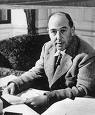 Influence their
Work?" PSCF 41
(December 1989): 214-220.
Influence their
Work?" PSCF 41
(December 1989): 214-220.
Does the world view of the scientist affect his results? This paper examines the influence of the investigator on his scientific observations and of the clinician on his work with his patients. Seeing the patient as an object created in the image of God influences the tone and attitude of a physician towards his patient.
C. S. Lewis
Armond Nicholi, Jr.,
"When
Worldviews Collide
C.S.
Lewis and Sigmund Freud: a
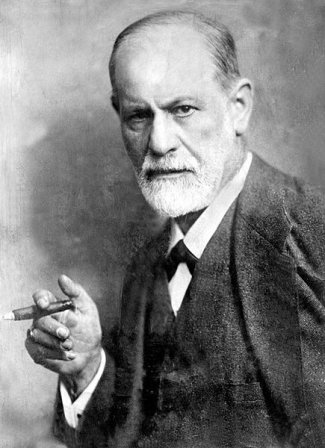 comparison of their thoughts and viewpoints on life,
pain and death," Parts I and II. The Real Issue January and
March 1998.
comparison of their thoughts and viewpoints on life,
pain and death," Parts I and II. The Real Issue January and
March 1998.
Sigmund Freud
_______________________________________________________________
For Arthur Holmes, a worldview "unifies thought
and life...defines the good life and finds hope and meaning in life...[and] is a
guide for thought and a guide to action."
_______________________________________________________________
Craig Rusbult, "Worldview Balance in Public Education," (ASA web, education)
Joseph L. Spradley, "Tradition and Faith in the Copernican Revolution,"PSCF 43 (March 1991): 36-42. A review of the Copernican revolution reveals the importance of nonempirical factors in its development. The writings of Copernicus, Kepler and Galileo show the continuity of their ideas with the Greek classical tradition and the connection of their work with their Christian faith. These human dimensions illustrate how cultural values, creative insights and personal commitments can be as important in science as empirical evidence.
Sherrie Steiner-Aeschliman, "Immanent Dualism as an Alternative to Dualism and Monism: the World View of Max Weber," Worldviews 4, 235-263, 2000.
Arthur N. Strahler, "How Does the World View of the Scientist & Clinician Influence Their Work?", PSCF 42 (June 1990).
James Stump, "Science, Metaphysics, and Worldviews," Leadership University (2002)
Kenell J. Touryan, "Are Truth Claims in Science Socially Constructed?" PSCF 51 (June 1999): 102-107
Harry Blamires, The Christian mind: How should a Christian think? Ann Arbor: Servant Books, 1978.
James Bradley, Mathematics in a Postmodern Age: A Christian Perspective, edited by Russell W. Howell & W. (Eerdmans, 2001)
Roy A. Clouser, The myth of religious neutrality, Notre Dame: University of Notre Dame Press, 1991.
Arthur B. Holmes, Contours of a World View, Wm. B. Eerdmans Publishing Co., Grand Rapids, 1983.
David G. Meyers and Malcolm A. Jeeves, Psychology Through the Eyes of Faith
First published in 1987 and is written by ASA Fellow David G. Myers, professor of psychology at Hope College in Holland, Mich., and Malcom A. Jeeves, professor emeritus of psychology at the University of St. Andrews, Scotland. The revised version includes new chapters such as: "Evolutionary Psychology and Human Uniqueness";" Science and the New Spirituality"; and "Forgiveness: What It Takes and What It Gives".
H. Richard Niebuhr, Christ and culture, New York: Harper Torchbooks Edition, 1975.
Thinking Like a Christian: Understanding and Living a Biblical Worldview: Teaching Textbook (Worldviews in Focus Series) by David Noebel, Chuck Edwards (Contributors)
Biology Through the Eyes of Faith, [2nd. ed. 2002], is written by ASA Fellow Richard T. Wright. The author stresses a biblical message of stewardship and examines the role of the life sciences in medicine, genetics and the environment. He also explores theories of origins, contrasting creationism, intelligent design and evolution.Stephen John Wykstra,
"Should Worldviews Shape Science: Toward and Integrationist
Account of
Scientific Theorizing," in Facets of Faith and Science. vol. 2: The
Role of Beliefs in Mathematics and the Natural Science in Augustinian
Perspective, edited by J. M. van der Meer (Lantham: The Pascal
Centre for Advanced Studies in. Faith and Science/University Press of America,
1996).
Larry L. Zimmerman, Truth and the Transcendent: The Origin, Nature, & Purpose of Mathematics, (Answers in Genesis, 2000)
Also:
- Music Through the Eyes of Faith
- Business Through the Eyes of Faith
- Sociology Through the Eyes of Faith
- History Through the Eyes of Faith
- Literature Through the Eyes of Faith

Most Recent Entry: 7/30/2012
_____________________________________________________________________