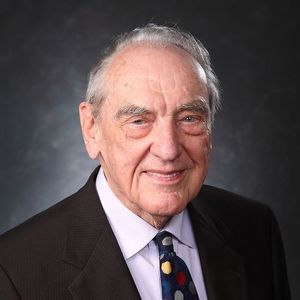
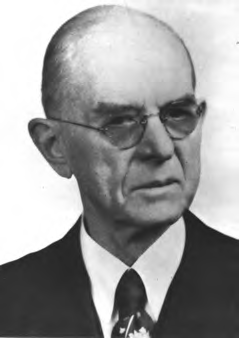
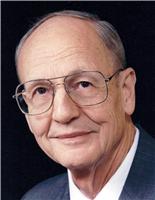
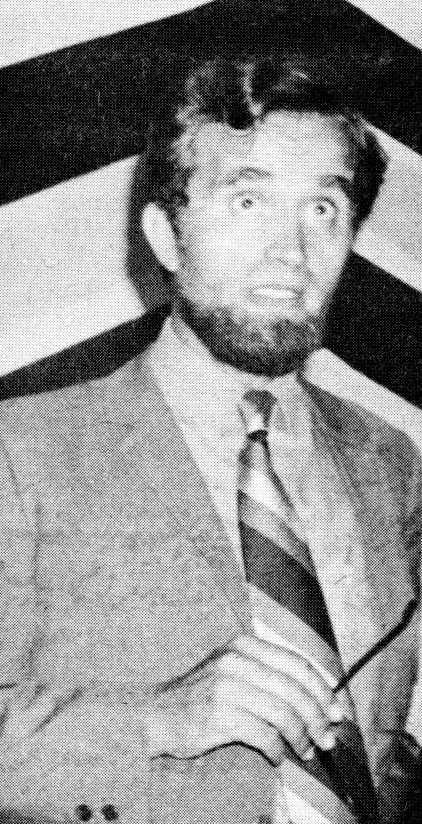
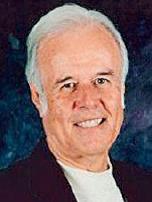
Vern Ehlers died on August 15, 2017, after a life of service as a nuclear physicist and a Congressman for 17 years. He was born on Feb. 6, 1934, in Pipestone, Minnesota. He attended Calvin College and received a doctorate in nuclear physics from the University of California at Berkeley. He did research and taught at Columbia University for several years before returning to Calvin College as a physics professor.
Vern became active in local and state politics from 1975 to 1993 when he was elected to fill the Michigan congressional seat vacated by the death of Paul Henry. He continued to serve in Congress for 8 full terms, retiring in 2011. During these terms he earned great bipartisan respect and, as a rare physicist in Congress, worked effectively to strengthen support for issues of importance to science.
He joined the ASA in 1966 and became an ASA Fellow. He published two items in PSCF, a response titled “The Evangelical College as ‘Friend’” to an article in the September 1972 issue and “Gems of Wisdom and Wrong Conclusions” in June 1980. He spoke at two ASA annual meetings in 2006 at Calvin College and in 2010 in Washington, DC. He was a strong supporter of the ASA and was articulate in speaking about issues of science and faith.
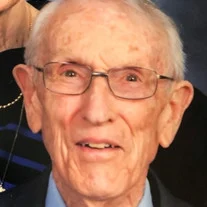
Peter Esser of Smithtown, NY, passed away on January 31, 2023 at age 83 in 2023. He was born on October 29, 1939. He graduated from Brown University with a BS in physics and an MS and PhD in physics (1971) from Adelphi University. His research work for his thesis was done at Brookhaven. After a year of teaching in a college, he switched from pure physics to medical physics.
After a year as Research Intern in Nuclear Medicine at Brookhaven National Laboratory, Peter began his life’s work as a Physicist in Nuclear Medicine at New York Presbyterian Hospital, then became Chief Physicist in the Division of Nuclear Medicine and then Chief Physicist at the Kreitchman PET Center. He was involved in research and developing improvements in Nuclear Medicine and PET technology obtaining several patents, coauthoring research papers and editing numerous books related to the fields. He collaborated in the development of a “phantom” for the testing of PET equipment with Data Spectrum which is in use today. He also taught at Columbia University as Professor Emeritus of Clinical Radiology (Physics) in Environmental Health Sciences and Special Lecturer in the Department of Radiology and the Department of Applied Physics and Applied Mathematics. He enjoyed teaching and encouraging students of all levels. Seeking ways to improve the technology of PET and Nuclear Medicine was an important part of his focus.
He held one of the NSF Presidential Internships in Nuclear medicine at the Medical Research Center of Brookhaven National Laboratory in New York. Peter is a past president of the American Board of Science in Nuclear Medicine and a member of the Nuclear Accreditation Committee of the American College of Radiology. He was a board certified medical physicist with extensive experience in Nuclear Medicine and PET. He was editor of the book Emission computed tomography: Current trends thirteenth annual symposium on the sharing of computer programs & technology in nuclear medicine.
He was an active member, over time, of numerous professional societies and a Fellow of the American College of Radiology and a Fellow of the American College of Nuclear Medicine.
Peter joined the ASA in 1966 as he began his PhD graduate studies. He continued as a faithful member and donor to the ASA throughout his entire life.
Of Monona, Wisconsin, adjacent to Madison, died on 18 Nov 1992 at the age of 66. Born in Chicago, he grew up in Madison, and during WWII served as a radar man on a Navy mine sweeper in the Pacific. After the war he earned a B.A. in philosophy at the U. of Wisconsin and started working for the Oscar Mayer meat-packing company, where he was a research technician until 1973. For the next seven years he worked on the Biotrin Project and for the Dept of Agricultural Engineering and Bacteriology at U.W. From 1980 to his retirement, George worked for the Internal Revenue Service. He was a long-time member of ASA and active in the Bethany Evangelical Free Church of Madison. He is survived by his wife, Virginia, three sons, two daughters, a number of grandchildren, and a brother.
"We Looked Up to Alton Everest," Alton Everest Dies at Age 95.
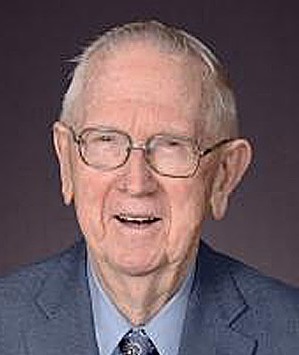
Everest was an appropriate name. For F. Alton Everest (1909-2005) was as towering and rock solid as the mount that shares his surname. The 6'2" Everest spent 95 very productive years on earth before passing away on September 3. He was the last survivor of the five founders of ASA.
In what his son Dan calls "part of his own systematic, thorough preparation of his affairs," Alton summarized highlights of his professional life (slightly edited): He taught Electrical Engineering at Oregon State U. 1936 - 1945. He was Senior Lecturer in Communications at Hong Kong Baptist College 1970 - 1973. Still teaching, but in less formal situations, he helped produce documentary science films at Moody Institute of Science (MIS) from 1945 - 1970.
He authored seven books on acoustics written for the nonspecialist and published by Tab-McGraw Hill. He also wrote and privately produced the audio-visual training courses, Critical Listening and Auditory Perception.
During World War II, he served at the U. of California Division of War Research in San Diego. As Chief of the Listening Section, he studied transmissions of sound in the sea, ambient noises in the sea, making sonar much more useful. (Ed. Note: He and colleagues traced a mysterious background noise to the activity of millions of "snapping shrimp".)
As an acoustical consultant (1973 - 1988), he designed radio and recording studios in the U.S. and 16 foreign countries; provided acoustical correction of churches, auditoriums, and civic spaces; and worked with architects on new construction. He was an Emeritus Member of the Acoustical Society, a Life Member of the Institute of Electrical and Electronics Engineers (IEEE), a Life Fellow of the Society of Motion Picture and Television Engineers, a member of the Audio Engineering Society, and cofounder and past president of ASA. See also and
The American Scientific Affiliation: Its Growth and Early Development,
F. Alton Everest , 1986, 2010 ASA Press (available from the ASA office). Various
sources, Newsletter*
top
Edwin Fast (1914-2004), Nuclear Physics
Of Idaho Falls, ID;. 7-2-1914 to 10-7-2004. He was a nuclear physicist at Idaho National Engineering and Environmental Laboratory until his 1993 retirement, taking time out to teach at Missouri Baptist C. during the 1973-74 school year. He was a charter member of the Idaho Academy of Science and joined ASA in 1954. Idaho Academy of Science executive director Philip A. Anderson recalls that when the academy first established a website, in 1994 or 1995, Ed told me his name was missing from the list of charter members. I told him that we would correct that omission ... But just to make sure, the following day Ed showed me the check with which he paid his IAS dues as a charter member - not just a copy of the check, but the original processed check that he still had in his possession from 1958. That speaks volumes about what an "organized" person he was.
Fast often led Bible studies at the lab during his lunch hour. He was a member and deacon of Calvary Baptist Church in Idaho Falls, where he led music, taught Sunday school, and held various leadership roles. Philip A. Anderson, Executive Director, Idaho Academy of Science; Kirk Casey of Calvary Baptist Church and Margaret Shinnyhorn, Fast's daughter.*
top
 Robert C. Fay (1936-2025) Chemistry
Robert C. Fay, emeritus professor of chemistry and chemical biology at Cornell University died on Feb. 6, 2025, in Fairfax, Virginia. He was 88. Bob was born on March 14, 1936, in Kenosha, Wisconsin, and was educated in the public schools. He received an AB degree from Oberlin College, and a Master’s and PhD from the University of Illinois in inorganic chemistry. During his graduate studies, he worked four summers as an inorganic chemist at the National Bureau of Standards in Washington, D.C.
Before getting his doctorate, Bob spent a year at Wheaton Graduate School studying biblical literature. He said the experience helped him decide between a professional Christian ministry and chemistry, though his lifelong religious involvement never flagged. He believed, he said, “that there’s a very close interaction between science and religion.”
Karl Johnson and Keith Yoder published an interview with Bob in the December 2009 issue of Perspectives on Science and Christian Faith. It was titled “Chemist as Complementarian: An Interview with Robert C. Fay” and is available at this link.
Together with his wife, Carol, he attended almost every ASA annual meeting in the last 15 years. He was an enthusiastic support of the ASA.
“He thought far beyond the frame of a chemist and saw the deeper challenges and opportunities for someone of his faith convictions to speak wisely to the big questions that truly launch all inquiry, including scientific inquiry,” said Vivek Matthew, executive director of Chesterton House. “Beyond that, the warmth and devoted care that he and his wife Carol provided to our organization were pivotal to getting us to where we are today.”
Of Fort Belvoir, VA. He received his BA (1931) and MA (1936) in chemistry from UCLA and was honored as a 50-year member of the American Chemical Society. George was voted a Fellow of ASA in 1959. He was active in arranging local ASA section meetings in the Washington, DC/Baltimore area.
By 1978 George lived in Alexandria, Virginia, working as a chemist at the U.S. Naval Research Lab in Washington, D.C. George and wife Grace
were the "golden oldies" of McLean Presbyterian Chruch, now becoming active in jail ministries. Their son Ed and his wife Margy in Toronto, are co-directors of the Patmos Gallery, an art gallery established by Christians to encourage Christian artists.
Bob was born on October 24, 1920, to Charles Albert Fischer and Matilda Nylen Fischer in Hartford, Connecticut. Following the death of his father in 1922, he moved with his mother and two brothers to Wheaton, Illinois. He attended Wheaton College (BS in Chemistry in 1942) and the University of Illinois (PhD in Analytical Chemistry and Electrical Engineering in 1946). He was on the faculty at the University of Illinois (1946-1948) and Indiana University (1948-1963). He was the founding Dean of the School of Science and Mathematics at California State University, Dominguez Hills, (1963-1979) and the Provost and Senior Vice President of Biola University (1979-1989).
He lived in Rancho Palos Verdes, California, from 1963 to 2002 and then in Fullerton, California.
Bob joined the ASA in 1945, was elected a Fellow and later served on the ASA Council 1962-1966, the last two years as President. He contributed as a scientist to the safe harnessing of nuclear energy through his studies of deuterium (heavy water) with the Manhattan Project during World War II. He studied the application of the electron microscope to scientific investigation and led the initial successful efforts to chemically add fluoride to toothpaste in order to prevent cavities.
As an educator, Robert Fischer taught thousands of students as they prepared for careers in many fields, helped create a new university at Cal State Dominguez Hills, and led the transformation of Biola College to Biola University. He wrote scores of scholarly articles and authored textbooks about electron microscopy and quantitative chemical analysis. For lay readers seeking to properly integrate science and faith, he wrote
? (2 Eds. English, a 3rd. in Spanish,
a 4th in German ) and
Robert Fischer met God personally during his childhood and sought to serve Him faithfully throughout his life. He demonstrated his faith daily. He taught Bible classes and preached in several churches and was active at different times at College Church (Wheaton, Illinois), Twin Cities Bible Church (Urbana, Illinois), United Presbyterian Church (Bloomington, Indiana), Peninsula Baptist Church (Palos Verdes, California), Rolling Hills Covenant Church (Palos Verdes, California), and Evangelical Free Church (Fullerton, California).
Beyond Robert Fischer's many accomplishments, much of his enjoyment in life centered on his wife and family. Though orphaned of his own father and raised by a single mother, Robert Fischer was himself a role model of a loving father and faithful husband. He
was survived by his wife of 66 years Mary Ellen (Mitchell) (Fullerton, California) and his five children.--Phil Fischer,
David Ernest Fisher, age 85, of Wheaton, finished his work on Earth and moved to his heavenly home on September 22, 2021. He was born on October 23, 1935 in Lakewood, OH to Ernest Albert and Dorothy Mary (Deeks) Fisher, and graduated from North Olmsted High School.
On June 23, 1956 he married Doris Jane Sholes, then earned a Bachelor’s degree from Roberts Wesleyan College in Rochester, NY in 1957, followed by a degree in Missionary Technical Radio from Moody Bible Institute in Chicago, IL in 1960. He gained practical experience as a radio engineer and announcer at WDAC in Lancaster, PA, where he met many listeners who became faithful supporters over the ensuing decades. In 1963 Dave and Doris joined Trans World Radio (now TWR) and served in Monaco (Europe) 1963-1973, Swaziland (Africa) 1973-1976 and Guam 1976-1978. He served in a technical capacity preparing broadcasts to be aired in dozens of dialects, so that people of many tribes and nations could hear the Good News of Jesus in their heart language. It was from hearing responses from listeners behind the Iron Curtain, who had been taught that science invalidated faith, that he was inspired to spend a few hours per week writing radio scripts that addressed their concerns and questions. In 1978 the family moved to Wheaton, so he could focus full-time on showing secular listeners the coherence between science and Christian faith, via interviews with notable scientists with a strong Christian faith, as well as exposés of synergies between science and the Bible. Over the years, from its start for Hungarian, then Russian and Mandarin-speaking listeners, the Truth in the Test Tube (TTT) program has been produced and broadcast by TWR in 13 languages, drawing responses from around the globe. He also served in the World by 2000 project at the US Center for World Mission in the late 90s. He marked 58 years of service with TWR in June 2021.
After 52 years of marriage, Doris was promoted to heaven in 2008. Eleanor Weiberg became his wife and ministry partner in 2011, celebrating his 50 years with TWR with him in 2013. They would have celebrated their 10th wedding anniversary this November.
In 1985, he earned an M.A. in Intercultural Studies and Missions from Wheaton College. His print publications include co-authorship of Scientists Who Believe (Moody Press, 1984), translated into five languages and selling over 50,000 copies, chapter contributions to Ambassadors for Christ (Moody, 1994), numerous articles in Young Ambassador magazine, and frequent contributions to Chuck Colson’s BreakPoint broadcast.
Dave joined the American Scientific Affiliation in 1979. He actively recruited ASA members for science-faith material to use in his broadcasts. That plus his penchant for puns is illustrated in the June/July 1982 issue of the ASA Newsletter. It recounts the way Dave drew on information from astronaut Jack Lousma (commander of the third Columbia space shuttle mission) on his broadcast and urged ASA members to contribute similar stories. The newsletter concludes
“As a headline for this story Dave Fisher suggested "AN APOLLO-GETIC APPROACH," because of our "perverse and persistent penchant for puns." Where did he get that idea? Even so, it's good to see a young fellow show respect for a senior's old-age penchant.-Ed.”
He frequently submitted news items for the ASA Newsletter. Then he served as co-editor, with Margaret Towne, of the newsletter of the ASA from 2002 to 2011. Dave continued to volunteer with the ASA for the remainder of his life. He frequently recorded all the sessions he attended at the annual meetings and would regularly submit calendar items for posting on the ASA website. He was elected an ASA Fellow in 1995 in recognition of his contributions.
He enjoyed spending time with family and friends, attending lectures by visiting scientists, notably at Fermilab and Wheaton College, keeping fit, traveling to visit supporting churches in the Eastern US and to attend conferences, as well as playing board games and word games. And puns!! He prayed for his children and grandchildren every day.
top
Charles Flynn ( -1994) Chemistry died quietly in his condo on Oct. 28, 1994, while resting after dinner. Chuck published his annual Flynn Frizzer at Christmas time, and word of his death came in the final issue (vol. 8), written by brother Geoff, whose cover letter offers some insight into Chuck's personality: "While the loss of Chuck is difficult to accept it is comforting to know that he is now with our Lord, dancing and running and I'm sure also exchanging puns." Chuck worked as a chemist at the U.S. Bureau of Mines' Research Center in Reno, Nevada, and his fellow employees put together a retirement party for him, including a ballad that two coworkers wrote.
The reader might be indulged for a verse or two that provides some insight into Chuck's delightful character (sung to the tune of the Beverly Hillbillies' song):
Come and listen to a story `bout a man named Flyn
a-notched chemist, and a warm-hearted friend
He's a scholar and a Christian
And he's always got a pun.
Well, here's to you Chuck, it's been great fun!
Rahr, that is...fight the fat...entropy
If you ask about his hobbies, we'd say he's had a few
When it comes to classic music, composer birthdays what he knew
His computer's been abuzzin'|
Cause Chuck's on his way to be a Mathcad hero!
Chuck, that is...Dr. Flynn...we'll miss him.
(from The Ballad of Chuck Flynn, written by Debbie Bluemer and Sandy McGill, USBM)
Geoff recounts one of his favorite stories about Chuck in the final Frizzer. In high school, Chuck entered and won first prize in a science contest, which was a four-year scholarship to Caltech. The awards ceremony was held in the Pasadena Civic Auditorium, where Chuck was awarded the prize by Werner Von Braun. As part of the offering, he was allowed to ask Von Braun a question. Geoff recounts: "Our parents were quietly praying in the audience that Chuck would keep quiet. But you know Chuck. He did in fact ask a question which resulted in a period of silence from Dr. Von Braun. Our parents thought Chuck's question must have been extremely basic and Dr. Von Braun was trying to think of a nice way to respond without embarrassing Chuck. Dr. Von Braun's response indicated that the auditorium was filled with many noted scientists and that only a handful probably even understood the question and maybe only three knew the answer! He then proceeded to answer Chuck's question. Needless to say we never doubted Chuck's brilliance after that." During the funeral service, Beethoven's Ninth Symphony was played, and afterwards "we gathered to share stories and of course pizza and soda. What else would you expect to be served at a party to honor Chuck?"
Newsletter*
top
Wayne Frair (1926-2015) Zoologist of Basking Ridge, NJ
Wayne Frair passed away on Thursday, Jan. 29, 2015. He was born in Pittsburgh, Pa., on May 23, 1926. He received a BA in zoology from Houghton College, a BS in zoology from Wheaton College, an MS is embryology from U of Massachusetts, and a PhD in biochemical taxonomy from Rutgers University. Except for a sabbatical at Rutgers, his entire career was as a professor of biology and chairman of the biology department at King’s College in Briarcliff Manor, NY. He was an expert in sea turtles and on baraminology.
Wayne became a Christian while in the US Navy in 1946 and then became interested in issues of science and faith. He joined the ASA in 1952 and became an ASA Fellow, remaining with the ASA until 2005. He was an advocate of young-earth creationism, having been influenced by George Mooreland at Houghton. He served on the board and was president of the Creation Research Society from 1986 to 1993. He wrote several books including “A Case for Creation.” While other creationists left the ASA a few years after the Creation Research Society was founded, Wayne remained active in the ASA and was an outstanding example of civil discourse with opposing views. Walt Hearn was one who remembered Wayne as “a good friend, one of the brightest, certainly the gentlest, YEC I knew in ASA. At ASA Annual Meetings we had many good discussions about creation/evolution, but never an argument.”
top
John H Freer (1938-2017) Psychiatrist
Dr. John H. Freer, 79, of Hopkinsville died September 30, 2017, in Madisonville, KY, following complications from open heart surgery.
A native of Somerset, KY he was born January 3, 1938, the son of the late Albert Herschel Freer and Edith Evelyn O’Dell Freer. He completed his undergraduate studies at Kentucky Wesleyan University in Owensboro, KY. He went on to the University of Kentucky where he obtained his MD He then completed his residency at Menninger Clinic.
Dr. Freer returned to Kentucky as Chief of the Alcoholic Treatment Center at the Veterans Administration Hospital in Lexington, KY. He was active in Mental Health Clinics across the state prior to moving to Hopkinsville in 1991. Dr. Freer came to Hopkinsville to work at Western State Hospital where he would eventually retire. While in Hopkinsville he also worked at the Pennyroyal Center and also had a private practice. Following his retirement, he went to work at Fort Campbell where he specialized in Behavioral Health of Families. He was also a retired officer with the United States Public Health Service.
He was an active member of First United Methodist Church where he was also a member of the Share Group and the Choir. He joined the American Scientific Affiliation in 1978 for about ten years and rejoined in 2011 until his death.
He is survived by his wife, Anita, two children and five grandchildren.*HBG Funeral Homes
top
Gerard Fridsma (1936-1995) mechanical engineer from Grand Rapids, Michigan, ended a nine-month battle with cancer Friday, March 31, 1995, at age 58 years. Jerry was born May 1, 1936 and educated in Passaic, New Jersey and employed as a research engineer in experimental hydrodynamics for 38 years, working on designs of landing craft, submarines and sailboats. A long-time ASA member. Joan Fridsma*
top
Robert C. Frost (1926 -1992 ) Biology
Of Escondido, California, an internationally known lay minister and teacher, died on 15 Sept 1992 at age 66. While speaking at a charismatic conference in Brighton, England, last December, he developed a hoarseness which was soon traced to a thyroid malignancy. After chemotherapy the cancer subsided, then came back beyond medical control.
Born in Vancouver, Washington, Bob graduated from Reed College in Oregon, earned an M.A. and Ph.D. (1952) in biology at Rice, stayed on in Houston to teach anatomy at Baylor College of Medicine. He later taught biology at Evangel College in Missouri, Westmont and Southern California colleges in California, and Oral Roberts University in Oklahoma, where he chaired ORU's Dept of Natural Sciences. In 1970 he resigned to take up full-time writing and speaking. For several years he also taught at Melodyland School of Theology in Anaheim, California. Bob contributed articles to a number of periodicals and was a contributing editor to
New Covenant, a Catholic charismatic magazine. Speaking at the 1960 Annual Meeting at Westmont College: "Dr. Frost then asked the question., "To what extent is the Christian biologist a mechanist?" His answer pointed out the Christian's commitment to a transcendent God Who established the laws and supervises their operation and Who is also the Author and Finisher of the moral and spiritual life, as well, The Christian biologist sees beyond the mechanistic operation to the author beyond, much as a person can look through a glass window or focus attention on the glass itself". He wrote about the "Spirit-filled life" in a series of books from Bridge Publishing, Inc. (formerly Logos), Plainfield, New Jersey.
Aglow with the Spirit (1971) was followed by Overflowing Life and
Set My Spirit Free (1973), The Mystery of Life (1975), and Our Heavenly Father (1978). Inspired by Jesus' words in John 4:34, Bob finished revising Our Heavenly Father the week before his death. As his breathing became more difficult, he and his wife Ruth, a nurse, were sustained by Psalm 116. Besides Ruth, Bob is survived by four grown children and six grandchildren. He was a Fellow of ASA and active in Cathedral of the Valley Church. (As young profs at Baylor Med in the '50s, the two of us spent many lunch hours in his lab or in mine praying or studying the Bible together, sometimes with students. I've never had a more "whole-hearted" Christian colleague. Walt Hearn.
Newsletter*
top
Merrill Galloway, age 77, of Tomball, Texas, went to be with Christ on December 27, 2015. Born in Philadelphia, Merrill held degrees from Wheaton College and Case Western Reserve, where he completed a PhD in chemical engineering. He served as a professor of chemical engineering at Cleveland State University from 1970 to 1980. Afterward, he pursued a successful 34-year career in the chemical industry working in research and process development at BF Goodrich, Westlake Chemical Co., and most recently SABIC Americas. He was a man of faith and integrity, both at work and at home. He joined the ASA in 1997 and had the greatest respect for ASA and its publications.
James E Gaughan was born on 06/16/1924 and died on 07/31/1996 at the age of 72. James Gaughan is buried in the cemetery: Riverside National Cemetery, which is located in Riverside, CA. He was a physics graduate of U, of MI and USC, and got an M.Div. from Westminster Theological Seminary in CA. James specialized in materials and worked as an aerospace non-metallic materials and processing engineer, with expertise in elastomers (synthetic rubber). He did some research into the history of "Creation Research." James joined ASA in 1990.
George Giacumakis Jr was born on July 6, 1937, and died April 6 following heart surgery. Dr. Giacumakis’ love for Israel and the Jewish people went back to when he was a college student studying Hebrew and Greek. The newborn state of Israel was only ten years old at the time and was the subject of much attention amongst his fellow Bible students. When awarded a scholarship by Brandeis University, he studied at the largely Jewish school and earned both a Master’s and a Ph.D. degree in Mediterranean Studies (Near East and Islamic Studies).
After graduation, in 1963 he joined Cal State Fullerton’s Irvine campus in the department of history. He became a Danforth Foundation Fellow in 1968. He was department chair from 1972-1975 and in 1978 left campus to head the American Institute of Holy Land Studies (now called Jerusalem University College) in Jerusalem. He returned to the Irvine campus in 1984 and also became an adjunct professor of history at Biola University. He was director of the university’s first south county branch in 1989 until his retirement in 2007.
George joined the ASA in 1961 and beginning in 1966 he served several years on the executive council of the Southern California section of the ASA. He was also active on the social science commission of the ASA. In 1966 he published the book The Akkadian of Alalah on ancient tablets found in the Syrian city of Alalah. He was a founding director of Song of Israel and founded the Museum of Biblical and Sacred Writings at Biola. He led many tours to the Middle Eastern countries. He also was an editor of Young’s Bible Dictionary and the International Standard Version of the Bible. One of the chapters of Protest and Politics - Christianity and Contemporary Affairs, edited by Robert G. Clouse, et. al., was written by George and titled “Christian Attitudes Toward Israel.”
One of the greatest Christian scholars of his generation, Owen Jay Gingerich died on May 28, 2023, at age 93. Born in March 1930 to devout Mennonite parents, he grew up in Iowa, Kansas, and Indiana with an early fascination for the stars. His father Melvin, the only member of his family who finished high school, became a history teacher and later (after completing a doctorate at the University of Iowa) a college professor. As a graduate student, Melvin brought home astronomy books from the university library for his son, including one about how to build a telescope. Together they made one good enough to see Saturn’s rings from a mailing tube, eyeglass lenses, and a magnifying lens for the eyepiece. As a teenager, Owen joined his father on a trip to Poland in 1946, bringing livestock to war-torn countries on behalf of the United Nations. A Polish astronomer who learned about it invited Owen to visit Poland again, resulting in Owen’s involvement in preparations for the Copernican quinquecentennial in 1973—an experience that helped re-shape his academic career.
When Melvin accepted a faculty position at Goshen College, Owen left high school a year early to enter Goshen, from which he graduated in 1951 with a degree in chemistry. That is where he encountered physicist H. Harold Hartzler, a leading ASA member, whom Owen considered “one of my most influential undergraduate teachers.” At that time, he was pondering how a person who wanted to serve Christ could justify doing “something so useless as astronomy.” Hartzler offered this advice: “We can’t let the atheists take over any particular profession. If you feel that you have a calling to go into astronomy you should go for it.”
Owen eventually earned the Ph.D. from Harvard in 1962, with a dissertation on stellar atmospheres supervised by Cecilia Payne-Gaposchkin. To support his growing family along the way, he taught for three years at the American University of Beirut (fulfilling his obligation as a conscientious objector) and for one year at Wellesley College. Harvard-Smithsonian Astrophysical Observatory hired him shortly after he completed the doctorate. There he spent the rest of his career, retiring in 2000 although he kept his office at the observatory. The hundreds of scientific papers he wrote included two widely cited articles on standard models for the solar atmosphere.
For much of his professional life, however, Owen functioned more as a historian than as an astronomer. A key moment came in 1970, when he ran across a heavily annotated copy of Copernicus’s De revolutionibus (1543) in the library of the Royal Observatory in Edinburgh. The notes contradicted a claim by the famous author Arthur Koestler, that De revolutionibus was “the book nobody read,” a phrase that became the title of one of Owen’s books. Over the next three decades, he tracked down 600 copies of the first and second editions, examining the marginalia to learn (if possible) who had actually read the book, when they did so, and what they thought. No other book in the history of science has been studied in a comparably exhaustive manner. In the process, he became a leading expert not only on Copernicus, but also on Ptolemy, Kepler, Tycho Brahe, and Galileo. Nor did he neglect modern developments, such that he served for many years as an associate editor of the Journal for the History of Astronomy.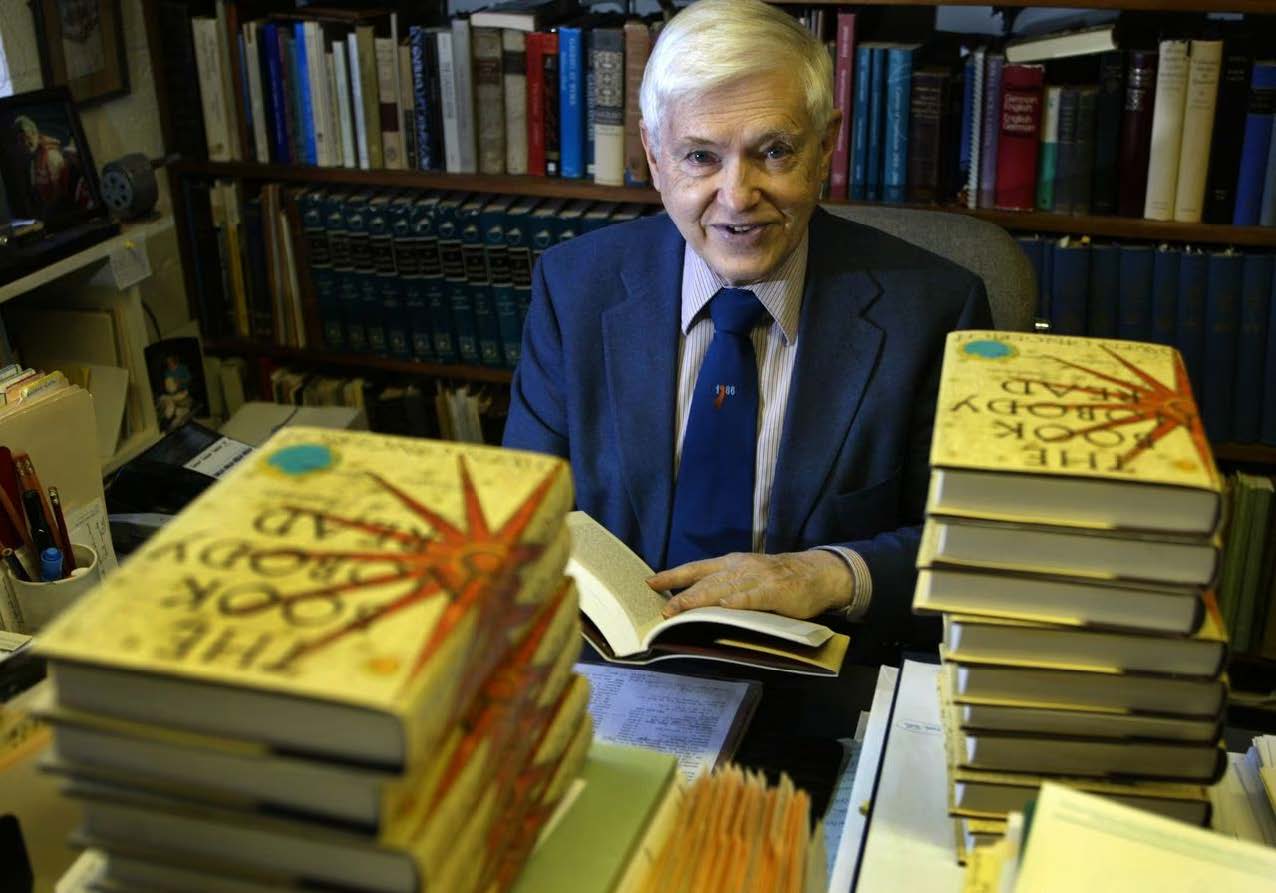 He also became a highly knowledgeable collector of rare and often valuable scientific books, which he stored in two safes in his office and eagerly showed to friends.
A major theme in Owen’s historical work was the role of Christian beliefs in the lives and careers of many great scientists, especially Kepler (see the March 2011 issue of PSCF). He wrote and spoke frequently, with equal eloquence, in too many places to count. It is fair to say that his general education course, “The Astronomical Perspective,” was legendary: those qualified to have an opinion regarded him as the finest teacher in his department and one of the best at Harvard. His essays, books, and public talks were always exquisitely illustrated with wonderful images, often from his own camera.
Perhaps his best-known lecture, published in multiple versions, was called, “Dare a Scientist Believe in Design?” Although he always answered that question affirmatively, his approach was more subtle than the often-strident claims of Intelligent Design advocates: in his view, the existence of a designer was a reasonable but modest conclusion from the evidence, hardly a slam dunk. This drew ire from both hard-core atheists, such as the staunchly positivistic philosopher of science Adolf Grünbaum who took him to task at a colloquium in Pittsburgh, and ID proponents, such as Phillip E. Johnson, with whom Owen had a spontaneous, very lively exchange at the 1992 ASA meeting in Kona, Hawaii. Owen’s plenary address on “The Future of Physical Science—Ethical and Theological Implications," was unrelated to ID, but a few weeks earlier his critical review of Johnson’s book, Darwin on Trial, had appeared in PSCF. Johnson’s plenary the next day, “Science and Scientism in 21st Century Education,” questioned the validity of “the Darwinian theory” and blamed “scientific naturalism” for undermining traditional values. Their public disagreement led Owen to clarify his position in the December 1992 issue: “To invoke God’s active agency as the explanation for slow, long-term changes in the biological record will be no more efficacious as a scientific theory than to say that the moon orbits the earth or apples fall from trees because of God’s sustaining activity in the universe. While I believe both to be true, they do not pass as scientific explanations. In reading Darwin on Trial, I am left with the impression that Johnson wishes they would.”
This attitude drove the two short books he wrote in the final part of his life, God’s Universe and God’s Planet, both published by Harvard University Press, the latter with a foreword by former ASA Executive Director Randy Isaac. Acutely aware of his mortality, Owen focused on finishing them as soon as he could, without sacrificing quality. He also continued to serve the ASA in various ways. He gave a plenary address at the 2002 meeting in Santa Barbara, published an eloquent sermon on natural theology in the June 2014 issue of PSCF, and was still on the editorial board at his death. Having first been identified as the consulting editor for astronomy in June 1969—a run of fifty-four years—Owen Gingerich gave more to the ASA than almost anyone else. I need not say that his expertise, counsel, and courage will be sorely missed.
*contributed by Ted Davis
Joined the ASA in 1960, was elected a fellow soon after for his contributions to the ASA and science. Gish died on March 5, 2013, at the age of 92, Born on February 17, 1921, in White City, Kansas, he served in the U.S. Army from 1940 to 1946 in the Pacific Theater of Operations, attaining the rank of captain. He earned a B.S. in chemistry from the University of California, Los Angeles, in 1949, and then a Ph.D. from the University of California, Berkeley, in 1953. After a stint as a postdoctoral fellow and then assistant professor of biochemistry at Cornell University Medical College, he returned to the University of California, Berkeley, from 1956 to 1960, before joining the Upjohn Company as a researcher from 1960 to 1971.
Along the way he became an avid anti-evolutionist and left the scientific community in 1971, he became the vice president of the Institute for Creation Research, founded by Henry Morris. In 2005, Gish retired, becoming the ICR's Senior Vice President Emeritus. A prolific writer, his most famous book was
(Master Books, 1973), entitled in later editions Evolution: The Challenge of the Fossil Record (Master Books, 1985) and
(Master Books, 1995). His most recent book was
But Gish was famous, or notorious, principally on account of his debates with scientists, including such opponents as George Bakken, Kenneth R. Miller, Massimo Pigliucci, Kenneth Saladin, Michael Shermer, and William Thwaites. "If the mild-mannered professorial Morris was the Darwin of the creationist movement," wrote Ronald L. Numbers in The Creationists (2006), "then the bumptious Gish was its T. H. Huxley." Gish boasted of having engaged in over three hundred debates. He was certainly a lively debater, whose style involved a rapid delivery of arguments on widely varying topics; his debate style was dubbed the "Gish Gallop" by NCSE's executive director Eugenie C. Scott in 1994. But scientists quickly concluded in the words of Karl Fezer, writing in 199, that "Gish will say, with rhetorical flourish and dramatic emphasis, whatever he thinks will serve to maintain, in the minds of his uncritical followers, his image as a knowledgeable 'creation scientist."' Gish spoke to the biases of a segment of Christendom that discounted science for a biblicist understanding of God and nature. --abstracted from bio,
One of the most distinguished members of the ASA, Dr. Robert P. Glover, died at his home in Cynwyd, Pa, after an illness of six months. Dr. Glover was one of a three-man team of surgeons who in 1947 and 1948 pioneered in mitral valve heart operations. Later he found a way to slice into the heart near a diseased valve thickened by scar tissue and inserting a tiny rod-like instrument which opened like an umbrella to stretch the valve back to normal. In 1952 they developed the famous "drawstring" technique to reseal leaking heart valves. By 1956 he was Chief of Thoracic and Cardiac Surgery, Presbyterian and Episcopal Hospitals; Clinical Professor of Thoracic Surgery, Hahnemann Medical College and Hospital; Director, the Thoracic and Cardiovascular Research Laboratories at Presbyterian Hospital, Philadelphia, Pa. He was the author of sections on cardiovascular surgery in a number of textbooks and was editor of the book, "Practical Diagnosis of Surgical Heart Disease".
, Kitchell Jr. Memoir of Robert P. Glover (1913-1961).
. 1962 Apr;29:191-2.*
Of Kiln, Mississippi, died in the fall of 1985. He had been a member only since February, perhaps after seeing the write-up of the 1984 Annual Meeting in Chem. & Engineering News. Born in 1912, he received a B.S. from Illinois in 1934, and an M.S. (1935) and Ph.D. (1938) from the U. of Iowa, all in chemistry. His specialties were organic and agricultural chemistry, and he eventually retired as assistant director of the Southern Regional Research Center of USDA's Agricultural Research Service in New Orleans. He was the author of 23 publications and patents. Newsletter*
Roger D. Griffioen died on January 3, 2026, at age 91. He was born on September 7, 1934, in Grand Rapids, Michigan, attended the GR Christian schools, graduated from Calvin College (now University) in 1956, married his college sweetheart, Kathleen Schepel, in 1957, and obtained his PhD in nuclear physics in 1960 from Purdue University. After a year-long post-doc in California at UC Berkeley, he began his teaching career at Calvin College in 1961 where he remained for nearly 40 years.
His time at Calvin was influenced by the changing times. His teaching load varied as the years went by. He served many years as physics department chair as well as several years as Dean of Natural Sciences. Sabbatical and summer research leaves included work at Florida State University in Tallahassee, the University of Rochester in New York, and the Lawrence Livermore Laboratory in California. He also spent a year in Tucson, Arizona, as the program officer for a corporation offering summer research grants to high school teachers in the field of physics.
In 1968 he joined the American Scientific Affiliation. He was elected an ASA Fellow in 1978 and continued to be a member for the rest of his life.
After an undergraduate research program at Calvin began to discover and track asteroids, Roger was honored in 2003 when their second recognized discovery was named Asteroid Griffioen. Following his retirement from Calvin in 1999, he became involved with the Murdock Charitable Trust. There he was able to resume his work enabling high school teachers to do research in their field of interest until re-retiring in 2014.
For 20 years, Roger sang with the Calvin Alumni Choir, participating in their tour to Asia in 2000. Throughout his life, he played his trumpet at church and in various bands until he participated in his final concert on May 17, 2025. He did it. He played when he was 90!
Michael's undergraduate degree in biology was obtained from Kenyon College in 1979. He is survived by his wife, Sally Nasser Gonda, and children, Lucy and Sarah of Pittsburgh. He was a middle school teacher at Moravian Academy, Bethlehem, from 1986 to 1990. He received a masters at Tufts University, Medford, Mass.,1992. He was currently studying at University of Pittsburgh.
( -1971) Physician.
Was a physician in private practice in Hong Kong. An Englishman, Gray received his M.D. degree from Cambridge University in 1936 and had published several papers on urology. He was a member of the Royal Society of Medicine, International Society of Urology, and International College of Surgeons. He was an Anglican but had served in the Gospel Clinic of Lutheran World Service in Hong Kong and was a consultant surgeon at the Fanlong, Hospital of LWS.
On his 1963 application for membership in ASA, John Gray described himself as "a firm believer in the inspiration of the scriptures as the chief guide to a Christian life, and a firm believer also in the necessity for an honest dedication to the scientific approach to medicine."
John (Jack) William Haas, Jr., age 89, of S. Hamilton,
MA, passed quietly on February 12, 2020, at the Masconomet HealthCare Center
after a brief illness. Son of John W. Haas, Sr. and Ada Bowles Haas, “Jack” was
born in Philadelphia, PA, on February 19, 1930. He received his BS degree in
chemistry from King’s College, DE, where he also met his future bride, Ann
Sutliff Haas, beloved wife of 66 years. Jack went on to achieve MS and PhD
degrees in physical chemistry from the University of Delaware in preparation
for his career as a college chemistry professor and scientific researcher at
Grove City and Gordon Colleges. Jack was an elder and deacon in the First
Presbyterian Church Northshore, where he also played the organ for over 40
years. An active community member, he served on the Hamilton Conservation
Commission, Historical Society, and Chebacco Woods and Lake Associations.
Jack heard about the American Scientific
Affiliation (ASA) while he was a King’s College student from his science professor,
Omar Olney. He joined the ASA in January 1957, when he was a graduate student
at the University of Delaware, and remained a member for 63 years. When Olney
went to Gordon College in 1960 as the sole biology professor, he arranged for
Jack to get an interview to start the chemistry department at Gordon. Jack
joined Gordon in 1961 and within two years he was chairman of the New England
section of the ASA.
Jack was an avid advocate of the ASA and its
mission of expanding the discourse on science and Christian faith. He was a
visionary and often identified leading-edge possibilities for the ASA. His
first letter published in PSCF in
1971 urged the ASA to produce 5-minute radio broadcasts for widespread use on
Christian radio stations, although there is little evidence that this was done.
Later, in 1994, Jack brought the ASA to the digital world when he convened an
impromptu gathering at the annual meeting to consider starting an ASA website.
Terry Gray was a new member who attended and offered to take the lead in
implementing it. In 1996 Jack helped found the ASA Press which published
several books. He had a deep passion that ASA should provide resources to
churches and the public that taught good science. He had the idea of creating
an online Members in Glory page. He faithfully filled in all the information he
could and he is now the latest entry.
ASA had the fortune of having Jack on the
executive council from 1973 to 1978. In 1980, when Bill Sisterson suddenly
resigned as executive director and Bob Herrmann expressed interest in taking
that role if he could return to the Boston area, Jack stepped in. He and Dean
of Faculty Judson Carlberg worked with President Dick Gross to arrange for Bob
to have a joint appointment as an adjunct professor and pre-med advisor at
Gordon College. As a result, the ASA offices relocated from Elgin, IL, to
Ipswich, MA, in Bob’s home. Jack continued to work closely with Bob and the
relationship between ASA and Gordon College grew productively.
Jack continued to spend much time in the ASA
office, particularly focusing on helping build the ASA website. When Terry Gray
scanned and did an OCR on the articles in all the ASA journals, Jack worked to
edit and format the articles. Jack felt that there should be a lot of
discussion about science and faith on the internet. He personally put together
a large number of topical discussions that are still available online (see links below), though somewhat outdated now. For many years until the last few months of his life, Jack would search the internet for new news in science and faith and post four articles each day M-F on the ASA Facebook page and Twitter. He felt there should be an archive of tributes in memory of ASA members who had passed into glory. He started the obituary page, now called Members in Glory, and patiently scanned the internet for information to create as complete a compilation as possible. He maintained the page until a year before his death. He is the latest entry, for now.
When I succeeded Don Munro as ASA Executive
Director in 2005, Jack was very influential in working with me to help me
understand the mission of ASA and the big picture of science and faith. We became close friends,
meeting virtually every week for coffee and
discussion. These discussions moved from the ASA office to Williams Bakery,
then Sofia’s coffee shop, and finally to Jack’s home until our last meeting
on January 14, 2020. I helped him attend many local lectures and travel to
many ASA annual meetings, his last, other than Gordon College, being the 2012
meeting at Point Loma.
In addition to his many accomplishments and
acts of service, Jack will be especially remembered as a devoted and faithful
husband, a loving and present father who passed on the important things of life
to his children, a loyal friend, one who took joy in intellectual banter, and a
man who loved and served his God with his whole life.
On Sunday, March 14, 2021, Jennifer Ruth Hampton was killed in a car accident in Holland, MI. Born to Charles and Barbara (Settergren) Hampton on November 22, 1972 in Wooster, Ohio, she was educated in the Wooster Public Schools. She received her B.A. in Physics with honors from Oberlin College, her MPhil in Physics from University of Cambridge in England on a Churchill Fellowship. She earned her MS and PhD in Physics from Cornell University.
She was a professor and department chair of physics at Hope College, where she was first of all a teacher who loved and mentored her students in the joy of learning. Jenny was, in turn, greatly loved, admired, and appreciated by her students. In the words of one student, “Dr. Jennifer Hampton is perhaps the most exceptional professor that I have been blessed to know in my time at Hope College.” Jennifer received this year’s Hope Outstanding Professor Educator (H.O.P.E.) Award from the Hope College graduating Class of 2021. The H.O.P.E. award, first given in 1965, is presented by the graduating class to the professor who they feel epitomizes the best qualities of the Hope College educator. This year is the first time that the honoree has been chosen posthumously.
Jenny joined the Hope faculty as an Assistant Professor of Physics in 2007. She was promoted to Associate Professor of Physics in 2013 and to Professor of Physics in 2020. Jenny’s research focused on understanding and controlling the fabrication of inorganic thin films and nanostructures. Her most recent work investigated Prussian blue analogues and their potential application as a material basis of a new generation of batteries. Her research lab was affectionately called the Surface Laboratory, a highly interdisciplinary enterprise that brought students and colleagues to the interface of physics, chemistry, and materials science. For this work, Jenny received nearly continuous funding for several years from the National Science Foundation, published nearly 20 papers in peer-review journals, and frequently brought her undergraduate research students to present at national meetings. She was a creative and determined scientist and a superb research mentor.
Jenny was a member of Faith Christian Reformed Church in Holland where she had been deacon and a member of the missions committee as well as a regular singer and clarinetist for the worship team. In addition, she loved her book group, her biking group, and the opportunity to tutor young girls in Kids Hope.
Jenny had an adventurous side as well. She started school in Liberia, West Africa. She explored Europe with her family in 1984, 1995 and 2003. She worked in Cote D'Ivoire with her missionary aunt in 1993 during an Oberlin winter term. In 2018 traveled to China with her best college friend, Chloe Papke, and in 2019 she participated in an Iron Man competition with her gym, Valeo.
She joined the ASA in 1996 while in grad school and faithfully kept her membership through the rest of her life.
*Langeland Sterenberg Funeral Home; David Van Wylen
top
Allen J. Harder (1942 -1977) History and Philosophy of Science
He died February 28, 1977, at home in Kansas City, Missouri, at the age of 34. According to his widow, Julia L. Harder, Allen died at the end of a "long but patient struggle to live abundantly in a body increasingly limited by the growth of a brainstem tumor. We praise God for His mercy in allowing Allen to remain at home, relatively free from physical pain, and that Allen is at last with our Lord and Savior."
Allen received a B.S. in physics from Wheaton and a Ph.D. in the history and philosophy of science from Indiana University. He had taught at Lycoming College in Pennsylvania before becoming an assistant professor at Iowa State University in Ames. (Our paths crossed briefly before I left ISU in 1972, rejoicing that God had sent Allen as a witness in the philosophy department there. He was an articulate spokesman for Jesus Christ as well as for his own philosophical ideas--Ed.) He had been a member of ASA for about ten years and had contributed reviews and at least one article to the Journal. He was born in Peoria, IL. Besides his wife Julia, he is survived by his parents in Kansas City and a sister in Colorado. W. Hearn,
Newsletter*
top
A. Dorothy Harris MD (~1903 -1971 ) Physician
From Lancaster, Pennsylvania, was a missionary member of ASA since 1954 and a missionary to China since 1939. Born in Philadelphia PA, she received a B.A. in biology from Wheaton College in 1925 and an M.D. from Women's Medical College of Pennsylvania in 1933. When she joined ASA, she was employed by Overseas Missionary Fellowship of the China Inland Mission at the Happy Mount Leprosy Colony, Tanshui, Taipei Hsien, Taiwan. "Wheaton College Alumni News 1958. :Dr. Dorothy Harris '25 and Joy Leister '30 rejoice that they have been able to return to Taiwan to take responsibility for the Happy Mount Leprosarium again. The work has grown, and they have 65 patients." She had been a member of Aldan Union Church, Aldan. PA.
JWH*
top
Franklin J. Harris,
Jr. (1918 - 2014 ) electrical engineer.
A
resident of Windsor Park in Carol Stream, he died October 2,2014, at
Johnson Health Care Center in Carol Stream, Illinois. He was born
July 19, 1918 in East Orange, New Jersey to Franklin and Emma
Harris. He grew up in Glen Ridge, New Jersey and graduated from
Newark College of Engineering and entered the US Navy during WWII.
He married Leslie Woodruff, also of Glen Ridge, in 1943 and moved to
Washington D.C. where he was assigned to the Naval Research Lab
(NRL). After his discharge, he continued as a civilian at the NRL
until 1974. In June 1974 Frank retired from the Naval Research Lab
in Washington, D. C., where he had been head of the
Beam-Semiconductor Device Section in the Electronics Division. Frank
accepted a position as electronic laboratory associate at Wheaton
College, Illinois, in January 1975
In 1986, Leslie passed away and he went on to marry Karen Lizner.
They moved to Windsor Park in 2003, where Karen passed away in 2011.
Franklin Harris developed 11 patents over a span of 22 years during
his career at NRL. His patents were all related to radar technology
for defense. Radar technology developed at the Naval Research
Laboratory contributed greatly to the winning of World War II.
Franklin's early work may have helped contribute to that win. His
later work was also used commercially in storage tube oscilloscopes
which were widely used to advance technology on many fronts.
Once retired, he enjoyed an adventuresome lifestyle, traveling
all over the world including, Australia, Israel, Africa and Alaska.
He enjoyed scuba diving, roller skating, swimming, and classical
music, especially the Artist Series at Wheaton College. He also
served on short term mission trips to HCJB in Ecuador as a short
wave worldwide radio broadcaster. He was an active member of College
Church in Wheaton. He is survived by his five children, Kathleen
Wall of Reedley, California, Robert (Alice)Harris of Ellicott City,
Maryland, Jean (Malcolm) Swinbanks of Barrowden, England, John
Harris of Lansing, Michigan and Debby (Glenn) Leach of Tracy's
Landing, Maryland. He was buried in Abraham Lincoln National
Cemetery.
Franklin was a member of ASA for over 56 years
(joined in 1958). During his time in Washington, he was an active
member of the DC ASA section.
Obit published in the
Chicago Daily Herald on Oct. 6, 2014. Newsletter.
top
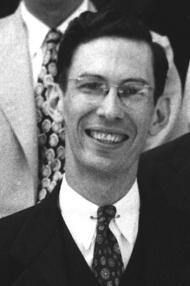 R. Laird Harris (1911 -2008) Biblical Studies, chemical
engineering.
R. Laird Harris (1911 -2008) Biblical Studies, chemical
engineering.
(picture 1947, ASA Annual Meeting, Taylor U)
Born March 10, 1911. Dr. R. Laird Harris passed away Friday, April 25, 2008, in Quarryville, Pa. Harris was born near Upper Makefield Township, Pennsylvania. He earned a B.S. (Chemical Engineering) from the University of Delaware (1931), a Th.B. (1935) and a Th.M. (1937) from Westminster Theological Seminary, an A.M. from University of Pennsylvania (1941), and a Ph.D. from Dropsie College (1947).
Harris was a former moderator of the PCA and the Bible Presbyterian Synod. He was also a founding faculty member of Covenant Theological Seminary, where he was a professor and chairman of the Old Testament Department from 1956 until he retired in 1981. Dr. Harris served as chairman of the Committee on Bible Translation that produced the New International Version of the Bible . Harris was one of the biblical scholars who had strong interests in science-faith question in the early period of the ASA. He served on numerous Convention Committees. See papers.
Newsletter*
H. Harold Hartzler (1908-1993) Physics
For many years a very active ASA member and professor of physics and astronomy at Mankato State University, Mankato, MN since 1958, died Thursday, 9 Dec 1993, at age 85. "H3," as he was sometimes known in ASA circles, graduated from Juniata College, Huntingdon, PA in 1930, and from Rutgers U., Newark, NJ, in 1934, where he received a doctorate in physics. With post-graduate work at Pennsylvania State U., U. of Michigan, and U. of Arizona, Harold was well-prepared in his long and full career in teaching - first as a professor of mathematics and astronomy and dean of men at Elizabethtown (PA) College from 1935-1937. Then, it was off to Goshen College, where Harold settled in from 1937 to 1958.
Besides the ASA, Harold belonged to numerous learned societies involved in mathematics, astronomy, physics, and education, and to various honorary societies, including Sigma Xi. He was the first Executive Secretary of the ASA. His funeral announcement in the Goshen News noted his membership in the ASA and that "He was the only person who attended every one of the 31 national meetings of the American Scientific Affiliation." He published numerous papers in JASA and
PSCF. While unable to attend one of his later meetings in person, Harold "showed up" via the medium of videotape. Harold was the "heart of the ASA for many years, heading up the ASA office and acting as as peace-maker in contentious times. He mentored younger members to become involved in the affairs of the
organization. The Editor (Walt Hearn), while in Oregon in the early '70s, remembers an OR Local Section Annual Meeting at which Harold, then traveling about the country, gave a lively luncheon talk about relations between the ASA and ICR. Harold was also a member of the Creation Research Society. He valiently sought to bridge the gap between creationists and those who found a place for evolution. One of Harold's long-term projects was a study of Amish and Mennonite genealogy and history. Duane Kauffmann, 1950 Photo,
Newsletter*
top
Charles Hatfield (1920-1993) Mathematics
Died at age 73 on Wednesday, 17 Nov 1993. Shortly after being able to come home from the hospital on 22 June for two days to celebrate his 50th wedding anniversary with Muriel and family, his health rapidly declined. Born in Kentucky, Dr. Hatfield graduated summa cum laude from Georgetown College in 1940. and received an M.A. from the University of Kentucky. After obtaining his Ph.D. in mathematics from Cornell University in 1944 and completing two years of active duty in the USNR, he joined the mathematics faculty of the University of Minnesota, moving from there to North Dakota in 1960.
His long teaching career included graduate teaching assistant at U. of Kentucky and Cornell, assistant professor at the U. of Minnesota from 1946-1960; professor and math dept. chairman at the U. of North Dakota, 1960-1964; and chairman and senior professor of mathematics at the U. of Missouri-Rolla until his retirement. Besides developing new courses at the U. of MO in abstract algebra and number theory, he was a most valued advisor and group lecturer. Chuck was deeply involved with the ASA as Council Member and President, author, lecturer, promoter of Christian scholarship.
In addition to serving on the board of governors of the Mathematical Association of America (1975-1977), he was a member of the American Mathematical Society and Sigma Xi. He taught Morning Bible Class at First Presbyterian Church and Rolla Bible Church. Chuck was also a member of the board of InterVarsity Christian Fellowship and the Institute for Advancement of Christian Studies. Muriel Hatfield, Elving Anderson,
Newsletter*
top
Larry Hayes (1942-2026) Engineer

James “Larry” Hayes passed away peacefully on May 25, 2026, after spending several days surrounded by loved ones. Larry was born in Birmingham, Alabama, on March 7, 1942.
During a particularly busy week in June of 1963, at the age of 21, Larry graduated from Birmingham-Southern University with a Bachelor of Science in Physics, moved to Huntsville, Alabama, and married the love of his life: Carolyn Elaine Layman. He continued his education with graduate studies in physics from 1963–1966 at the University of Alabama at Huntsville before beginning his remarkable professional career.
Over the next six decades, Larry and Carolyn built a loving home centered on faith, family, and steadfast commitment. In July 2007, he joined the American Scientific Affiliation and remained a member until his death.
Larry spent much of his career as an engineer with the U.S. Army Space and Missile Defense Command (SMDC), where he served as Program Director for numerous advanced technical radar and optical programs. He later continued his work with the development of ballistic missile defense systems, managing multi-million-dollar government programs and reporting directly to senior Army leaders, before founding his own consulting company after retiring. Larry was deeply respected for his intelligence, precision, and dedication to his work.
In 1990, Larry earned the Superior Civilian Service Award for his outstanding leadership, skill, and dedication to the U.S. Army Strategic Defense Command. Additionally, from 1982–1984, he served as the Northern Division Lt. Governor of Toastmasters International.
Larry, a lifelong learner, was an avid reader with an endless curiosity about the world. As a self-taught speed-reader, he consumed books and articles on countless subjects, especially history and biblical studies. Led by Carolyn’s faithful example, Larry was baptized into the Church of Christ and was a devoted and involved member for over four decades, known for leading detailed and thoughtful Bible studies.
Larry is survived by his beloved wife, Carolyn Hayes; his children, Ruthie Sommers (David), Marland Hayes (Denise), and Janell Hustead (Bill); nine grandchildren; and two great-grandchildren. Larry is dearly loved by numerous nieces and nephews. He is preceded by his brother, George Hayes (Theresa), and his parents, Virginia Nell Reynolds-Hayes and James Marland Hayes.
Larry’s life was marked by quiet faithfulness, intellectual curiosity, humility, and enduring love for his family. He will be deeply missed and lovingly remembered by all those who knew him.
top
John D. Haynes (1919-2000) Biometrician
American Cyanamid Company Pearl River, New York. This industrial biometrician, a servant of science. Died 2-21-2000 in Nanuet NY. Born 4-11-1919 in PA. US Army 1942-45 enlisting in Buffalo, NY Long term ASA member and leader in the NY Section (1965-2000). He noted in a Ramm memorial
article: "[...this] servant of science, who just had had theological questionings satisfied by studying
Mere Christianity, Miracles, and Problem of Pain, all by C.S. Lewis, welcomed the appearance of
The Christian View of Science and Scripture as an eminently logical, scholarly treatise, which met a definite need and kept me in the fold." Newsletter .
top
Walter R. Hearn (1926-2017) Biochemist
Walter Russell Hearn died on April 11, 2017, at the age of 91. He was born in Houston, Texas, on February 1, 1926. Walt grew up in Houston and majored in chemistry at Rice University. He received a PhD in biochemistry at the University of Illinois at Urbana-Champaign in 1951. After doing research for a year at Yale Medical School and for three years at Baylor College of Medicine, he spent 17 years on the biochemistry faculty at Iowa State University until 1971. His research interests included peptide chemistry, hypothalamic hormones, and bacterial pigment biosynthesis.
For five years Walt was a Visiting Biologist to Colleges for the American Institute of Biological Sciences. He is a Fellow and Life Member of AAAS and an Emeritus member of the American Chemical Society. In 1972 he switched professions and moved to Berkeley to do free-lance editorial work with his wife Virginia. They have edited periodicals and some 200 books, largely for Christian publishers.
Walt joined ASA while he was in grad school and served on the Executive Council in the 1960s. From 1969 to 1993 he edited the ASA newsletter. He was a coauthor of the widely distributed publication, Teaching Science in a Climate of Controversy (ASA, 1986), author of Being a Christian in Science (IVP, 1997), and dedicated contributor and advisor to God & Nature.
He has also contributed chapters to a number of books, the latest being "Creation Matters" in Darwin and the Bible: The Cultural Confrontation (Penguin Academic, 2009), edited by anthropologists Richard Robbins and Mark Cohen. His articles, reviews, and poems have appeared in such publications as Perspectives on Science & Christian Faith and the Berkeley publication Radix, for which Ginny has been copy editor for over 40 years. Walt was once "poetry rejection editor" for Radix magazine. Walt and Ginny have strong IVCF backgrounds, helped to launch New College for Advanced Christian Studies in the 1980s, and are members of Berkeley's First Presbyterian Church.*
Ronald L. Numbers wrote in The Creationists (1992), "As one of the first biochemists to play an active role in the ASA, Hearn felt a God-given responsibility to inform members about the growing importance [in the 1950s] of biochemistry in theories of evolution ... Because of his outspokenness, he often found himself the center of controversy with the ASA, but because of his unfailingly sweet temper, he seldom made enemies."
"Everybody in the 'science-faith game' has a history," Hearn wrote in a 2014 essay. "As a minor-league player recalling many seasons, what 'strikes' me is the number of 'big-leaguers' I've actually known." He proceeded to relate his encounters with such figures as Harry Rimmer, Henry Morris, Ronald L. Numbers, John C. Greene, John Polkinghorne, Duane Gish, Francis Collins, Phillip Johnson, Michael Denton, Forrest Mims, Robert Russell, Ian Barbour, and NCSE's Eugenie C. Scott.**
Walt was one of the most active and prolific advocates for the ASA, urging everyone he knew to consider joining the organization that meant so much to him. ASA members came to know him through his 25 years of insightful and witty comments in the newsletter and his ubiquitous presence at the annual meetings. He was a major factor in helping Emily Ruppel found the God & Nature online magazine, serving as a regular contributor and advisor. He provided two years of postings to be published in forthcoming issues.
Walt not only ministered to people through writings and personal interactions but also by example. He made the transition to a basic lifestyle that emphasized thrift and ecological sustainability and giving to others. His famous talks on “dumpster diving” opened many eyes to the waste that permeates our society.
The ASA was shaped in many ways by Walt and he will be sorely missed until we all warmly greet him again in glory.
*God and Nature
**NCSE
top
Russell Heddendorf (1930-2008) Sociology
Professor of sociology at Covenant College, Lookout Mountain, GA from 1982-2000, died of heart failure on Dec. 24, 2008, at age 78. He was born on June 11. 1930 on Long Island, N.Y., and graduated from Queens College in New York City. He received his Ph.D. in sociology after graduate study at Columbia University and the University of Pittsburgh Following his Army service in Korea and Japan during the Korean War, Russ married Eleanor Pearce in 1954. He taught at Dickinson and Geneva Colleges prior to going to Covenant. His main concentrations in the field were social theory and sociology of religion and he founded the Association of Christians Teaching Sociology (ACTS) in 1976.
Russell was particularly concerned with the idea of Christian calling as opposed to career and the conflicts of living in and not of the world. Not long ago he published From
Faith to Fun, which deals with the sociological aspects of humor contrasted with the Christian idea of joy. He also wrote
Hidden Threads (1994). Russell was an adjunct professor after he retired and kept very busy in the department up until the end.
His ASA publications included: Sociology (1958), The Church and Race: An Experiment On Futility (1965), Religion, Science and the Challenge of Modernity (1986), Another Perspective on Dooyeweerdian social theory (1991).
"He loved to travel and visited his daughter who was a missionary in France. He leaves his wife, Harriet, son David, and daughter Ruth Ann. Russ had a love of travel and exploring the world. He enjoyed camping with Ellie and their children and with Harriet made a number of visits to Europe. He was devoted to preserving a connection with his relatives in the Alsace region of France. Russ played tennis, and was a lifelong Dodgers baseball fan. He sang in several church choirs, worked diligently on his yard, and was proficient in the theory and practice of humor. He was a member of Lookout Mountain Presbyterian Church, and with Harriet enjoyed the ministry of Rivermont Presbyterian Church in Chattanooga where he taught Sunday School and led a men's Bible study."
Bio.,
Newsletter*
top
Milford F. Henkel ( -1969)
Of Pierson, Michigan, died on July 12, 1969, in an automobile accident, of which his wife, Julie, was the only survivor. She and their sons Milford, Jr., and Jerry testified in a courageous Christmas letter that God has given them grace, strength, and help in time of need. He served in the Rainbow Division 168h Field Hospital Medical Corps in WWI. (in progress)
Newsletter
top
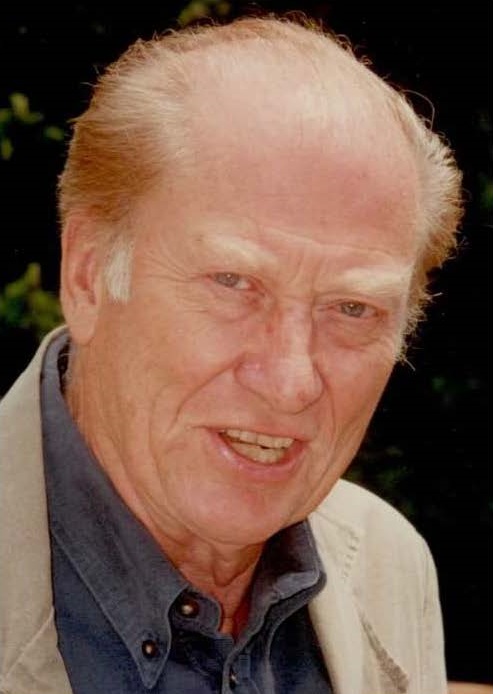
Robert L Herrmann (1928-2019) Biochemist
Robert L. Herrmann passed away peacefully on December 12, 2019, at the age of 91. Bob is survived by his loving wife of 69 years, Elizabeth (Betty) Herrmann; his children, Stephen Herrmann and his wife Anne of Pembroke, MA; Karen Ritter and her husband John of Tulsa, OK; Holly Waite and her husband Geoff of Topsfield, MA; Anders Herrmann and his wife Celine of Beverly, MA.
Born on July 17, 1928, in New York City to Philip and Florence Herrmann, Bob grew up in Queens. His family attended a Plymouth Brethren group in Manhattan. He studied chemistry at Purdue University, interrupted by two years of service in the Navy on USS Shenandoah. In 1950 Bob married his childhood sweetheart, Betty Ann Cook, a year before completing his chemistry degree at Purdue. He earned a PhD at Michigan State University and came to MIT in 1956 for a post-doc as a Damon Runyon Fellow in Biology. There he met another post-doc in chemistry, Walter Thorson, who was also in the Plymouth Brethren group. He later joined the faculty of Boston University, teaching biochemistry there for 17 years while consulting for the V.A. in Bedford. In 1976 he joined the biochemistry faculty at Oral Roberts University School of Medicine in Tulsa, OK, before returning to New England.
Bob joined the American Scientific Affiliation in 1957 shortly after arriving at MIT. He became active in ASA, for example, leading a discussion at the 1969 annual meeting at Gordon College on “Can a Christian Accept a Mechanistic Origin of Life?” In 1974 he lectured at Gordon College on “Christian Faith and the Scientific Mind.” Together with more than a dozen other ASA members, Bob was a member of the Federation Christian Fellowship subgroup of the American Societies for Experimental Biology. He was elected to the ASA Executive Council in 1978 while he was on the faculty at the Oral Roberts University School of Medicine. He was serving as president of the council when, in 1981, the council was informed that Bill Sisterson was unexpectedly resigning as executive director. Bob was eager to go back to the Northeast and was also very interested in leading the ASA which was then located in Elgin, Illinois. Sensing an opportunity, Jack Haas at Gordon College helped construct a package deal that would give Bob an adjunct professor and pre-med advisor position at Gordon as well as being Executive Director of the ASA, if ASA would move its headquarters to the Northeast. The deal was accepted and the Herrmanns moved to Ipswich, MA. His house became the ASA headquarters, which later moved to leased space in downtown Ipswich.
The ASA was privileged to have Bob serve as Executive Director from 1981 to 1994. He was a major factor in revitalizing the ASA. An unfortunate office fire in 1979 had destroyed many records and the sudden departure of Executive Director Bill Sisterson left the ASA in a difficult situation. Harry Lubansky served as an interim director until Bob was able to move to Ipswich and take the reins.
Perhaps Bob is best known for pursuing the John Templeton connection to ASA. While perusing the membership list for possible sources of funding, Bob noticed that John M. Templeton was a member. Knowing of his investment prowess, Bob visited him at Lyford Cay in the Bahamas while Bob was vacationing there. John immediately solicited Bob’s help in reviewing a book he was writing. Soon their relationship blossomed, leading to five jointly authored books. Meanwhile, John became a fan of the ASA, supplying both some funding as well as additional visibility and members from the Unity Church. In 1987 Bob helped John found the John Templeton Foundation (JTF) which currently is one of the largest sources of funding for research in science and faith. Bob published eight articles in PSCF, four of which were co-authored with John Templeton.
One of the most significant ventures that Bob initiated and led was the ASA/Templeton Lecture series. Funded by the JTF, the ASA managed a nation-wide series of lectures at colleges and universities on science and faith, raising awareness of both the ASA and issues of science and faith. When Bob retired in 1994, Don Munro succeeded him as executive director and continued working out the logistics of the lecture series which concluded around 2003.
He loved his family and enjoyed birdwatching, boating, the company of dogs, and discussions on science and Christian faith. He will be greatly missed and remembered with affection.
For those of us who knew him personally, Bob was a great inspiration. I recall attending both annual meetings and local chapter meetings of the ASA where Bob took specific interest in me, welcoming and encouraging me. The JTF and Gordon College continue to sponsor an annual lecture series in his honor, sustaining the work that he dearly loved.
Randy Isaac
topJohn Hiben (1925-1984) Psychology of Parsons, Kansas,
Died in July 1984 at age 59, according to a note from his wife, Marian. Born in Minneapolis, John graduated from Bethel College and did graduate work in psychology at Minnesota and Kansas, earning an M.A. in 1961. At the time of his death he was a clinical psychologist at the Parsons State Hospital and Training Center, and an active participant in the First Baptist Church of Parsons.
top
Frederick Slocum Hickernell (1932-2016) Physicist
Fred S Hickernell went to be with the Lord on July 5, 2016. He was born on January 16, 1932. He is survived by his wife, Thresa, of 62 years and four children and seven grandchildren.
He earned a bachelor’s degree in education from Arizona State College, the forerunner of Arizona State University (ASU), and studied meteorology at UCLA for a year. He served as a weather officer in the Air Force for several years, eventually rising to the rank of major in the Air Force reserve. He worked for Motorola for over 38 years. While working for Motorola he completed his advanced degrees, earning a Master’s degree in science and a PhD in physics, both from ASU. Fred was elected a Fellow of the IEEE for contributions to the development of acoustic and optical surface wave devices for electronic systems applications.
Fred became a member of the American Scientific Affiliation in 1968. He had a very special association with fellow ASA members because they were from all different educational backgrounds. Coming together with their knowledge of Christ as it associated with their scientific understanding was a great learning experience. Fred was elected Fellow and served twice on the Executive Council of the ASA. He was elected to the council in 1991 for a five year term. In 2001 he rejoined the council for two years to fill in for Bill Cobern who resigned from the council at that time.
Fred was the program chair for the highly successful 1999 ASA annual meeting at John Brown University. Bill Phillips was the featured speaker, talking about his recent Nobel prize in physics. Fred and Thresa attended many annual meetings. He frequently led the ASA Fellows lunch and was a great encouragement to all those in attendance.
top
William H. Hildemann (1927- 1983) Immunogenetics
Amyotropic lateral sclerosis ("Lou Gehrig's disease") claimed his life of on 8 Sept. 1983 after two years of severe illness. An internationally known authority on the comparative genetics of the immune system, he was a professor of microbiology and immunology at UCLA Medical School in Los Angeles. His immunological work helped lead the way to heart and kidney transplants. Bill Hildemann was born in Los Angeles in 1927.
After obtaining his bachelor's degree and an M.S. at USC he served as a First Lieutenant in the First Marine Division during the Korean War. He returned to earn a Ph.D in immunogenetics at Cal Tech, then spent a postdoctoral year in London before joining the UCLA faculty in 1957. He eventually served as chair of the Dept. of Microbiology and Immunology and as director of the UCLA Dental Research Institute. Bill helped to found two international journals and published almost 200 papers in his 26 years at UCLA. An interest in aquatic life began with his Ph.D. work on immune responses in fish. Bill continued to study the phylogeny of the immune response in such organisms as corals and sponges.
He had a great love for the South Pacific and at one time served as dean of Hilo College at the U. of Hawaii. Bill's widow, Mrs. Dorothy Hildemann, wrote to us about her husband's lifelong participation in the Lutheran church. A Sunday school teacher for many years, he was also active in the Lutheran Campus Council at UCLA. He and Dorothy met in church and were attending Village Lutheran Church in Westwood. Because Bill had been a jogger, swimmer, and scuba diver, his debilitating disease was a heavy burden to him, she said, "but his faith in God never wavered." Bill Hildemann joined ASA in Aug. 1982, perhaps after one of our readers called his attention to mention of his name in the Jun/Jul issue of the Newsletter. We had quoted a letter he wrote in Science (5 Mar. 1982) on the creation/evolution controversy, and a later letter responding to his. We thought Bill's final rejoinder was superb. In fact we planned to quote it in a story we still haven't found room for, on articulating Christian faith in secular journals.
Bill said he did not advocate "mixing religion with science instruction," as charged by his critic. Instead he advocated "teaching concepts of evolution in a manner that avoids unnecessary strife" - in a country where perhaps 40 million people perceive evolution as "ant-God." After quoting Judge Overton's decision in the Arkansas Balanced Treatment case, to the effect that such a perception is mistaken, Bill concluded: "I would add that concepts of creation and evolution are quite compatible if evolution is viewed as a creative process continuing over many millions of years. Individual writers or lecturers could, of course, say much more about divergent beliefs or theories concerning origins, depending on the audience. The integrity of science is not compromised by stating that 'ultimate origins of life and matter are unknown and open to conjecture.' Indeed, evolutionary scientists, among whom I count myself, could well take greater care in separating facts from conjecture."Dorothy Hildemann said that response to Bill's letters in Science was very large, running about 9 to 1 in favor of his stand. She also said that coming issues of Immunology Today, Transplantation; and Developmental & Comparative Immunology would all contain special memorial tributes to her husband. Newsletter*
top
Lerner Brady Hinshaw (1921-1999) Physiology of Roseville, CA Born Jun 9 1921, San Diego County, California. Died Feb 14,1999 in Roseville, CA He enlisted in San Francisco as a private in the U.S. Army. He declared he had three years of college, was single, without dependents, and was employed as an "airplane and engine mechanic". He was recorded as 73" tall, 167 lbs. He married Alice Elaine Larson, Jun 28 1946, Grand Rapids, Kent County, Michigan. After the war he earned the BS in Biology 1949 and MS in Biology at USC and the PhD in Physiology in 1955. He did a post-doc at the University of Minnesota. He joined the faculty and became prominent in his field of animal physiology with 283 publications under his name. Alice, daughter of William & Ethel Larson, was born Apr 6 1920, Grand Rapids, Kent County, Michigan. Alice obtained a B.A. in English from Wheaton College in Illinois in 1941, and a Registered Nurse Diploma from Johns Hopkins University in Baltimore, Md., in 1945. She met her husband, Lerner Hinshaw, the love of her life, a captain in the U.S. Army, by being his pen pal for several years during World War II when he was overseas, and sight unseen accepted his marriage proposal.
They married in Grand Rapids on June 28, 1946. They had four children. She supported her husband faithfully, family said, as he obtained his Ph.D. in physiology while living in Pasadena, Calif. They lived in Minneapolis while her husband pursued his research and teaching career. He joined the ASA in 1974. Newsletter, Memorial in several journals*
top
Peter Hofstra (1921-1994) Medical doctor of La Jolla, CA died 7 Mar. 1994. He graduated in pre-med from Calvin College in 1939, Graduated 1943, University of Michigan Medical School in orthopedic surgery and did his surgical residency in hospitals in New York city, Paterson, N.J. He was also interested in biblical archaeology and creation/evolution questions
top
Joseph R. Hoover
( - )Medical Doctor
Of Fort Wayne, IN, passed away June 2, at age 70. His wife Elizabeth reports, "While he persevered almost 22 years with Parkinson's Disease, the cause of death was related to his heart." Joined the ASA in 1962. (incomplete)
top
Kenneth B. Hoover
(1911-2014)
Ecologist.
The Rev. Dr. Kenneth B. Hoover passed away on November 3, 2014, at the age of 103 at Messiah Village in Upper Allen Township. He was born in Abilene, Kansas on September 6, 1911.
Considered to be too frail for a life of farming, Dr. Hoover turned to education. He attended Messiah College from 1930-33, earned his A.B. at John Fletcher College in Iowa in 1934, his M.S. at Kansas State University in 1941, and his Ph.D. in ecology at Pennsylvania State University in 1952. In 1936 he began his teaching career at Jabbok Bible School in Oklahoma as Instructor in Science and Mathematics. In 1942 Messiah College appointed him as Instructor in Biology. Five years later he became chairman of the college’s Division of Social Sciences. In 1977 he was named Professor Emeritus of Biology.
Dr. Hoover was a highly respected and greatly loved college professor. His well-prepared class presentations were laced with humor and interesting stories. He took a keen interest in students, who regarded him as a mentor. He followed many of his students after their graduation from Messiah College. Several of his students he encouraged to do post-graduate work and later arranged for them to join the college faculty. Younger faculty also saw him as a mentor as well as a father figure. Both former students of the college and faculty members have referred to him as a true servant leader.
His hobbies included hiking and bird watching. Especially young people enjoyed walking with him in rural areas, learning about birds and plants. He and the late Clifford Jones spent many hours together, binoculars in hand, enjoying their common interest in birds.*
Ken joined the ASA in 1962 and in 1978 he was elected emeritus by the council, reflecting his emeritus status at Messiah. This gave him lifetime membership in the ASA.
*From Conklin Funeral Home
top
Reijer Hooykaas (1906-1994) Historian of Science
Dutch historian of science and author of Religion and the Rise of Modern Science, died on Jan. 4, 1994, as reported by Christians in Science in Britain. They say:
"He was at his best when surrounded by a group of research students in animated discussion. He constantly stressed the need for intellectual humility before the data of both Scripture and the natural world that God has given us, urging us to `sit down before the facts like a little child.' He warned us of the danger of `a fresh idolatry of our minds. This,' he said, `is really the liberal disease, whether it takes the form of orthodoxy or not.'"
Hooykaas co-taught the Regent C. summer course (Vancouver, BC) on "Christian Faith and Natural Science" with his good friend from across the Channel, the late Donald M. MacKay. He was an ASA Honorary member. See article. Arie Leegwater.*
top
Cleveland Hopkins (1910-2003)
Electrical Engineering entered the Lord's presence Sept. 7, 2003 at age 93 in Prescott, AZ. Cleveland was born in Santa Rosa, Calif., on Sept. 8, 1910, to Charles Blodgett and Lucia (Cleveland) Hopkins. He was married to Lillian Christine Hopkins MacKenzie on Aug. 11, 1945, at Park Street Church in Boston, Mass. They enjoyed 58 years together. After obtaining a B.S. in Engineering, he was recruited for a classified project at MIT, where his team developed the pulse radar technology now used to guide planes into airports worldwide.
At the Pentagon, he headed planning for the airborne early warning system, later becoming Head of Operations Analysis Office of the Alaska Air Command, in charge of the Arctic Distant Early Warning radar lines. Cleve continued his career in operations research and analysis with a variety of government agencies, including the National Bureau of Standards (NIST), Office of Technology Assessment, Office of Telecommunications Policy, the FAA, and the Naval Research Laboratory as well as several stints with MIT Lincoln Laboratory (Division 2) as an analyst for ICBM development and deployment for the Army and Air Force. In addition, he was a life-member of TIMS/ORSA, a Senior Member of the IEEE and the Society of Professional Engineers, a Fellow of the American Association for the Advancement of Science, a registered Professional Engineer in the District of Columbia, and a member of the National Capitol Astronomers Association and the American Scientific Affiliation.
He served Park Street Church and Derwood (MD) Alliance Church as trustee, and First Baptist Church in Prescott as deacon. His favorite hobby was astronomy, building his own 14" telescope and small observatory. Other hobbies included computers, woodworking, hiking, ham radio and geology. As author, editor, co-author and co-editor, he had a hand in 57 professional publications. Obit*
top
George R. Horner (1913-<2007) Anthropology
George was Professor in the Department of Anthropology and Sociology at Eastern Nazarene College, Wollaston Park, Quincy, MA in the 50s and 60s. In that period he was active in the work of the ASA New England section and nationally as a JASA author and speaker at Annual Meetings. Archaeologist, Indian Site Survey, State Museum of New Jersey, '40-42; Active Duty, United States Army, '43-45.
A missionary anthropologist he graduated from Wheaton College in 1940, received his masters at Columbia University in 1943, and doctorate at the Sorbonne, La Litterature orale: son emploi comme technique Pour I 'etude de la structure sociale et psychologique des tribus indigenes. Doctoral thesis. Sorbonne, Universite de Paris, June, 1950. He served as anthropology instructor at Wheaton from 1946-48 prior to completing his doctoral studies, In the 1970's George moved to Bridgewater State College to found the Anthropology major and undertook ethnographic investigations in West Africa as well as archaeological investigations in the Boston area. He promoted a multi-sub-disciplinary approach to the field of Anthropology in the classroom as well as in the field.
The Dr. George B. Horner Award for Academic Excellence in Anthropology is presented annually to outstanding graduating Anthropology majors. He was a founding member of the African Studies Association in 1958 and the African Research and Studies Program at Boston University. He published in the American Anthropologist in the 70s. Early Braintree gravestone art 1728-1850 : Second Parish Church Elm Street Cemetery, a portfolio by George R Horner (1986) His wife Mary Elizabeth Horner died January 25 2007 at Cape End Manor in Provincetown, Mass. Mrs. Horner taught French at ENC during the 1960s and 1970s. She was an MK, born in Seoul, Korea, and lived in Pyongyang until she was 18. They met at Wheaton College. Wheaton College Achieves,
Newsletter, Bridgewater State Achieves*
top
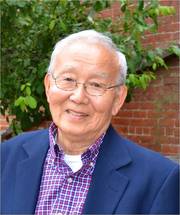 Tomuo (Tom) Hoshiko
(1927-2013)
Biophysiology.
Tomuo (Tom) Hoshiko
(1927-2013)
Biophysiology.
Tomuo Hoshiko Ph.D., 86, of Ashland, OH and formerly of University Heights,
went to be with his Lord and Savior, Saturday night, November 9, 2013 at the
Bradford House in Brethren Care Village.
Dr. Hoshiko was born October 5, 1927 in Surrey, British Columbia, Canada, to the
late Tsunehachi and Toshie (nee Kuroda) Hoshiko.
Tom's parents, Japanese
immigrants to Canada, had a farm in British Columbia. His father passed away
when Tom was 4 years old, and his mother continued farming until the
government appropriated their home and land during World War II. Tom and his
mother were then assigned to work on a sugar beet farm in Alberta. Later he
came to USA for college and he became a naturalized US citizen. He received
his Bachelor of Science degree from
Kent State University in 1949 and his Ph.D. from the University of Minnesota in
1953, and was a Research Fellow at the University of Copenhagen in Denmark.
A Professor Emeritus, Dr. Hoshiko was Professor of Physiology and Biophysics at
Case Western University in Cleveland. During Sabbatical years he also was
Visiting Professor at the Illinois Institute of Technology, at the Tokyo Medical
and Dental University,
and at the Katholieke Universitiet Leuven, Belgium. He had many
presentations and research publications in scientific journals in his area
of expertise, transport across biological membranes. Subsequent to his 1962
commitment to Christ, Tom's life increasingly focused on God and on family
activities. He was an avid photographer and a great camper, canoeing and
fishing up into the Canadian hinterland with family. Long before it was
generally popular, he was interested in solar power which
he incorporated into a house he built and another that he remodeled.
He attended Ashland Grace Brethren Church. He was a member and Fellow of the
American Scientific Affiliation - a network of Christians in the Sciences, and
was a founder of University Christian Forum at Case Western Reserve University.
He was President of the Society of General Physiologists, a member of the
Council of Scientific Society Presidents, a member of the American Physiological
Society, and a member of the Biophysical Society.
In 1962 he married Barbara (Rambo) Hoshiko, who survives. Also surviving are one
daughter, Katherine (James) Bentley of Ashland; two sons, Daniel (Ruthanne)
Hoshiko of Univerity Heights,
OH and James (Kimberly) Hoshiko of Westville, IN; grandchildren, John Bentley,
Anna Bentley, Lydia Bentley, Peter Bentley, Kent Hoshiko, Adam Hoshiko, Tim
Hoshiko, Jackson Hoshiko, Paul Hoshiko, Nathan Hoshiko, Ben Hoshiko and Lauren
Hoshiko; two sisters, Eileen Hoshiko and Yuri (Hoshiko) Goto and one brother,
Michael Hoshiko.
He was preceded in death by his parents and one sister, Mary (Hoshiko) Ono.
Tom joined the ASA in 1966. He helped start a fellowship of Christian
Biophysicists who met in conjunction with the Biophysical
Society Meetings, He served as chair of the Bioethics
Commission in 1997 and gave presentations at several ASA annual meetings.
His last ASA talk "Challenging the Secular Mindset of Scientists" was given at
the 2000 annual meeting. He and ASA member wife Barbara were retired from CW in 2001.
Dwight T Davy, PhD, PE Professor Emeritus and Interim Chair Mechanical and
Aerospace Engineering Case Western Reserve University Cleveland, OH
commented: "'I learned much from Tom's words, but his life taught
me much more, He was a role model to me and other Christians in the
way his faith animated his public life, Tom hosted a group of people
at CWRU who met regularly to discuss issues of faith, We variously
studied the Bible and a number of books usually written by Christian
authors addressing matters of science, philosophy, and faith. We
were a small motley group coming from a variety of perspectives. We
had many great discussions around intersections of the Christian
faith with various issues of life and our work .
Somewhere
along the line we hatched the idea of inviting Christians,
well-known for their academic or research work, to speak on campus.
Tom, as usual, led the charge. We, as the University Christian
Forum, sought to partner with the appropriate department or school
within the university to bring them to campus and, by the way, to
help cover
expenses, The speaker would give a seminar on their work under
sponsorship of the department or school, and then they would also
give a public address in which they spoke of their faith as the
context for their work. Tom was a mentor without seeking to
be one, By his life, Tom challenged me and other Christians on
campus to step out more boldly in public testimony of our faith, He
could engage in a dialog about faith with a remarkable blend of
openness and humility along with conviction and boldness.
More than once I got to see him challenge
faculty thinking with clarity and skill and do it with kindness and good humor.
Newsletter,
Obituary*
top
Henry H. Howell
(1914-1980) Biology.
Professor of biology at Asbury College in Wilmore, Kentucky, died on January 4, 1980, at age 66, evidently of a heart attack. He had served as professor of biology at Asbury for 22 years, and although retired in 1979 he was still teaching classes at the time of his death. Born in Birmingham, Alabama, he had received an A.B. at Birmingham-Southern College, an M.S. in biology from Auburn, a B.D. from Asbury Theological Seminary, and a Ph.D. from the U. of Alabama. He was a member of a number of scientific societies, especially the American Fisheries and Wildlife Society. He had been president of the Midwest Benthological Society and general secretary of the Kentucky Academy of Sciences. In a memorial service at the Wilmore United Methodist Church, of which he was a member, it was said of Henry Howell that "he was no isolated or insulated or alienated scientist. His love for God's world and nature was always combined with a love for people. He used his love of nature and the creation to get into the hearts of young people." He helped organize the Jessamine County-Wilmore Planning and Zoning Commission, which he chaired for 9 years. Tributes came from county residents who appreciated his efforts to stop pollution of local streams. He was the first Asbury faculty member to receive as a sabbatical grant to study the Jessamine Creek Gorge for recreational and environmental benefits.
Henry Howell is survived by his wife Irene, two daughters, two sons, a sister, brother, and one granddaughter. Irene Howell wrote to us, saying that Henry had wanted to attend the 1979 ASA Annual Meeting at Stanford, but had not yet adjusted to the pacemaker he had worn since May 1979. He taught fall quarter and the first four days of winter quarter this year. On January 4, Henry "came home for lunch and was sitting at the table with our son who had just returned from Minneapolis and our missionary daughter who had come home from Liberia for a surprise Christmas visit. I heard our son exclaim 'No! Daddy! "When I got there he was gone." Our sympathy goes to the Howell family, along with appreciation for the account Mrs. Howell sent
ASA News. She said "We are so grateful to the Lord that there was no suffering and that he had lived abundantly until his last breath. Now God's grace is proving
beautifully sufficient for us." Newsletter*
top
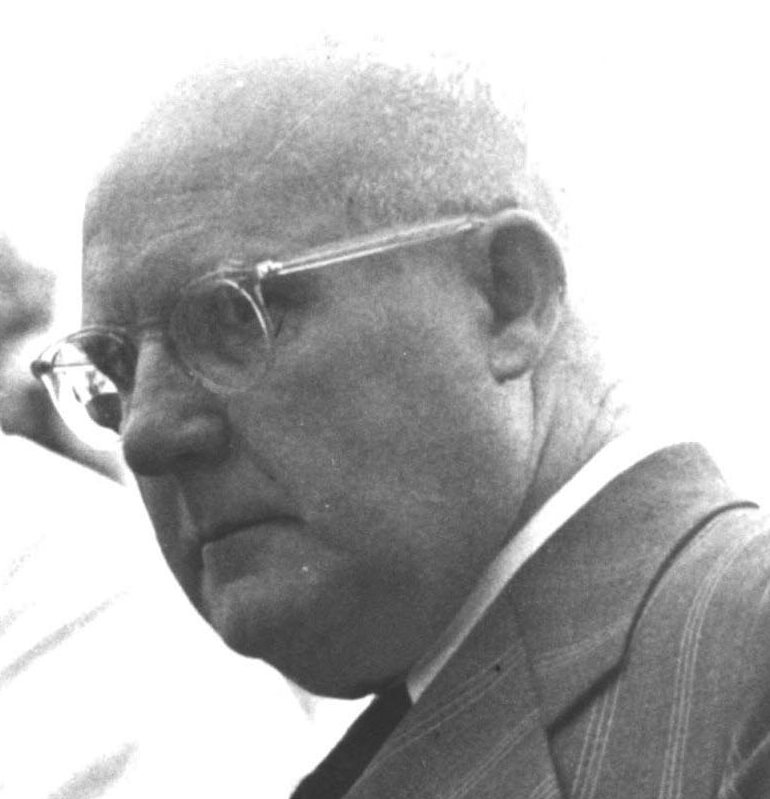
John R. Howitt (1891-1985) Psychiatry of Toronto died on 31 August 1985, halfway through his 94th year. He was buried on September 4 in Guelph, Ontario, where his parents and siblings were already buried. John received his M.B. in 1915 and his M.D. in 1928, both at the U. of Toronto. He specialized in psychiatry and eventually retired as superintendent of Ontario Hospital in Port Arthur. In addition to membership in various medical societies he was a Fellow of the Royal College of Physicians and of the American Psychiatric Association. A very-long-time member of ASA (later CSCA), he attended almost every Annual Meeting, generally assisted by his nephew, surgeon John Stewart. According to John Howitt's niece Barbara Stewart Ferguson, the few times when "Unc" was physically unable to attend, she listened avidly to her brother's reports of the meetings. John Howitt was a model Christian gentleman of "the old school" but he had a twinkle in his eye and a sparkle in his speech. Born on February 29 in a leap year (1892), John often joked about his missing birthdays, including the one he felt cheated of in 1900. Maybe that's what kept him so young. He was remarkably tolerant of young squirts who held views sometimes radically different from his own.
John was the author (anonymously, because of his government employment) of a pocket-sized 96-page booklet entitled
Evolution: "Science Falsely So-called," a compact summary of anti-evolutionary arguments published by the International Christian Crusade (205 Yonge St., Room 31, Toronto, Ontario, Canada, M513 11\12; 50 cents per copy, plus postage). Including all editions, over 200,000 copies have been distributed. The 20th edition appeared in 1981. Over the years, as each new edition appeared, John would send the
Newsletter editor a copy. I don't know that we ever convinced each other of anything, but I know that I will miss John Howitt.-Walt Hearn.
Newsletter*
top
Charles Hoyle (1949-2009) Chemistry
Passed away September 7, 2009, in Hattiesburg, MS, at age 60. He earned his BS from Baylor and his MS and PhD from Northwestern University. After employment as a researcher at Armstrong World Industries (81 patents) in Lancaster, PA, in 1983 he joined the faculty of the University of Southern Mississippi as professor of polymer science and chemistry. He was internationally recognized as a pioneer in the fields of the photochemistry and photophysics of polymers. He published more than 160 refereed papers, cited nearly 2,500 times. In addition to his research skills, he also excelled as a mentor and encourager of his students. Biography MSU*
top
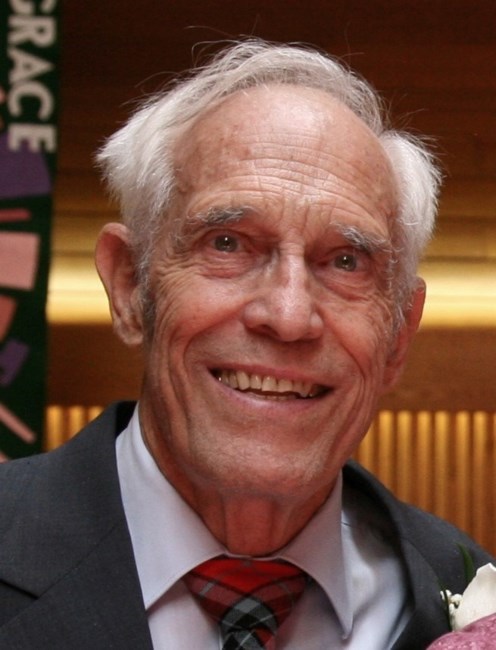 Edward Remick Huff
(1930-2021)
Agricultural Engineer
Edward Remick Huff
(1930-2021)
Agricultural Engineer
Ed Huff, 90, died Tuesday, January 12, 2021. He was born in Pawtucket RI on August 21, 1930, the youngest of three children of Edward Alonzo and Louise Mary (Remick) Huff. He grew up through first grade in Pawtucket, RI, then moved with his parents to the Huff place in Lyman, ME. He walked a mile to school through 8th grade. He and his parents moved to Kennebunk when he attended Kennebunk High School, graduating in 1948. He graduated from the University of Maine in 1952 with a BS in Mechanical Engineering.
After serving in the Army in New Jersey and Germany, he married Ellen Lewis of Jamaica Plain, MA. He worked as an engineer for General Electric Company for 6 1/2 years, then taught at Wentworth Institute in Boston for 1 1/2 years. In 1962 he moved to Maine with his wife and young daughter, where he got an MS in Agricultural Engineering at the University of Maine in 1966. He taught in that department, later called Bio-Resource Engineering, until his retirement in 1997, with two years taken off to obtain his PhD from the University of Nebraska in 1979 and to work at Valmont Industries in Valley, Nebraska.
Ed joined the American Scientific Affiliation in 1985 and attended the annual meetings frequently. He actively taught and supported the harmony of science and Christian faith in classes at his church, the United Baptist Church of Old Town, and contributed significantly to ASA projects on knowing creation. He was also a member of the Peniel Bible Conference of Lake Luzerne, NY, The American Society of Agricultural Engineers, and was a registered Professional Engineer. He was known for his energy, curiosity, humor, and dedication to God, science, and his family. *Dignity Memorial Obituary
top
Charles Hummel (1923-2004) Chemical Engineer. IVCF.
81, died Aug. 16, 2004 after a long battle with vascular dementia. He had a Yale BS, MIT master's in chemical engineering, a Wheaton master's in theology and an honorary doctorate from Geneva College. After a year at Exxon, he joined InterVarsity Christian Fellowship in 1951, became IVCF's interim director, became president of Barrington College. 1965-1974, and returned to IVCF in 1975 as Director of Faculty Ministries and remained there until his retirement in 1991.
He served on the ASA Council from 1985-89 (president 1988). He was an avid sailor and belonged to the Barrington Yacht Club for 30 years. His 15 books included
The Galileo Connection: Resolving Conflicts between Science and
the Bible; The Tyranny of the Urgent and Fire in the Fireplace:
Contemporary Charismatic Renewal. Newsletter*
top
K. Wiley Jarrell (1916-1982) Missionary
Died August 22, 1916, May 1, 1983, 66 years, Allegany County The notice came from daughter-in-law Lorene Jarrell of Taylorsville, North Carolina, with whom Wiley's widow stayed briefly after his death. He had
a degree in theology with work in psychology. He was listed in the ASA Directory as a Missionary Member. Newsletter*
top
Robert E. Jarvis (1927 - 2014)
physical chemistry,
Professor Robert Jervis died on his 87th
birthday on May 21, 2014 after an amazing life. He was devoted to
his Christian faith and his family. He was a distinguished scientist, a
man of principle, but also great humility. Above all he was a man of
integrity, greatly admired and respected by his students and scientific
colleagues around the world and deeply loved by his family. Born in
Toronto, he came from humble roots. A child of the depression, he
achieved an undergraduate degree in Math, Physics and Chemistry in
1949 and an M.A. and Ph.D. in Physical Chemistry in 1952, all at the
University of Toronto.
He worked at the Chalk River nuclear research
facility from 1952-58 pioneering novel methods of trace element
analysis in the environment by applied nuclear chemistry. He joined the
University of Toronto Faculty of Applied Science and Engineering
where he continued his research in applied analytical and environmental
chemistry. He was professor at University of Toronto for five
decades, including as Professor Emeritus in his final years. His work
took him around the world lecturing and consulting with scientists
and scientific bodies and as a visiting professor at the University of
Tokyo, University of Cambridge and University of Kuala Lumpur. He
published over 250 scientific papers.
Robert Jervis received numerous
awards and honours: the W.B. Lewis Medal, Canada's highest nuclear
scientific award; the international Hevesy Medal, for radioanalytical
chemistry; the American Nuclear Society's Emmon Medal; and he was
the first foreign recipient of the Russian Academy of Science's
Ressovsky Medal. He was a fellow of the Royal Society of Canada, the
Canadian Nuclear Society, the Canadian Society for Chemistry and an
honourary fellow of the Atomic Energy Society of Japan and the
Indian Academy of Sciences.
He lived his faith in all aspects of his
life and always travelled with a Bible, seeking to bring God's love
to all. His deepest professional satisfaction came from instilling first
year students with a love of science. His greatest love was his
family - his devoted wife Jean, from whom he was inseparable for 70
years, daughter Ann, son Peter, grandchildren Dylan, Bronwen and Max -
who shared more than a lifetime's worth of happy memories together.
He is also survived by his beloved sister Kathleen.
Obituary
top
Eugene C. Jekel (1930–2025), Chemistry

Eugene Carl “Gene” Jekel entered the fuller presence of God on December 20, 2025, passing peacefully at the age of 95. A faithful servant of God, Gene took great delight in reading and reflecting on Scripture. He was deeply devoted to his family, taking them on numerous camping trips throughout the lower 48 states, and was equally dedicated to his church and his profession.
Gene was born in Holland, Michigan, on December 19, 1930, a descendant of the Pyle family of Zeeland, Michigan. He grew up on his family’s farm in Zeeland, attended the one-room New Groningen Schoolhouse through eighth grade, and graduated from Zeeland High School in 1948. He went on to graduate cum laude from Hope College in 1952 with a Bachelor of Arts degree, majoring in chemistry. He then pursued graduate studies at Purdue University, where he earned his master’s degree in chemistry and met his future wife, Elaine Zimmerman. They were married on August 15, 1960.
In 1955, Gene began his teaching and advisory career at Hope College, a vocation that would touch the lives of thousands of students through his wisdom, guidance, and encouragement. During the 1962–1963 academic year, he took a leave of absence from Hope College to return to Purdue University, where he completed his PhD in inorganic chemistry.
During his tenure at Hope College, Gene served two three-year terms as chair of the Department of Chemistry and became coordinator of the General Chemistry lecture and laboratory courses beginning in 1976. In 1977, he was appointed Hope College’s Chief Advisor for the health professions and served as faculty sponsor for the Michigan Beta Chapter and the national honorary Alpha Epsilon Delta. He also served as a reader for the national AP Chemistry Examination. In recognition of his excellence in teaching college chemistry, Gene received the National Catalyst Award from the Chemical Manufacturers Association in 1985. That same year, he was honored with Hope College’s Distinguished Alumnus Award, and in 2024 he received the Milestone Alumni Award.
From 1970 to 1971, Gene took a sabbatical from Hope College and moved his family to California, where he served as a visiting professor of chemistry at the University of California, Berkeley.
In addition to his work at Hope College, Gene directed the first of twenty-four National Science Foundation Summer Workshops in 1964. With Elaine serving as his administrative assistant, these programs reached more than 1,000 high school chemistry teachers from across the nation who attended workshops at Hope College. Gene and Elaine, who also held a PhD in chemistry from Purdue University, later co-authored a compilation of laboratory experiments developed from these workshops.
Gene and Elaine became active members of the Hope Academy of Senior Professionals in 1993. Following their retirement in 1997, they enthusiastically embraced travel, exploring the United States and Canada by motor home and joining U.S. and international tour groups that took them all over the world.
A devout Christian, Gene was a dedicated member of Third Reformed Church. He served several terms as an elder and three terms as Vice President of the Consistory, taught Sunday School, and was an original member of the men’s Sunrise Saints Bible Study. He attended faithfully every Thursday morning through this past December.
Gene joined the ASA in 1955 when he began teaching at Hope College. In 1965 he was elected president of the Western Michigan section of the ASA. He was elected an ASA Fellow in 1978.
top
Deryl F. Johnson ( - 1999) Physics, Bible of Knoxville, TN. Some of us will remember Deryl from his frequent attendance at ASA Annual Meetings, a familiar sight with his invariably pleasant disposition despite his leg braces and canes. Deryl was a physicist with an interest in the history of science. whose WWII wounds severely affected his mobility and he had to move from physics to philosophy and biblical literature. He began his careering teaching philosophy at London College of Bible and Missions, Ontario, beginning September 1964. He had completed his residence work for the PhD in Religion at the State University of Iowa.
His dissertation was on the Princeton Theologians and their attitudes toward Darwinism, 1859-1929. He gave a talk on the subject at the 1977 Annual Meeting He then moved philosophy and religion at Frederick College, Portsmouth, Virginia. He later taught at Methodist College, Fayetteville, North Carolina. Finally he taught Bible at Warner-Southern College in Lake Wales, Florida from 1975 to his death Deryl wrote from a V.A. hospital in Tampa in spring 1992, requesting our prayers. He was suffering from osteomyelitis of the skull due to a WWII head wound. He was beginning a heavy regimen of antibiotics, given six times daily for a month.
Newsletter*
top
Duane E. Johnson (1928-1976) Chemistry
We have been notified by Mrs. Shirley Johnson of Los Gatos, California, that her husband, Duane E. Johnson, died of leukemia on November 29, 1976. Duane, 47, was a research chemist for IBM Corporation. Shortly before his death, company officials came to his room at Stanford University Hospital in Palo Alto to present him with a substantial bonus in recognition of his discoveries in electron-beam litography, which make possible the production of finer lines in printed circuits. He had been hospitalized for nearly two months. Duane, a native Iowan and graduate of Iowa State, received his Ph.D. from UCLA. He was active in Calvary Baptist Church of Los Gatos, where his funeral service was held. Besides his widow, he is survived by two sons and a daughter in Los Gatos, a brother in Iowa, and a sister in Nebraska.
Newsletter.
top
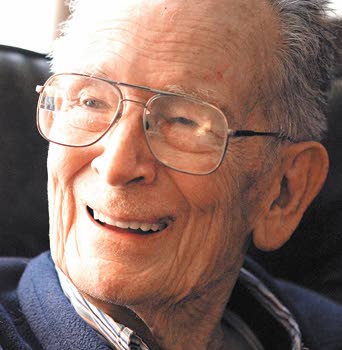 Lawrence
H. Johnston (1918-2011)
Nuclear physicist.
Lawrence
H. Johnston (1918-2011)
Nuclear physicist.
Lawrence H. "Larry" Johnston, one of the last survivors of the Manhattan
Project, died peacefully Sunday at his home in Moscow, Idaho. Millie, his wife
of 69 years, and family were with him. He was 93.
Johnston designed the first atomic bomb detonator and is believed to be the only
eyewitness to all three 1945 atomic explosions - at White Sands, N.M., and in
Japan at Hiroshima and Nagasaki, events that killed some 200,000 people and
ended World War II. Johnston was assigned to measure the impact of the bombs.
Johnston had just completed his bachelor's degree and begun graduate work at
University of California, Berkeley in 1940, when he agreed to follow his mentor,
Nobel-prize-winning Luis Alvarez, to Boston to help develop microwave radar at
MIT's Radiation Laboratory. By 1943, Johnston had helped develop a
ground-controlled-approach radar blind landing system for airplanes, an
invention critical to the success of World War II Battle of Britain and the
post-war Berlin Airlift.
Both Alvarez and Johnston then moved to Los Alamos,
N.M., to help develop the atomic bomb.
Back at Berkeley after the war, Johnston helped Alvarez build a new type of
proton linear accelerator. Johnston then headed construction of a larger version
of it at the University of Minnesota, and worked on another at Stanford
University. In 1967, the Johnston's moved to Moscow where he served as physics
professor at the University of Idaho until 1988. He focused on nuclear physics,
lasers and molecular spectroscopy. After retiring, Johnston continued to give
talks about his experiences to all ages, from elementary school children to
scientists. A natural teacher, Johnston used many occasions as teachable
moments. When fishing, gutting fish meant also examining contents of the fish's
stomach and asking his kids to decipher its last meal. "Hmm, caddis fly larvae."
Friends and family teased Johnston that his interest in explosives went back to
his birth on Chinese New Year - known for its fireworks - Feb. 11, 1918, in
Shantung Province, China, to Christian missionaries. A picture at age 3 shows
him grinning and holding a large Chinese firecracker. The family spent Larry's
fifth summer traveling across the USA in a Model-T Ford, paying farmers 25 cents
to camp on their property and visiting national parks. Ever after, Larry loved
camping and the outdoors.
Johnston was asked in post-war years whether he regretted working on the A bomb.
"My answer," Johnston told an MIT interviewer in 1991, "is that I felt very
privileged to be part of an effort that promised to end the war abruptly, and
which had the prospect of saving many lives, both Japanese and American."
Johnston, known for his wit and kindness to all, held this view even during
heated debate over the ethics of the bomb in more recent decades.
Johnston devoted much of his retirement to improving the relationship between
modern science and the Bible. He was a member and later a fellow of the ASA from 1950 until his
death in 2011. A proponent of intelligent design, Johnston sought
understanding of evolutionary biology from the University of Idaho's Holly Wichman and James Foster through weekly lunchtime sessions that continued until
his death.
He enjoyed jousting with younger ASAer's on the list serve.
Millie and Larry treasured two trips to Israel where they worked on Biblical
archeology projects and Larry helped Israeli scientists use sonar to locate
potential dig sites. Newsletter,
Obituary
top
Walter Colin Johnson (1922-2005) Psychiatry
Walter went to be with the Lord on Feb. 19, 2005 at age 83. Born in England, he graduated from Malvern C. and U. of London Guys Hospital. He served in the Royal Army Medical Corps and practiced medicine in England for several years. He moved to the U.S. in the 1950s and served on the staffs of several New England hospitals. He was a pioneer in treating depression and was a member of the American Psychiatric Association, the Massachusetts Medical and Dental Society and the Christian Medical and Dental Society.
He attended Park Street Church in Boston and later First Congregational Church in Boxford, MA. On a 1982 ASA questionnaire he wrote: We should stress inerrancy not only in matters of faith and practice, but also in science, history, and geography. At the same time, we should not bend science to fit into rigid or preconceived notions of biblical interpretation ... His papers in the Journal of the American Scientific Affiliation included "Only a Machine, or Also a Living Soul?", "Depression: Biological Abnormality or Spiritual Backsliding?", "A Neglected Modality in Psychiatric Treatment: the Mono-amine Oxidase Inhibitor", and
"Demon Possession and Mental Illness". Johnson made several missionary trips to South America. Newsletter*
top
C. Weldon Jones (1953-2003) Biology
Professor of Biology at Bethel College passed away Sept.21, 2003 at age 50 after a brief illness. After obtaining A.B., A.M. and Ph.D. degrees from Harvard, he was a teaching fellow at Harvard before joining the Bethel faculty in 1982.
He was also a visiting scientist at Mayo Clinic, enabling Bethel students to participate in research projects there. Carnegie Foundation for the Advancement of Teaching and the Council for the Advancement and Support of Education named him Minnesota Professor of the Year in 1995. He was listed three times in Who's Who Among America's Teachers. Weldon kept a small poster in his office that read: "Make Them Think." He remarked: "That statement, more than any other, articulates my philosophy as a teacher. I cannot be satisfied with simply providing students with 'the facts' My hope is that I have helped to produce sensitive students who are able to leave college as working biologists with creative and critical minds and who take with them a bit of my love for the field." Weldon experienced seizures several years ago and this summer had brain lesions and partial paralysis. While undergoing treatment, he experienced complications that ultimately led to respiratory failure. Detailed tribute at www.bethel.edu/Special_Events/newsrel/2003articles/09-22-03jones.html.
Newsletter*
top
Charlotte L. Jone (1950-1983) Biology
Served the University of Arizona, Tucson. She died on August 29 at the age of 33. Charlotte was born in Lafayette, Indiana, and received her bachelor's degree in biology in 1972 from Purdue, where she was a member of Phi Beta Kappa and Phi Kappa Phi. She received her Ph.D. in 1979 from U.S. San Diego, then did postdoctoral work in the Dept. of Cellular, Viral, and Molecular Biology at the U. of Utah Medical Center in Salt Lake City before moving to Arizona. While at Utah Charlotte contributed her comments, "No Line Between Safe and Dangerous Knowledge," to a symposium on recombinant DNA in the June 1978 JASA (included in the ASA reprint collection,
Making Whole Persons: Ethical Issues in Biology & Medicine, edited by Robert L. Herrmann). Charlotte Jones was buried in Peel, Arkansas, where her parents now live. She is survived also by two brothers who live in Portland, Oregon.
Newsletter*
top
 Edwin Karlow (1942-2025) Physicist
Edwin Anthony Karlow, 82, passed away unexpectedly from a heart attack on March 28, 2025. Edwin was born to Milton and Vera Karlow on May 13, 1942, in West Hollywood, California, where he grew up and attended Glendale Adventist Academy. He attended Pacific Union College for 3 years and graduated with a Bachelor of Science in physics from Walla Walla College in 1966. Edwin married Marilyn Edna Cross of Walla Walla, Washington, on September 7, 1964, and they lived in Walla Walla while he finished his university studies. In 1971, Edwin graduated from Washington State University, having completed both a Masters and a PhD in physics.
In 1969, a fellow graduate student at Washington State University told Edwin about the American Scientific Affiliation (ASA). He joined the ASA that year and remained a member for the rest of his life. He contributed a suggestion for two “Sabbath Problems” in the October/November 1977 issue of the Newsletter of the ASA and CSCA.
Columbia Union College in Takoma Park, Maryland, hired Edwin as an assistant professor, and the family moved in the late summer of 1971. After being recruited to Loma Linda University, Edwin became chairman of their physics department in 1978, and the family moved to La Sierra, California, that summer. Between 1978 and 2008, when he retired, Ed was involved in a host of activities from university governance to faculty senate to WASC accreditation to audio/visual teams to music recording to university honors program to educational laboratory instrumentation. Through all of those activities, Ed’s core passion remained classroom instruction; he never lost his deep love for the students, and he counted it his privilege to teach.
After his retirement from La Sierra University, Edwin and Marilyn returned to Walla Walla, where they lived happily until Marilyn’s passing on December 7, 2014. Barbara Herdman and Edwin were married on April 10, 2016, and they relocated to Barbara’s hometown of Tillamook, Oregon, soon thereafter. While in Tillamook, Ed continued to pursue his interests in physics education, RV camping, and the intersection of faith and science. Ed left this world at peace.
top
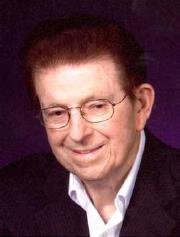
Carroll Karkalits (1916-2013) Chemical Engineer
Olin Carroll Karkalits, Jr., 96, of Lake Charles, LA passed away in his home on May 6, 2013 with his devoted wife of 51 years, Barbara, by his side. He is survived by his wife, two children, and five grandchildren.
Carroll was born on May 31, 1916, and received his Bachelor's of Science from Rice University and his Master's of Science and PhD from the University of Michigan, all in Chemical Engineering.
After a distinguished career in industry, he served as the first Dean of College of Engineering and Technology at McNeese State University for thirty-four years, retiring in 2006. In 2008 he was named Dean and Professor Emeritus at McNeese State University. Carroll was a Registered Professional Engineer in Louisiana and Texas and was elected Fellow of the American Scientific Affiliation and American Institute of Chemical Engineers.
He loved the Lord, was a lifelong student of God's Word and a member of Trinity Baptist Church for over forty years. He taught Bible Study and Sunday School for over seventy years and helped lead numerous people to the Lord. He also served on the Board of The Southern Baptist Theological Seminary in Louisville, KY from 1988 to 1998.
Carroll joined the ASA in 1951. He was active at the local section and regional levels, often organizing meetings and hosting speakers. He published nearly ten book reviews in the Journal of the ASA. He and Barbara attended many annual meetings and supported the ASA for 62 years.
top
Martin Karsten (1909-1987), Biology
Born in Michigan 12 Nov 1909; Married Francis Mastenbrook in 1935. Degrees from Calvin and U. Michigan. died on 19 March 1987 in Grand Rapids, Michigan, after years of failing health. He joined the ASA in "1941", attended Annual meetings in 1948, and 1961. The Aug/Sep 1978 Newsletter noted: "I finally hung up my teaching duds last December." Those were well-worn duds! Martin had taught biology for a total of 44 years, over 30 of them at Calvin College in Grand Rapids, MI.
He "retired" from Calvin in 1975 but stayed on to teach one course per semester for the next two and a half years. The Karstens bought a condominium in nearby Kentwood, which Martin redecorated himself before moving in on April 1. They've also been helping a Vietnamese family sponsored by their church until the father, an M.D., could find employment.
Newsletter*
top
John E. Katon (1929-1996) Chemistry
A native of Ohio, born 5 Jan 1929. The Toledo native came to Miami after working as senior research chemist for Monsanto Co. and as research group leader with Monsanto Research Corp. He joined the chemistry dept. at Miami U., in 1968, where he directed the molecular spectroscopy lab up to his death October 13, 1996 at age 67. John was a former scoutmaster and received its Distinguished Service Award in 1995 and the Outstanding Chemist award in 1979 from the Cincinnati chapter of the American Chemical Society. Ed Yamauchi,
Newsletter*
top
Harold H. Key (1914-1991 ) Anthropology
Of Signal Hill, California. He died 5 Nov 1990 in Los Angeles. Born. in 1914 in Jacksboro, Texas, Harold earned a Ph.D. in anthropology at the U. of Texas. According to ASA records, he spent 20 years with Wycliffe Bible Translators and at last report was a consultant for Evangel Bible Translators. He wrote Bolivian Indian Tribes, 2 editions, the first in 1967. He was professor emeritus of anthropology and linguistics at Cal. State University at Long Beach, and a Fellow of ASA.
Newsletter*
top
Donald E. King ( -1976) Hospital Chaplain passed away unexpectedly on October 14, 1976, from a coronary. Donald was chaplain at Lebanon Community Hospital, Lebanon, Oregon. He gave a talk "The Ethics of Medical Miracles." at a local section Meeting is 1973. Don was a member of the Mennonite Community in Lebanon and was ordained a Deacon in the 1970s.
Newsletter, Mennonite Newsletter*
top
Glenn Kirkland (1919-2008) Physics
A Fellow of the ASA, Glen died on Aug. 11, 2008 at age 89. He had joined the organization in 1957. A PA native, He graduated from Taylor-Allderdice High School in Pittsburgh , then earned both bachelors and masters degrees in physics from nearby Carnegie Institute of Technology. He also completed the coursework toward a doctorate in physics, before World War II service interrupted his studies.
He moved to Silver Spring ,Maryland in 1945, and began working for Johns Hopkins University Applied Physics Laboratory. He became a member of their Principal Professional Staff, and retired in 1984 after 39 years of service. At APL he helped develop the VT fuse, a supersonic guide missile telemetry system, the AEGIS weapon system, and also performed missile flight test analysis.
Paul Arveson noted (1980s): "Glenn was a long-time leader in ASA in the Washington-Baltimore Section (note his activity in the early 60s). I attended Fourth Presbyterian Church with Glenn, and got to know him better when we worked together copying tapes for the C. S. Lewis Institute in the1980s. What impressed me about Glenn was his cheerfulness ... He had an optimistic outlook on the world, and he demonstrated that most clearly when his wife, Grace, became a victim of Alzheimer's ... [Glenn] founded the Alzheimer's Disease Association of Maryland, one of the first such organizations in the country, to provide support and raise awareness of this disease ... He went on to become one of the country's leaders in this area ... He was one of the finest men I have ever met." Glenn of Bethesda, Maryland, took early retirement in 1984 from his position at the Johns Hopkins APL so he could care for his wife Grace, stricken with Alzheimer's disease. He has also devoted much time to educating the public about Alzheimer's, a form of progressive senility that can be almost as devastating to family caregivers as it is to the person with the disease. Grace can still walk but can now speak only short sentences. She becomes confused and disoriented and does not always recognize Glenn. "I am so grateful for the help God provides through the Christian family," The fellowship of ASA meetings means a lot to Glenn, whose stress-tested faith could cheer anyone through dark days, weeks, months-or years. When we asked him at Houghton College how he managed to get away for the Annual Meeting, he said he had left Grace in a "foster home for adults" that provides temporary care for Alzheimer sufferers and temporary respite for their caregivers.
In 1949 Glenn married Grace Mize, an office assistant at the Treasury Department. They had one child, Evelyn, in 1951, who married Dr. M. Blaine Smith in 1973. In 1977 at the age of 66, Grace was diagnosed with Alzheimer's disease and began the slow, inexorable deterioration of her mental capacities, until she died in 1990. A year later Glenn married Barbara Shytle Denny, and they enjoyed seventeen years together. -Ed.)
Newsletter, Nehemiah Ministries Obituary *
top
John A. Knapp ( -1997) Medical Doctor.
Died Jan. 12, 1997. John interned at Cook County Hospital in Chicago (dietetics) and taught student nurses as a missionary in Jordan in 1952-54. Note on his 1965 activity within the psychiatric profession while employed in Charlottesville, Virginia However, she didn't quite finish her degree since my father, then a country doctor who delivered babies for $25, then $50, each gave up his family practice in TN to undertake a residency in psychiatry at the Univ. of VA in Charlottesville. Attended 1987 Annual Meeting.
Newsletter*
top
J. Raymond Knighton, Jr. (1922-2003) Medical Doctor
Born June 1, 1922 81, died Aug. 30 2003 of congestive heart failure at 81. He was a graduate of Wheaton College IL and the Hahnemann Medical School of Philadelphia. Knighton was the first executive director of the Christian Medical Society. In 1954, when an acquaintance at a pharmaceutical company offered him a batch of extra medicine, he gave the supplies to medical missionaries and launched a branch of the society called Medical Assistance Programs (MAP). Nine years later, MAP became an independent agency and Knighton became its president. In addition to providing medicine and supplies to the poor worldwide, Founded in Chicago, MAP International moved to Brunswick in 1985. It has about 125 employees worldwide and provides about $150 million in supplies annually to hospitals, clinics and refugee centers. It also provides health education and training programs from offices in Africa and Latin America.
Knighton's honors have included knighthood in the Order of Christopher Columbus from the Dominican Republic and a Layman's Citation for Distinguished Service from the American Medical Association. Wheaton College,
Newsletter*
top
Maurice F. Knott (1914-2008) Chaplain
Born in Australia died on June 3 at age 94. He was a military chaplain during World War II. After discharge, he became active in real estate in the Irvine, CA, area. He joined ASA in 1997. One of his favorite hobbies was sailing, and he was out on the ocean just two months before his death.
Newsletter*
Was born in Oakland, CA, "enjoyed his association with the ASA very much," writes his wife, Ali. Bob died Feb. 21, 2000 of a stroke. Born in Oakland, CA, he studied philosophy at U.C. Berkeley, apologetics under Cornelius Van Til at Westminster Theol. Sem., and spent two years at Union Theol. Sem., where he studied under Paul Tillich and Reinhold Niebuhr. Then in the Netherlands, he met his wife and did doctoral work under Prof. S. U. Zuidema at the Free U.
In 1958, he returned to teach apologetics at Westminster. Bob retired in 1995, and has been active in the Orthodox Presbyterian Church for most of his life. In January 1999, fluent in Dutch, he taught "A Christian Worldview" in Suriname under an OPC mission there. Bob was a current member of the editorial board of
Perspectives on Science and Christian Faith. Newsletter*
top
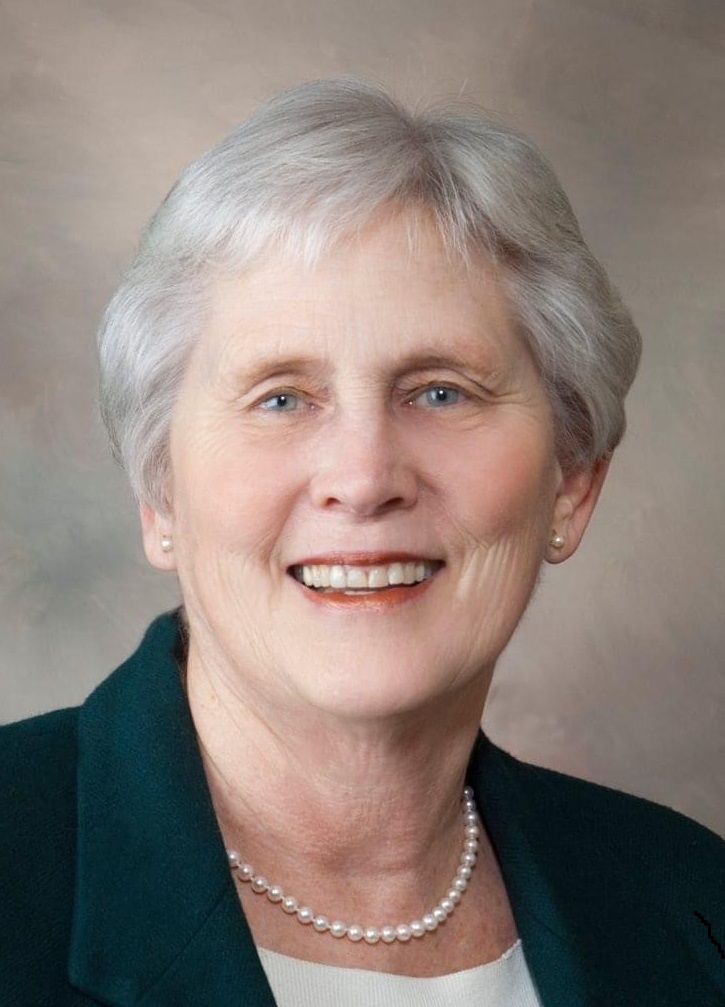
Mary H Korte (1946 -2023) Environmentalist
Mary Hurn Korte passed to eternal life in her sleep at home on Sunday, July 30, 2023, at age 77 after a 10-year struggle with heart failure. She was born on March 5, 1946, in Boston, MA, to Eugene W. Hurn and Lola (Gates) Hurn of Henrietta, TX. She is survived by her husband of 54 years, Don W. Korte, Jr., her son Don “Trey” Korte III, her son-in-law Jamie Schounard, and her grandchildren Lizzy, Brooke, and Erin.
As the daughter of a US Navy Commander, Mary lived in Boston, Philadelphia, New Orleans, Tokyo, northern Virginia, and then Carmel, CA, where she graduated from high school. She attended The College of William and Mary where she excelled both academically and in women’s athletics. She was a four-year starter in field hockey and three in lacrosse and was inducted into the Phi Beta Kappa Honor Society. More importantly, William and Mary was where she met Don whom she married after completing her master’s degree at Southern Illinois University in 1969.
Before the birth of Trey, Mary worked as a high school teacher and medical researcher. Her research at St. Jude’s Children’s Hospital in Memphis, TN, was instrumental in determining the calcium-dependence of an important regulatory molecule now known as calmodulin. As an Army wife, Mary established homes in Silver Spring, MD; Presidio, CA; San Francisco, CA; and Columbus, OH, for Don and Trey and did not resume teaching (at Columbus State Community College) until Trey was in high school.
After the Army, Mary and Don took positions in the Department of Natural Sciences at Concordia University Wisconsin. While at Concordia, Mary completed a doctorate from Trinity College/Liverpool University. For over twenty years, Mary taught a variety of science courses at Concordia and was also Director of the Master of Science-Environmental Education program. In addition to science, Mary loved theology obtaining a diploma in Christian Apologetics from The International Academy of Apologetics, Evangelism, and Human Rights in Strasbourg, France. After her retirement, she thoroughly enjoyed being a docent at the Milwaukee County Zoo.
Mary immensely enjoyed all aspects of God’s creation especially when she could experience it firsthand. Her favorite activities were raising/showing dachshunds, riding horses, and being at the beach and the ocean whether sailing on it or snorkeling in it. Some of her happiest times were conducting fish surveys for the Reef Environmental Education Foundation in the Caribbean and the Hawaiian and Society Islands. Mary was a consummate teacher whose passion was to infuse her students—whether secondary, collegiate, or at the zoo—with the same love, respect, and awe for nature that she had.
Mary joined the ASA in 2000. She presented a paper at the 2010 ASA annual meeting on “Faith and Science in Environmental Policy-Making.” At the 2011 ASA annual meeting she co-authored a paper with her husband, Don Korte Jr, on “Bluff Restoration and the Concordia Center for Environmenal Stewardship.”
top
Dennis L. Krueger
( -1967) psychology, Joined the ASA in 1966, died on 30 June 1967 He was a clinical psychology trainee at the Veterans Hospital, Los Angeles.
Newsletter*
top
Richard W. Kruse (1929-1969) Science Teacher
Was employed both as a science instructor in the Syracuse public school system and as a research associate in pharmacology at the S.U.N.Y. Upstate Medical Center. With A. Farah he had recently published "The Relation of Cellular Sulfhydryl Changes to the Renal Action of the Antidiuretic Hormone",
J. Pharm. & Exptl. Therapeutics 161, 169-182 (1968). Richard held a B. S. (1951) from Hartwick College and M. S. (1955) from Albany State College for Teachers.
He was a member of Sigma Xi, National Science Teachers Association, A-I.B.S., International Oceanographic Foundation, and National Wildlife Federation in addition to ASA, of which he had been a member since 1966. He had worked with the Christian Service Brigade of the North Syracuse Baptist Church. He also served as a radiation chief in the local civil defense agency.
Newsletter *
top
Boris Kuharetz (1921-1994) Astrophysics,
A native Yugoslavian, he died in late Sept. 1994 at age 73. He emigrated as a child to the UA, graduating from Dickerson High School 1n 1938. He was an astrophysicist, with training at Columbia U. and Stevens Inst. of Technology, where he received his Ph.D. in physics. He was last at the New Jersey Institute of Technology in Newark, and heard of the ASA through the late Jim Neidhardt. He was active in the work of the NY Section of the ASA.
Newsletter*
top
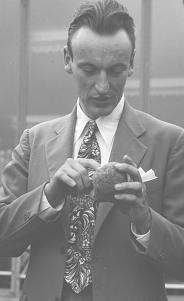
J. Lawrence Kulp (1921-2006) Geochemistry
Larry passed away on Sept. 25, 2006 at age 85, as the result of a logging accident. From Plymouth Brethren roots, he graduated from Wheaton, earned a doctorate in chemistry from Princeton, and then joined the department of geology at Columbia. An early member, Fellow, and Council member he was a major influence in moving the ASA from a young earth position via carbon dating..
At various times, Larry was professor of geochemistry at Columbia University, vice president for research and development at Weyerhaeuser Company, director of research of the National Acid Precipitation Assessment Program, affiliate professor at the University of Washington, a consultant in environmental and energy affairs, and owner of Teledyne Isotopes.
Kulp had a strong influence during the formative years of the ASA. Tim Deibler says, "My understanding is he was a giant in his influence, highly respected by both Christian and non-Christian scientists, irenic, and at least as influential as Bernard Ramm, since Kulp was a trained and working scientist, and highly respected at that." Walt Hearn recalls Kulp's reaction when someone presented a paper on a position with which he disagreed: "Instead of shredding him, Larry took him aside and gently tried to change his views." Tim Deibler, Walt Hearn
Newsletter*
top
Holfger Christian Landmack (1884-1962), physical fitness
Died in Plainfield, N.J. of an apparent heart attack. Born19 October 1884 28 30 Frederiksberg Denmark. Death: 16 March 1962 Plainfield, New Jersey. A native of Denmark who came to the U.S. in 1912. Married Ida Jepperine Hansen 20 December 1912.
Langmack taught physical education., physics., mathematics and character building in such institutions as Minnesota State Teachers, College, University of Minnesota, New Jersey State Teachers College, Battle Creek and the Naval Academy at Annapolis. After his retirement, Dr. Langmack devoted his time to philosophical research, particularly the unification of science and religion through a concept of mathematical relativity. His publications include:
"God and the Universe", "Let There Be Light", "God's World and Science", and
"Scientific Faith and Logical Science", and to be published "Science By The Way of The Cross".
He founded and directed the Kolding Ny Realskole before immigrating to the United States with his recently-married wife, who like himself was a skilled gymnast and whom he met at the 1912 Olympics where, as a representative of Denmark, she placed second in gymnastics.
His American career began with the teaching of Danish gymnastics and physical education in Hutchinson, Minnesota (1913-1915). This was followed by physical education teaching positions and professorships at Seward Junior High School in Minneapolis, Minnesota State Teachers College, the University of Minnesota Summer School, New Jersey State Teachers College in Trenton, Savage College in New York City, and briefer appointments at such institutions as Cornell and Temple Universities. He also served as physical culture specialist at Battle Creek College (1926-1928). From 1928 to 1954 he was specialist in physical culture and character education at Paul Junior High School in Washington, DC, during which period he also lectured at the University of Maryland, George Washington University, and the U.S. Army Parachute School at Ft. Benning, Georgia. After his retirement in 1954, he devoted much time to his life-long interest in the unification of science, philosophy, and Christianity.
The most prominent publications of Mr. Langmack are his books entitled
Football Conditioning (NY: A. S. Barnes Co., 1921), which presents a progressive exercise program based upon Danish gymnastics and carries an introduction by Knut Rockne, the famous football coach at Notre Dame University, and
God and the Universe (NY: Philosophical Library, 1953) which outlines the story of creation using mathematical symbolism and concepts of relativity and absoluteness from the fields of physics and biology.
The following statements from the tribute to his memory presented by his friend, Dr. Spencer Miller, Jr., former Undersecretary of Labor (under Eisenhower), at his funeral indicate the great respect in which he was held by his friends:
When I first met Holger Christian Langmack I was immediately attracted to him by his dynamic energy, the catholicity of his interests, the spiritual depth of his thought, and his utter dedication to the service of Almighty God. As our acquaintance developed into a loving friendship I came to value his intellectual integrity and his moral courage in addition to the four other qualities of his sterling character No movement for human betterment was alien to his spirit. Our last such pilgrimage together was the Annual Presidential Prayer Breakfast in Washington and the Annual Conference of International Christian Leadership. What an inspiration it was to him and Ida and what a joy for him to meet so many Christian leaders the world around. They recognized in him one of their own. When I introduced him to Billy Graham and Abraham Vereide his eyes sparkled as he met these two great spiritual leaders and outstanding examples of God-guided lives.
To Washington he carried a draft letter to the President of the United States which outlined a plan to meet the threat of atheistic communism by the establishment of an Academy of International Freedom under God. It was a unique and profound conception. It would have heartened President Kennedy and Holger had he been able to present this inspired idea in person to the President
On the lapel of his coat he wore a gold yoke-fellow button� the symbol of the universal ministry as developed by Dr. Elton Trueblood. He could subscribe whole-heartedly to the six-fold discipline of this ministry because it was the pattern of his life. When Our lord said,
"take my yoke upon you," it was a symbol of our shared Burden. The yoke is not an extra weight to bear but is actually a means of support to ease the load.
His life was Christ centered. He never seemed so truly himself as when he was praising and thanking God by song or the spoken word. In all he has written over a hundred songs of praise At the close of his book, God and the Universe, are two lines of his which are the testament of his faith and his belief in the Victory of Christ:
Newsletter, JASA, June 1963, pp. 65-66 *
top
T. H. Leith (1924-1986) History and Philosophy of Science
Of York University in Ontario, whose illness from incurable cancer was recently reported. Harry Leith held joint doctorates in science and philosophy from M.I.T. and Boston University and taught courses on the environment and natural science at York's Atkinson College. He was one of only eight faculty members at York ever designated a University Professor. He was an advisor to Ontario's famous Science Centre and a long-time Fellow of ASA. He is survived by his wife Janet, three children, and a brother.
He taught science couses at Gordon College prior to his move
to Canada. Harry died on July 13, 1986 at age 62. Tribute at his memorial service in Toronto was paid by CSCA member Bob Jervis.
Newsletter*
top
Paul A. Lepse (1937-2019) Chemist
Paul Arnold Lepse passed away July 19, 2019 in Seattle of cancer at age 82. He was born in Seattle on March 18, 1937, to Henry H. and Olga (Anderson) Lepse. Academically gifted, Paul rapidly completed his education at Ballard High School, Seattle Pacific College and a doctorate in organic chemistry from the University of Washington. The title of his dissertation was “Kinetics of the Oxidation of Benzaldehyde with Chromyl Acetate.” He married Jean Marie Mandt in 1961, a marriage which lasted 58 years.
After a year of post-doctoral research in Munich Germany he joined the faculty at Seattle Pacific College (later University) where he taught chemistry for 39 years. A couple generations of dentists, physicians, university professors, and research scientists are survivors of his rigorous organic chemistry courses. Paul was an avid reader and he enjoyed baseball, classical music, hiking and mountain climbing. Paul was active in his church, singing in the choir, serving at times as treasurer, recording secretary and church chairman.
He was active in the American Chemical Society, serving several terms as an officer, including going through the 3-year chair rotation, in the regional Puget Sound Section. He was very interested in the relationship between science and faith and enjoyed attending conventions of the American Scientific Affiliation to explore this topic. As a member of the Highpointers Club, he reached the geographical highpoints of 42 of the 50 US states. In 2001 he attended a family reunion in Norway including visits to the original homes of his grandparents and to the island of Lepsøy from which the family name originates. In 2015 Paul and Jean moved to Ida Culver House Broadview. Paul enjoyed meeting new friends at this retirement home and it was here that he received good care in the difficult last months.
top
Gordon Rowland Lewthwaite(1925-2013) Geography.
Born August 12, 1925 in Oamaru, New Zealand. Died peacefully,
September 18, 2013, at home in Northridge, California. The next to last
child in a family of 10 children, he attended and fondly remembered
Waitaki Boys High School in Oamaru.
Following his undergraduate degree at the University of Otago, and
Masters degrees in Geography and History, he came to America as a
Fulbright Scholar to pursue a PhD in Geography at the University of
Wisconsin, where he met his wife, Lydia. After receiving his PhD in
1956, he taught at the Universities of Oklahoma and Auckland (NZ) before
joining the then newly founded California State University, Northridge
in 1959. He taught Geography at CSUN for 32 years before retiring in
1992.
Gordon joined the ASA 1965. He served as a member of the
Editorial Board of PSCF, contributed articles and book reviews and spoke at
annual meetings. He showed how a geographer could contribute to biblical
scholarship with his work on the seven churches of the NT.
His colleagues at CSUN remember him as gentlemanly, upbeat, and
friendly, and a serious scholar staunchly committed to his wide-ranging
research in cultural and historical geography. He maintained his
scholarly activity well into his last year of life. His fair-mindedness
and intellectual manner extended also to his roles in his church where
he taught Sunday school, chaired committees, and sought peaceful
resolutions and scientifically tempered insights over many years. He was
well known by colleagues, friends, and family for his irrepressible
sense of humor, contributing many a pun to liven most any gathering.
He was survived by his wife of almost 60 years, Lydia, by
daughters Rebecca (Gaby) and Karen (Jerry), and his brother
David (Isabel), and many nieces and nephews in New Zealand and
the US." Karen Lewthwaite,
Newsletter.*
top
Lydia Luft Lewthwaite (1925-2017)
Lydia Luft Lewthwaite, an associate member of the ASA, passed away June 12, 2017, of Alzheimer’s disease. Lydia was born in Sheboygan, Wisconsin and received her Bachelor’s degree from the University of Wisconsin in Madison. There, she met and later married ASA member, Dr. Gordon Lewthwaite. The Lewthwaites lived in Auckland, New Zealand and then in Northridge, California, where they were active members of the California State University, Northridge community. They traveled widely throughout their lives. Lydia was 92 when she died.
topL. Gaunce Lewis, Jr. (1950-2006) mathematics.
He died suddenly of a brain tumor, May 17, 2006, at age 56 in Oswego, NY. On the mathematics Faculty of Syracuse University, he published numerous articles in his field of topology.
He gained the SM'76 and PhD'78.
After Navy service, Lewis taught for three years at the University of Michigan. In 1981 he joined Syracuse University, becoming a full professor in 1993. An expert on algebraic topology, Lewis spent a year as a fellow at Germany's University of Gottingen and two sabbatical years at MIT. He was active with the First United Methodist Church of Oswego. Survivors include his wife, Kathleen Edwards Lewis, SM'75, PhD'80; his mother; and two sisters.
Newsletter*
top
Herbert T. Liefeld (1900-1970) Medical Doctor.
"He passed into the Lord's presence on February 8, 1970", according to his son, Walter L. Liefeld, Professor of New Testament at Trinity Evangelical Divinity School, Deerfield, Illinois. Walt writes: "My dad was a 'beloved physician', a general practitioner who still made house calls and who helped many to find the Lord and grow in Him. He was a deep student of the Word whose theological library far surpassed my own. His membership in the ASA expressed his conviction that God's truth in nature and revelation forms a unity, and his life reflected that unity in its integrity-intellectually, personally, and spiritually."
Newsletter*
top
David Charles Lindberg
(1935-2015) History of Science.
 David, aged
79, died at Covenant Oaks Memory Care on January 6,
2015, after a long, arduous journey with Alzheimer’s
disease. He was born in Minneapolis, MN, on November 15,
1935, to Milton and Elizabeth (MacKinney) Lindberg. Dave
was survived by his wife Greta (Johnson), of
55 years; their daughter Christin Lindberg of
Minneapolis, their son Erik (Liana) of Milwaukee,
and their grandchildren Annie and Dave Buenneke, and
Evjen and Isak Lindberg; his sister Grace (Glenn)
Johnson; his brother Phillip (Anita); and many
nieces, nephews, cousins, and friends.
David, aged
79, died at Covenant Oaks Memory Care on January 6,
2015, after a long, arduous journey with Alzheimer’s
disease. He was born in Minneapolis, MN, on November 15,
1935, to Milton and Elizabeth (MacKinney) Lindberg. Dave
was survived by his wife Greta (Johnson), of
55 years; their daughter Christin Lindberg of
Minneapolis, their son Erik (Liana) of Milwaukee,
and their grandchildren Annie and Dave Buenneke, and
Evjen and Isak Lindberg; his sister Grace (Glenn)
Johnson; his brother Phillip (Anita); and many
nieces, nephews, cousins, and friends.
His degrees include Wheaton College, BA-Physics;
Northwestern University, MS-Physics; and a PhD from
Indiana University in the History and Philosophy of
Science. After teaching for two years at the
University of Michigan, Dave joined the UW in 1967
as a professor in the History of Science department,
where he spent the rest of his career until he
retired in 2001.
During his career he received many
writing, teaching, and service awards; lectured
frequently in the U.S. and abroad; edited
encyclopedic works; and authored many articles and
books on medieval history, and science and religion,
including “Beginnings of Western Science,”
which has been translated into seven languages. He
was devoted to his colleagues, department, and the
UW, also teaching in the Integrated Liberal Studies
program, and serving as director of the Institute
for Research in the Humanities. He most loved
teaching undergraduates and working individually
with graduate students.
Dave was also a member of the History of Science
Society, serving as its president. He spent a year
with his family at the Institute for Advanced
Studies, in Princeton, and another as a member of
St. Edmund Hall and Trinity College in Oxford. He
was also a Fellow at the Rockefeller Center in
Bellagio, Italy.Dave was a caring, loving husband and father.
With his wife, he created a loud and lively home,
filled with humor, books, discussions, and ideas. He
taught his children to work with their hands as well
as their heads, starting Lindberg & Son Roofing.
Dave was known as a defender of correct grammar,
builder of fine cherry furniture, planter of trees,
collector of books, and lover of volleyball,
football, fine tools and family camping trips.
Lindberg was a member of the ASA in the late
1960s/early 70s. His 1987 PSCF paper, Beyond War and Peace: :A
Reappraisal of the Encounter between Christianity
and Science,
written with colleague Ronald Numbers was an ASA
introduction to their numerous collaborative and
separate publications in the field of science and
Christianity.
Lindberg gave the keynote lecture at the 1991 ASA's 50th Anniversary
Annual Meeting held at Wheaton College.
Obit, Newsletter*
top
Kenneth Arnold
Lincoln (1922-2014) Chemistry
Ken was born at home in Oakland, CA
October 1, 1922 October 1, 1922 where his
father was in the insurance business, but spent the rest of his life
on the San Francisco Peninsula where he
died May 29, 2014. Health reasons for brother,
Leonard had the family moving to a more rural environment in Los
Altos Hills. They lived among the fruit trees. They
attended a one-room schoolhouse, Ken through 8th grade. Ken had a
delightful life in the country, playing with and growing up with
younger brother, Leonard. Those were really good years amidst
the depression. At age 15, he went back to the city, in Palo
Alto, California. Ken was a boys scout, attaining the honor of
becoming an Eagle Scout. This is also the time he started to
play the trombone.
Ken spent two years at San Jose State College and twelve years at
Stanford Uniersity where he received his Ph.D. in Physical
chemistry. In between he spent some time in the US Navy.
While studying for his graduate degree, he did research for Kaiser
Aluminum Corp. He then went to work at the Navy Lab in San
Francisco and finally to NASA at Moffett Field, retiring from there
in 1995.
It was significant that the Jupiter Galileo
spacecraft Ken worked on when he began at NASA in 1970 arrived at
the planet after he retired. At the onset, most of his time
was spent research heat-shield materials for the probe, that part of
the dual spacecraft designed to plunge into the dense atmosphere of
Jupiter. He was also part of the team that managed the design
of the probe and accommodation for the six on-board instruments.
The probe was scheduled to be launched from the Space Shuttle
earlier, but the Challenger accident resulted in a delay of 3-4
years. It was launched from another shuttle in 1989.
Recently, he shared his main
passions: aviation was
one of his passions, includes piloting his Cessna as well as
aircraft innovations and commercial aviation. He was
fascinated by riding and studying the railroad.
Music had a special place for Ken, specifically
being part of the band, playing his trombone. As mentioned, he has
played since junior high. He was in his high school orchestra
and band, the Stanford band and Primetime band. Dance music
favorites included Stardust and Deep Purple, In the mood, Sleepy
Lagoon.
Science was a deep passion of Ken’s,
Chemistry, physics and astronomy. The interface between
science and Christian theology. A long-time member and
fellow of the ASA
He was a sentimental man. He was not afraid to die because
of his relationship with God. He believed in God’s atonement, his
promises, his provisions. He was most sad about breaking
fellowship here at Samarkand. -- Contributed
by the fsmily.
Notes from the ASA Newsletter: Attended ASA Luncheon
at AAAS meeting in 1967. By 1975
Ken was employed at NASA's Ames Research Center, Moffett Field,
CA. Ken had been earth-bound so far, doing mass spectrometric studies
of laser vaporization of high-temperature materials, thern drawn
into the proposed Pioneer mission to Jupiter. Target date of
the "launch window" to Jupiter was late December 1981
(actually 1989). The light weight of Pioneer-class spinning
spacecraft allows an atmospheric probe and an orbiter mission to
Jupiter to be combined into a single launch. So if all went well, a
comprehensive exploration of Jupiter, its atmosphere, the
surrounding physical environment, and its extensive satellite system
can be made. The trick is to put together an orbiting spacecraft
"bus" and an atmospheric probe designed to survive a descent to a
pressure of 10 bars or more. The scenario will then be something
like this: "The probe is released about 57 days prior to encounter
with the planet; the spacecraft is retargeted after probe separation
to a closest approach and phased to communicate
with the probe. The probe enters the atmosphere on the light side of
the planet, decelerates, and relays in-situ data to the over-flying
spacecraft during the 30-40 minute descent to 10 bars or more.
Shortly thereafter the spacecraft retro, propulsion system (RPU) is
ignited to inject the spacecraft with its science payload into
orbit about Jupiter and proceeds on its three-year mission of
planetary observation."
Data from this
choreography would help reconstruct the radial, chemical, and
thermal structures of the primordial solar nebula. Of particular
interest was Jupiter's enormous, fast-rotating magnetic field with
its associated trapped environment. Ken's responsibility was the mass spectrometer on the
atmospheric Entry Probe. He is technical monitor for the preliminary
experiments, conceptual designs, contracts, and anything else
related to the mass spectrometer. Newsletter, family*
top
Stanley Elmer
Lindquist
(1917 - 2013) Psychology.
A long time Fellow of the ASA, June issue
of JACS (pp. 52-53)
discussing therapeutic methods used in Geel, Belgium, for the
rehabilitation of mental patients caught the eye of sociologist Russell
Heddendorf in a JASA
column a year latter.
Born on the dining room table in the
parsonage of the Swedish Evangelical Free Church outside of Georgetown,
Texas, on November 9, 1917, Stanley Elmer Lindquist passed on to his heavenly home on Friday, December
6, 2013 in Fresno, California. The seventh child of The Reverend EH
Lindquist and Esther Nyberg Lindquist, he spent his childhood all over
the western United States in communities where his father pastored and
his family hosted missionaries. These included Georgetown, Texas;
Stromsburg, Nebraska; Seattle, Washington, where he graduated from
Ballard High School; and Kingsburg, California. While attending Fresno
State College, he courted Ingrid Adele Walden from Kingsburg. In 1940
they married for life, until she passed away in 2004.
After teaching school for one year at John Muir Elementary in Fresno, he spent a year
as a USDA fruit inspector. He was drafted in 1942, but the army delayed
his induction until after his first son Douglas was born, in 1943. During basic
training, and based on his short career as a food inspector, his captain
made him a Medical Aid Man, assisting the medic. After a few months in England, his unit
crossed over Omaha Beach five days after D-Day. Attached to an Artillery
Division, he worked his way across northern France, and into Belgium. During the battle around
Aachen, Germany, he and his medic leader were seriously injured in a
minefield. His lower legs were shattered, and he eventually lost his
right eye, injuries which earned him the Purple Heart. It was six weeks
before Ingrid received a telegram that he was alive. After almost a year
of convalescence, he was discharged from the army. Although doctors said
he would never walk again, with determination and faith he lived an
active life, including building family cabins, traveling, horseback
riding, fishing, and attending grandson's soccer games.
While originally
wanting to pursue studies in education, Stan's interests turned toward
psychology as a way of helping others. At the University of Chicago he
majored in physiological and comparative psychology, minored in
experimental psychology and took a second full major in clinical
psychology. He completed a Ph.D. in 1950. He did all this while
supporting his young family by teaching at Trinity Bible College and
directing their choir.
Responding to a call to be a Christian
professor in a state school, he and his young family returned to Fresno
where he became the third faculty member of the new Psychology
Department at Fresno State College in 1953. He served many years as the
Psychology Department Chairperson, and was a professor at the University
until
retiring in 1990. He was a positive influence on his colleagues and the
young adults he taught. He always enjoyed hearing from former students
He shared a
great family adventure with his wife and three sons when they
accompanied him on a sabbatical in Europe in 1961-62. There he felt led
to reach out as a counselor to missionaries and pastors who
were experiencing struggles in their cross-cultural ministry. After
returning to Fresno, with encouragement from Ingrid and other close
family members, he established Link Care Center in 1964. Link Care was
developed to serve pastors and missionaries around the world who had
need for
Christian oriented counseling and psychotherapy. While it has also
served as a counseling resource to the greater central California area,
over its 49 years, Link Care has served over 5,000 pastors
missionaries, and families.
Stan was a man of great energy and desire to
get things done. In addition to teaching at CSU, Fresno, his work with
Link Care, and private counseling practice, Stan was an active lifelong member of the
Evangelical Free Church of Fresno, one of the churches his father
founded. He greatly loved singing in the choir and as a soloist. He made
time for hobbies and exhibited his love of wood turning through some
beautiful bowls and vases. He also dabbled in other forms of fine art,
with various degrees of success. He was never idle and never complained about the
aches and pains from his wartime injuries. Stan was a true 'citizen of the world,' and he and Ingrid traveled extensively, always
with an eye for the needs of pastors and missionaries in other regions.
Even in his late eighties, he took an extensive trip to Africa, where he applied his newfound
skills with digital photography to capture wildlife. Later, he took a
river cruise in Russia. Stan remained active until a few months before
his death, writing his memoirs and five books, finishing his last one with the help
of two of his granddaughters, Sarah and Erika, just this last spring.
He is
predeceased by his wife of 62 years, Ingrid, his oldest son, Douglas,
and his youngest son, Brian. He is survived by two sons, Russell and
Brent, their wives Becky & Colleen, Douglas� wife Joanne, eight
grandchildren, and three great grandchildren. Obituary,
Brent Lindquist; Newsletter*
top
D. Wayne Linn(1929-2023) Biologist
 DeVon Wayne Linn, age 93 years, passed Friday, March 31, 2023, in Ashland, OR. He was born Oct 9, 1929, in Estherville, Iowa, to parents Ward Ira and Mary Belle (Warrington) Linn. They moved to Fairmont, MN, where he graduated high school in 1947. He was in the US Army Signal Corps from 1947 to 1949, then attended Mankato State Teachers College where he majored in biology and chemistry. It was during college that he met Fae Anderson of East Chain, MN, his wife of 70 years. They raised three children: Jay Linn (MI), Doug Linn (WY), and Jennifer (Linn) White (WA). They have 5 grandchildren and 7 great-grandchildren.
Wayne received a master’s degree from Oregon State University and his PhD from Utah State. He taught at Southern Oregon University from 1964 to 1994, including serving as Biology Dept Chair from 1969 to 1973. He retired as the Coordinator of MS degree, Environmental Education. Teaching allowed Wayne to hold summer jobs at Rocky Mountain National Park as a wildlife biologist, Grand Teton National Park as a fisheries biologist, and at Crater Lake National Park as a naturalist. Sabbatical leaves afforded opportunities to work in Malawi, Africa, as a Peace Corps volunteer (1973–1975), and at the University of Swaziland, Africa, as a professor of biology (1983–1985). From his time in Malawi, he was honored and humbled to have an aquarium fish from Lake Malawi named after him—Nimbochromis linni.
Wayne joined the ASA in 1964. In 1972 he was elected to the executive council of the Oregon chapter of the ASA. He helped organize several local symposia such as a three-day symposium on "Hunger: Causes and Curses" on his campus. He published one article in the Journal of the ASA March 1973 issue titled “Christian-It's Your Environment Too.”
His love of travel took him and Fae all over the world, visiting 30 countries and RVing all over the US—making it to 47 states. They loved all outdoor activities including camping, hiking, fishing, biking, and swimming, which they shared with their children and grandchildren.
Wayne was always active in any church they belonged to and was a member of The Gideons International for 50 years, both in the USA and Africa.
Rogue Valley Times, https://www.rv-times.com/obituaries/devon-wayne-linn/article_9f1260b6-f665-11ed-87cc-eb6289126334.html
top
Albin H. F. Litty (1923-2006) Chemical Engineering
Born in Berlin GR he moved to the US with his parents in 1924 to Queens NY. A naturalized citizen he served in the US Navy in 1946. He graduated with a degree in Chemical Engineering from American International College, Springfield MA. Morristown NJ. 50 year member of the ACS in 2001. Buried in Rock Island National Cemetery.
Newsletter
top
Norman Lowell Lofgren (1921-2011) Chemistry
Professor Emeritus, Chemistry, Chicko State University, Chico CA, died on December 10, 2011, in his home in Chico. He was a professor in the Department of Chemistry from 1949 until 1982. He received honors for his teaching and made many contributions to campus life.
Lofgren was born to Hattie and Paul Lofgren on Dec. 26, 1921 in Oroville. He attended school in Richvale and in Biggs, CA. He graduated as co-valedictorian at Biggs High School. He entered Chico State College in pre-engineering and later transferred to the University of California, Berkeley to study chemistry.
After graduating with a B.S. in Chemistry, he was invited by Professor Wendell Latimer to work on the Manhattan Project. While in Berkeley doing research, he met his future wife, Rose Bergman. They married on March 21, 1947 and had recentlyhad celebrated their 64th anniversary.
Lofgren took graduate classes in chemistry and physics and was granted a PhD in physical chemistry in 1948. In 1949, he accepted a position at Chico State College and began teaching in what was to be a two-person Chemistry Department until 1956. His daughters, Donna Marie and Beverly Lynn were born in Chico. During the summers, Lofgren did research at the National Bureau of Standards in Washington, D.C., Stanford Research Institute in Palo Alto, General Atomics Laboratories in La Jolla, and Lawrence Radiation Laboratories in Livermore. In 1964, he spent a year researching at Harwell Atomic Energy Establishment in England, taking his family for adventures in Europe and visiting relatives in Sweden.
"What I remember most about Norm is his extraordinary patience with students as they endeavored to meet his relative high standards" said Don Alger, professor emeritus, Chemistry.
"He would patiently wait for students to think and ponder about the questions he would ask and rarely succumb to the temptation to just provide the answer until after several helpful hints and encouragement. Norm had high standards not only in his teaching, but also with respect to curriculum issues and professional activities. He remained interested and involved in some departmental activities into his late eighties."
In 1966, Lofgren became advisor to the Asian Student Association. In 1969, Norman and Rose helped bring the first Young Life to Chico and held the first club meetings in their home. In 1969, Lofgren became faculty advisor to Asian Christian Fellowship and hosted the fellowship in his home every Friday night for the next 40 years. Norman was nominated for the University Distinguished Teacher Award. He was an active researcher with nearly 20 publications in peer-reviewed journals.
Newsletter*
top
Rudolph C. Logefeil (1893-1966) Medical Doctor BS MD
BS and MD from University of Minnesota. 1921 Siversten Clinic, Minneapolis, Minnesota, 1922 Director of the Evangelical Alliance Mission, died 16 October 1966 in Minneapolis. Dr. Logefeil was formerly chief of staff at Fairview Hospital, Minneapolis, and was one of the original (1947) members of Fuller Theological Seminary's Board of Trustees, serving throughout its history to the time of his death. He was an elder of Olive Presbyterian Church and a former board member of Northwestern Schools, the Lutheran Bible Institute and Youth For Christ.*
top
Melvin E. Loptson American University Hospital: it has been learned that Melvin E. Loptson of Beirut, Lebanon, was killed (1959) in an air crash outside of Amman, Jordan.
top
Harry J. Lubansky
(1922-2004) Chemistry, Microbiology.
Harry Lubansky, 81, entered eternal
rest on Saturday (Jan. 10, 2004) at the Somerset Medical Center in Somerville,
NJ.
Harry was predeceased by his beloved wife of 54 years, Anne O. (Osepchuk)
Lubansky, on April 24, 2003. Born in Somerville, the son of the late Michael and
Mary (Bodnarchuk) Lubansky, he was raised in Manville and settled in Somerville
in 1949.
After graduating from Bound Brook High School, Harry received a
chemistry degree and a master's degree in microbiology from Rutgers University.
Harry was honorably discharged from the U.S. Army, having faithfully served his
country through the Office of Strategic Services during World War II.
Harry retired as a director of quality control from Ortho Diagnostics in Raritan
where he was employed for more than 30 years.
Harry joined the ASA in 1963
and served as an officer of the New York section in the
60s and 70s. As a lifetime member of the Emmanuel
Baptist Church in Manville, Harry served as the Sunday School superintendent for
more 30 years. He served on the executive board of Slovak Missionary Services,
and for 50 years as an executive officer for the Russian Evangelical Baptist
Union.
Surviving are his loving children:
three sons and daughters-in-law, Harry J. and Marian Lubansky of Little Rock,
Ark., Kenneth P. and Deena Lubansky of Kinnelon and Dwight D. and Marcia
Lubansky of Flemington; and his eight cherished grandchildren, each of whom were
very special to him. Newsletter, Courier News*
top
Howard William Lyon (1923-2004) Chemistry
Howard went to be with the Lord, Dec. 7, 2004, at his home in Cedar Falls, IA. He was born August 12, 1923 in Denison, son of Allen Lawton and Jessie May Luney Lyon and served in the US Navy during World War II. He married Marcia A. McKee June 8, 1947, in Lincoln, Nebraska. He was professor of chemistry at Northwestern College, Orange City, from 1949 to 1956. He was then employed at the University of Northern Iowa, retiring as professor emeritus in 1992. He received his B.S. (1947) and M.S. (1949) degrees as well as further graduate work from the U. of Iowa. He was a prof. of chemistry at the U. of Northern Iowa from 1956-1992.
He was a 50-year member of the American Chemical Society, volunteered with Habitat for Humanity, and was an elder and deacon at the First Presbyterian Church where he taught Sunday school and was a member of the choir. He joined ASA in 1953 (50 year Member). He is survived by his wife, Marcia.
Newsletter*
top
Lawrence Ernest Lyons (1922 - 2010) Chemistry University of Queensland. Died October 14, 2010.
"WHEN most
people think of semiconductors, the devices which ushered in the computer age, they think of somewhere like Silicon Valley in California. But home-grown scientist Lawrence Lyons was considered one of the very greatest minds in what is hoped to be the next generation of the devices, organic semiconductors. His seminal work,
Organic Semiconductors, co-authored with Felix Gutmann and published in 1966, was so influential that a pirated edition was even published in the USSR in 1970.
A supplementary volume Professor Lyons co-authored, which came out in 1983, underpinned the emerging field of molecular electronics - the science of manipulating polymers, or plastics, so they act as transistors and sources of light"
"These days it is an important field which holds out hope of helping solve the global warming challenge, among other things. Cheap organic materials might one day form the heart of low-cost solar panels, to name just one use. Professor Lyons' pioneering work into making very thin, pure organic films which could capture the energy of the sun set benchmarks for the research taking place around the world today.
Born in Sydney in 1922, he developed an interest in academia from his paternal grandfather, who was a school teacher. His younger brother, Lloyd, was also academically minded and later read medicine at Sydney University. Professor Lyons was a bright student from his earliest days at Sydney Boys High School. After matriculation, he studied science at Sydney University, winning the Liversidge Scholarship in 1939 and then the Caird Scholarship. His scientific efforts were to be put to practical use from the outset because of the outbreak of war."
"At the time, Australia had embarked on a project to build the nation's first military aircraft, the Wirraway. This required lightweight alloys, so Professor Lyons was tasked with leading a team focused on developing aluminium alloys. He served with the RAAF, then won the British Ramsay Fellowship for chemistry before deciding to pursue a doctorate at University College, London, one of the world's most prestigious tertiary institutions (at that time it boasted two Nobel Prize winners in chemistry).
He duly returned from Britain with the title Dr Lyons and was appointed lecturer at Sydney University, rising to senior lecturer and then reader in chemistry. While working there he met his wife-to-be, Alison, an arts graduate at the university. In 1963 he moved north of the Tweed after being appointed to the chair of physical chemistry at the University of Queensland, a position he held until his retirement in 1987. His research over the years garnered him two Fulbright scholarships, in 1957 and 1979, the HG Smith Medal for Chemistry (1968) and the Burfitt Prize for Chemistry (1968). He was also made a Leverhulme senior fellow at the University of Tokyo and Debye lecturer at Cornell University in the United States, as well as working at Cambridge, Oxford, Harvard and Princeton, among many other institutions. Capping a lifetime of achievement, in 1971 he was elected a fellow of the Australian Academy of Science, the highest scientific honour Australia offers its scientists, while in 1987 the University of Queensland appointed him an emeritus professor. Apart from his science, a driving force in his life was his Christian faith.
With his wife and other evangelical academics, he founded three Anglican residential halls at Sydney University and New College at the University of NSW. He was also instrumental in the construction of the building used by the then Kenmore Presbyterian Church, and now by Kenmore Uniting Church.
In retirement, he founded the Institute for the Study of Christianity in an Age of Science and Technology ICAST, for which he was awarded a Centennial Medal. He was also a key figure in the establishment of Kenmore State High School and the first president of its P&C committee. Professor Lyons is survived by his wife of 54 years, Alison, and son, Andrew."
He would occasionally respond to broad issues via a letter to the Editor in PSCF.
The majority of this notice was published in the
Courier Mail (Brisbane, Australia) on November 10, 2010.*
top
Sidney S. Macaulay (1937-1991) Theology
Of Decatur, Georgia, he died 12 Nov 1991 of a heart attack at age 54. He was a graduate of Erskine College, with an M.Div. from Erskine Theological Seminary and a Th.M. from Columbia Theological Seminary. After serving several Presbyterian pastorates, in 1968 Sid began working for the Christian Medical & Dental Society as south eastern regional director. In 1981 he became editor of the
CMDS Journal. He is survived by his wife Ann and a grown son and daughter. In memory of his contribution to joint ASA-CMDS projects, ASA sent a donation to the James S. Westra Memorial Endowment Fund, which grants scholarships to CMDS students so they can gain overseas experience as they prepare to serve Christ as Christian physicians. He was honored with a memorial issue of the
CMDS Journal (Spring 1992). Sid had edited the Journal for the Christian Medical & Dental Society for a decade before his death in November, 1991.
Newsletter*
top
David B MacKay (1944-2023) Marketing and Mathematical Psychology
David Bruce MacKay was born on May 1,1944, in Yonkers, New York. As a teenager, he spent summers working on farms in upstate New York, and one winter he learned how, with horses, to collect sap from maple trees and boil it down in huge iron pots to make syrup. Intending to become a farmer, he was awarded a full scholarship to Cornell University, but allergies led him into Agricultural Economics instead. During his graduate studies in Marketing at Northwestern University, he was active in InterVarsity Christian Fellowship. In January 1971, he started teaching at the Kelley School of Business at Indiana University. A teacher with high expectations, he also loved research, publishing often in journals of other disciplines, such as mathematical psychology, such that he was part of both the psychology and geography departments in addition to marketing. A regular recipient of grants from the National Science Foundation grants, David and his colleague, psychologist Jerry Zinnes, developed the Proscal software.
A daily reader of the Bible, David was a charter member of Christ Community Church in Bloomington, where he was an elder and an adult Sunday School teacher. David learned about the ASA from Ted Davis, who joined the same church when he was a doctoral student at Indiana and attended a Bible study led by David. Together, they started an academic discussion group for Christian graduate students and faculty that met weekly in the university library and continued after Ted graduated until David’s death. Although David did not attend ASA meetings and did not publish in the journal, he was a member for more than 43 years, consistent with his lifelong interest in apologetics.
In 1968, David married Carole Bartlett from Lafayette, California, a nursing student in Chicago whom he met on a blind date. Carole and their daughter Deborah MacKay, a clinical psychologist at Walter Reed National Military Medical Center, survive him. They also had five foster girls, three from Nigeria and two from Uganda.
top

Allan MacRae (1902-1997) Biblical Scholar
Passed away in his sleep at the age of 95 on Sep. 27, 1997. His son, John, said that "he was always thankful to be a part of the ASA and to contribute to it." Allan was a prof. of systematic theology and apologetics at Biblical Theological Seminary. He studied under R. A. Torrey, who advised him to go to Princeton Theological Seminary. There, he studied under Robert Dick Wilson and J. Gresham Machen, and became convinced of the necessity of a scholarly defense of the inspiration of the Scriptures. Later, during his time at the U. of Berlin, he made a trip to Palestine, where he met archaeologist Sir Flinders Petrie and studied under William F. Albright. With Albright, he participated in the exciting discovery of the biblical city of Ham (Gen. 14).
After returning from Europe, he assumed a professorship of Old Testament at Westminster Theological Seminary for eight years, then completed his Ph.D. at the U. of Pennsylvania under Ephraim A. Speiser. In 1937, he joined with Carl McIntire and others, with no resources but faith, to form Faith Theological Seminary, and served as its first president. Among the members of the entering class were Vernon Grounds, John W. Sanderson Jr., Norman Jerome and Jack W. Murray.
During the 1943-44 school year, a student, Grace E. Sanderson, became his wife. During their honeymoon in the Grand Canyon, three army fliers parachuted out of a failing bomber, floated into the canyon and spent the next ten days on an isolated plateau. The search for these airmen drew nationwide attention. A veteran park ranger, aware that MacRae, a veteran of many long Canyon trips, was there at the time, sent word to join him in the rescue attempt. They went down from the north rim, located a narrow deer trail down the precipitous cliffs and brought the three fliers out in good health. The story made Time and other magazines, and all the newspapers. MacRae used the many invitations to speak of the adventure to drive home a gospel application to thousands in many different kinds of organizations and settings.
In 1971, he joined Jack W. Murray in establishing the Biblical School of Theology, and retired as its president in 1983. Some of his former students include: Francis A. Schaeffer, Joseph T. Bayley, Vernon Grounds, Kenneth S. Kantzer, Arthur F. Glasser, G. Douglas Young, Samuel J. Shultz, Jack W. Murray, R. Laird Harris, and Paul Gilchrist. Allan's boyhood friend, John's Uncle Phil, told him that one of the things he appreciated about his father was that he had never heard him demeaning other people or groups. John said: "My father was involved in several church conflicts, but I never heard him denouncing other believers. In the midst of differences, he tried to stay focused on the principles rather than the personalities. The cause of Christ was what mattered to him."
MacRae had also done work for the NIV Bible translation, was president of Evangelical Theological Seminary, and was an honorary fellow of the ASA. He participated in the early conventions of the ASA and encouraged other conservative theologians and biblical scholars to join the organization.
Newsletter, other sources.*
top
Vernon Magnuson (1926-2013) Computer Science
Vern was born in 1926, in Minneapolis, Minn. His early childhood centered on family involvement within the Evangelical Covenant Church. That deep commitment to his church and faith continuedafter they moved out to California and settled in Eagle Rock in 1938.
After serving in the U.S. Army Air
Force for two years at the end of WWII,
Vern attended UCLA. He graduated in 1950, with a degree in mathematics and went towork in the fledgling computer industry. One of the computers to which he made major contributions is now on display in the Smithsonian Museum of American History in Washington D.C., and another at the Computer History Museum in Mountain View, Calif.
In 1950, he married Marilyn Hite. They had four children: Janice Magnuson of Tujunga, Susan Vincent of Fullerton, Donald Magnuson DDS of Penn Valley, and Sharon Geller of Thousand Oaks. They lived in Gardena and San Pedro before moving to Thousand Oaks in 1974 when he was hired by Burroughs Corporation, then in Westlake Village. He subsequently worked for several other area employers in the computer industry, retiring in 1997 from Seagate Corporation after a 47-year career in computer design and engineering. His Christian faith was the center of home and personal life.Vern was always a lover of classical and gospel music. For many years he led the music program at Inglewood Covenant Church. Friends and family have special memories of the fun fellowship sing-along's. His interest in choral music led him to join the Los Robles Master Chorale- originally the Moorpark College Masterworks Chorale - where he met his second wife, Barbara, whom he married in 1989. Continued participation in the Chorale was important to them for another fourteen years.
Vern and Barbara attended Pleasant Valley Baptist Church of amarillo. For the last seven years they have been members of Emmanuel Presbyterian Church of Thousand Oaks, where they sang in the choir for several years, and continue to participate in several small study groups. The warm friendships and support of this church family, the love of Christ and the comfort of the Holy Spirit have carried them through the sometimes-difficult years since Vern's stroke while on a trip to New Zealand in 2006.
Vern was a long-time member of the American Scientific
Affiliation (ASA), a fellowship of Christians in scientific occupations. He and Barbara attended many of the annual ASA meetings held each summer on various college campuses across the
USA and in England, which provided starting points for many enjoyable travel experiences. In addition, Vern and Barbara enjoyed five concert tours in Europe with the Chorale and three trips with Elderhostel, plus trips to England, Egypt, the Aegean, Sweden, Canada, and most of the 50 U.S. states. One of their favorite destinations has been presidential libraries, having visited all but the newest GW Bush library in Dallas. Vern is survived by his wife, Barbara Magnuson; his former wife, Marilyn Magnuson of Simi Valley and their four children; three stepchildren, sixteen grand and great-grandchildren, and
assorted sons and daughters-in law also loved this gentle and
honorable Christian man.
Vernon was called Home to be with the Lord on April 29, 2013, after a six-year struggle with late stroke effects. Vern was known to those who knew him as a very tender man, never demanding your attention. He was honorable and loved to give honor to others.
Barbara remembers him as so incredibly patient, a patience that
was sorely tried in his final years when he was confined to the
wheelchair and could barely speak. His was a gentle spirit that
we will all sorely miss. Abstracted from Ventura County Star from May 1 to
May 4, 2013.
top
Howard V. Malmstadt (1922-2003 ) Chemistry
Prof. emeritus at the U. of Illinois, went to be with the Lord on July 7 at age 81. He earned two degrees in chemistry from the U. of Wisconsin and then served as a Navy lieutenant during WWII. Upon his return, he earned a PhD in chemistry from the U. of Wisconsin and joined the faculty at U. of Illinois in 1951.
Howard was a co-developer of the first course in electronics for scientists and published the first book about the topic in 1963. He was the recipient of the 1976 American Chemical Society's Award in Analytical Chemistry, as well as the Division of Analytical Chemistry's 1963 Award in Chemical Instrumentation and its 1984 J. Calvin Giddings Award for Excellence in Education. In addition, he was a cofounder of the U. of the Nations in Kailua-Kona, Hawaii. He was provost and dean of the C. of Science and Technology and its International Chancellor, a position he held until his death.
Newsletter, U Illinois Chemistry*
top
 Thomas Jerome Manetsch (1932-2011) Electrical Engineering
Died on January 1, 2011 at age 78. He served as an officer in the US Navy during the Korean conflict. Following that, he pursued graduate studies leading to an academic career. He was Asst. Prof. of Engineering at UCLA and then moved to Michigan State University where he served 28 years in the Department of Systems Science and Electrical Engineering.
He was a leader in the application of modeling optimization and simulation techniques to problems of food shortages, wood production, and agricultural development, making contributions to research studies in Korea, Brazil and Nigeria. In 2001, Tom moved to Wisconsin to be nearer to family. He served as an elder in Reformed Church congregations in Michigan and Wisconsin and was involved in Foreign Student ministry and served on the board and in renewal capacities with Presbyterian Reformed Ministries International and with various prayer ministries. He had a passion for revival and congregational renewal. While Tom lived in Wisconsin, he was able to attend ASA chapter meetings in the Chicago area.
Newsletter*
top
George D. Maniaci (1923-1974) Social Work
Of Gladstone, Michigan, he was killed Oct. 24 in a motorcycle accident at 51. He served in the CPS from 1943-1946 in lieu of military service. He was active in mental retardation work and served on the research committee of the National Association for Retarded Citizens. George had been introduced to ASA at Goshen College, where he took courses under H. Harold Hartzler, or "Cubey" (for HHH or H-cubed), as he was affectionately called by his students.
Mrs. Maniaci wrote to ASA News that she has kept up with the ASA because George brought the
Journal home from his office, knowing of her interest in archaeology and related articles.
Newsletter*
top
Joseph Marconi (1922-1997) Industrial Management
Of Vestal, NY passed away in January 1997. He was president and gen. mgr. of Endicott Machine & Tool Co. and a Presbyterian elder attending the Boulevard Methodist Church. Joseph was largely self-educated, but published several articles, including "Coincidence or God" in 1985. He was awarded numerous patents for industrial devices. He was a member of the ASA since 1949, and thought it should do more advertising to increase our membership.
Newsletter*
top
Larry Martin (1946-2002) Physics
Larry died Oct. 25 2002 of a brain tumor. Annual meeting attendees remember ASA Fellow Larry and his wife Susan as what Ken Touryan calls "the coveted team leaders for worship at our ASA meetings." Larry had a diverse educational background.
He earned BAs in Music and Math. Ed. from Virginia Tech., an MA from Gordon-Conwell Theological Seminary, and a Ph.D. in Physics from UNC, his dissertation was "Self-trapping of Electrons in Fluid Neon." Martin became professor of physics at North Park U., Chicago, in 1991. In addition to physics courses, he coordinated "Science through the eyes of Faith." He was active in developing computer based learning software.
In summer2002 summer he moved to Durham, NC, to be near lifelong friends during his final months. "My faith has not changed through this occurrence," Larry wrote on 3/12/02. "I've always known I was mortal, like 100% of every preceding generation. ... But I'm also immortal and wish to live out my life in light of that fact as well." Subsequent journal entries included, "The prognosis is not very good," "Praise God from whom all medicines come", and "I can no longer list all the meds I'm on." Yet he resolved, "In any case, I'm still inclined to go out with faith in God through Christ." He died peacefully at 5:30 a.m. on Oct. 25, 2002.
He was awarded both the 2002 Zenos Hawkinson Award for Teaching
and Campus Leadership and the Student Association Service Award from
North Park. A memorial service was held Nov. 2 at Chapel Hill Bible
Church.
Newsletter^*
top
 Miguel Martinez (1956-2026) Physician
Miguel A. Martinez of Wenham and Rockport died suddenly of heart complications on February 10, 2026. He was 69.
Miguel was born on August 17, 1956, in Salinas, Puerto Rico. He moved to Michigan with his family when he was twelve years old. He graduated with honors from the University of Michigan in 1978 and Michigan State University College of Human Medicine in 1982. Miguel did a family practice residency with New England Memorial Hospital and then an emergency medicine residency with Worcester Memorial Hospital. He was Board Certified in both family practice medicine and emergency medicine.
Miguel was a gifted and caring doctor. He loved his work, his patients, and the staff he worked with. He began his career in 1985 as an emergency physician at Beverly Hospital and Addison-Gilbert Hospital. He served in numerous leadership roles, including on the medical staff executive committee, the quality committee, and as chair of the ethics committee. In 1992, he became a clinical instructor in the Department of Family Medicine of the Tufts University School of Medicine. He also chaired the Wenham Board of Health from 1992 to 2012, led a family practice clinic in the Point neighborhood of Salem from 1995 to 2000, and served from 1995 to 2019 as the medical director at Gordon College. In 2017, he became the medical director of Beth Israel-Lahey Urgent Care Centers in the Boston area, a group which grew to five clinics by the time of his passing. He joined the American Scientific Affiliation in 2022.
Medical missions were important to Miguel. In 1982, he and Kristina served for three months in Ecuador on a Readers Digest scholarship. He served on several medical missions with the Christian Medical & Dental Associations and was a lifetime member. He also took each of his six children on at least one medical mission trip, serving in Central or South America.
Miguel enjoyed life and had many interests. Some of his friends called him a Renaissance man. He was an active member of First Congregational Church of Hamilton, where he had many dear friends. He loved reading and learning about the Bible. He enjoyed skiing with family and friends. He was a member of the Salem Willows Yacht Club and Jubilee Yacht Club, and sailed and raced many different sailboats-always named Arco Iris or Taino- for more than 35 years. His sailing crew were all very special to him. His newest sport, pickleball, totally took over his old sport of tennis. Miguel painted beautiful paintings which he enjoyed sharing. He loved classical music, especially Bach, and listening to vintage Puerto Rican music and jazz.
top
 Frank S Mathews (1924-2021) Physicist
Frank Mathews passed away on January 23, 2021. He was born on April 22, 1924, Derbyshire, England. The family emigrated to Canada in 1930 during the depression to seek religious freedom and economic stability. Frank attended a one room school, graduating early, and immediately enrolled at the University of BC to study math and physics. During those years, he worked at a can factory, raced velodrome bicycles, and ran track and field.
After graduating with a Master’s Degree in physics, he enrolled in the Navy as an officer in the Canadian services and served on the Camperdown, a destroyer of the 19th Destroyer Flotilla, British Pacific Fleet. He was the chief radar officer on his ship, and one of the first radar experts in the Navy. Prince Philip was the chief radar officer of the fleet, and he and Frank shared daily phone calls to calibrate their clocks and their radar positions.
He subsequently attended Purdue University to study physics, where he was on a team of researchers that built the first synchrotron, precursor to the cyclotron. It was there he met his future wife Anne through Inter Varsity Christian Fellowship, was married, and Lisa and David were born. Late in life, one of his favorite memories was a visit to the CERN Large Hadron Collider in Switzerland, where one of his guides was his grand-nephew, grandson of his brother Stephen. He never lost his love of nuclear physics!
Frank took a teaching position at the Colorado School of Mines before he finished his doctorate. Summers were spent working on research projects for the National Bureau of Standards, DECO Electronics, the U.S. Navy, US AID and the American Scientific Affiliation. His travels took him to far- flung destinations experiencing local living conditions, and challenging projects – some classified, some pertaining to alternative energy generation. Some of his research projects involved sea ice flows, low frequency radio wave transmission for submarine communications as well as deep space radio astronomy.
In 1964, joined a PhD program in Geophysics in the Oceanography Department at Oregon State University. His focus of research was the Sicilian volcano, Mt. Etna. His advisor was a renowned Icelandic vulcanologist, and he spent months on the slopes of Mt. Etna collecting data before writing his dissertation. Collecting data meant lying next to the hot lava flows wearing an Asbestos and foil body suit measuring electromagnetic currents using probes inserted into the flowing lava to determine pyroclastic potentiality. He loved that the Italian Nonna (grandmothers) would send baskets of food up the mountain for lunch and dinner via cable car.
Back in Colorado after graduating from OSU, Frank was involved in setting up the Colorado Solar Energy Research Institute, and taught the first course in Solar Energy at CSM. He served on numerous Mines faculty committees, was President of MVCC in 1971 and 1972, and of The English-Speaking Union Denver Chapter in 1997 and 1998. He was a member of the Plymouth Brethren Bible Chapels in Denver, Lakewood, and Littleton and continued his involvement with Inter Varsity Christian Fellowship.
During his time at CSM, Frank joined the American Scientific Affiliation. His good friend Ken Touryan provided this report. “Frank, John Vayhinger and Gordon Brown of CU led the local Rocky Mtn ASA, starting in mid-1980s. They organized ASA activities, including biannual meetings and inviting local and out of state speakers. Frank was the driving force behind all these activities, including the planning of the ASA Annual 2003 held at the Colorado Christian University. Frank worked behind the scenes and never took credit for his efforts. He leaned towards ID regarding Origins, but always said "God did it but how". He recruited me in 1996 to be active in local ASA affairs.”
After he retired from CSM in 1986, he and Anne relocated to Kingston, Jamaica for two years, where he was involved with US AID in setting up a solar crop drying facility presumably to dry coconut, coffee and bananas.
topEnoch E. Mattson ( -1996) Theology
Of Surrey, BC, he died in 1996. He was one of the (if not the) founding members of the Canadian ASA in British Columbia. First Dean and Registrar: Enoch Mattson appointed in 1961 by the Evangelical Free Church. He was a graduate of Wheaton College and a ThD from Dallas Theological Seminary. He was also the first full time teacher of religious studies at Trinity Western. One of the early theologians to stay the course in the ASA.
Newsletter, Wheaton Archives*
topJoseph S. Maxwell (1890-1977) Medical Doctor.
An early ASA member, he was nominated to the ASA Council but lost to Larry Kulp. Participated in several annual meetings.
wrote an article for
JASA 12-51. A.B., Muskingum College,
1913; M.D., University of Pittsburgh, 1919; London School of Tropical Medicine and Hygiene,
1924; Rockefeller Fellowship, 1929; diploma in Ophthalmology, University of Pennsylvania,1934. Instructor, Assiut
College, Egypt, 1913-1915; Medical Missionary, Egypt, Student
Ethiopia, 1920-1933; Physician in Kentucky and West Virginia, 1933-1944; College Physician and Associate Professor of Health Education, Wheaton College, 1944-.
(Incomplete)
top
Eugene L. Maxwell
(1930-2014) Electrical Engineering. Born December
24, 1930 - Fort Collins, Colorado passed away January 25, 2014 - Fort
Collins, Colorado. The
journey of his life began in a small house on the west side of Fort
Collins on Dec. 24, 1930, and was completed at his current home. He was a
farm boy, proud of his Scottish descent and western roots. An insatiable
curiosity eventually led him to studies in electrical engineering at CU
Boulder and a Ph.D. from the Natural Resources and Forestry College of
Colorado State University. His career as a research scientist, which was
culminated by seventeen years at the National Renewable Energy Laboratory in
Golden, took him on what he refers to the title of his self-published
memoirs as
An American Odyssey that stretched at least twice around the
globe. For 47 years he was accompanied by his beloved wife Barbara J.
Maxwell who encouraged him to look more
deeply into the mysteries of
heaven even as he introduced her to the hidden glories of the stars. He is
survived by five children (Gayla Martinez, Becky Fulton, Tim Maxwell, Eric
Maxwell, Tammy I Cline) and ten grandchildren. Gene was involved with
the ASA Knowing Creation Project. Obituary *
top
Alan D. McCarrick (1956-2024) Engineer
 Alan D. McCarrick, beloved educator, engineer, and family man, passed away on December 24, 2024. Alan was diagnosed with myelodysplastic syndrome and a bone marrow transplant attempt from his son was unsuccessful. Alan was born on August 30, 1956 to Donald and Flora (née Smith) McCarrick. Alan was a devoted husband, loving father, and caring grandfather. He and his wife Elizabeth “Beth” were married for 41 wonderful years.
Alan was employed for 45 years at the Philadelphia Naval Shipyard’s Naval Surface Warfare Center as a chemical engineer, working on submarine life support systems. He also taught chemistry, physics, astronomy and paleontology for 25 years at The Christian Academy in Brookhaven, Pennsylvania. In recent years, he became active in and was serving as a trustee for Brandywine Summit Camp Meeting (BSCM) in Chadds Ford, one of the oldest continually operating camp meetings in Pennsylvania.
He had a true heart for the intersection of science and faith, and the difficult questions that arose there. In 1998 he joined and became an active member of the American Scientific Affiliation (ASA), an organization of people seeking to integrate faith and science. Alan published brief “News & Views” notes in Perspectives on Science and Christian Faith in 3 consecutive issues from Dec 1997 to June 1998. He was active in rejuvenating the Eastern Pennsylvania ASA Local Chapter two times, once in 2001 and again in 2019. Beth often joined him in attending the ASA annual meetings. Through his years of teaching, he became a strong advocate of the ASA student programs, faithfully supporting student funds and activities.
He and his wife Beth were members of Restoration Presbyterian (formerly Reformed Presbyterian Church of Boothwyn) for nearly 40 years. He enjoyed tennis and volleyball, both playing and coaching, and was a cricket and duckpin bowling enthusiast. Known by many by his nickname, “Oat,” Alan loved exploring unusual things and learning all he could about them. Even in his death, Alan will still be teaching and helping to expand scientific knowledge; he has donated his body to science, and it will be going to Drexel University, his alma mater.
top
John M. McCleery ( - 1967) Medical Doctor
John McCleery lived in Cleveland, Ohio, and after a long illness died on October 26, 1967. He was an M. D. with such widely varied interests and such a large correspondence that it has taken his daughter, Eileen McCleery Johnson, several years to notify everyone of his death.
top
Judson P. McClure (1938-2018) Chemist
Judson Perry McClure died in Peekskill, New York, on September 18, 2018. He was born in Longmont, Colorado, on February 7, 1934. He had a Ph.D. in chemistry and enjoyed reading science, history and literature, but he was a simple man at heart, devoted to his family, to his wife, Nancy, to his students, to Mercy College where he taught and chaired, and to Community Bible Church where he worshipped. In every area where he had responsibility, he was practical, conscientious and faithful but unassuming.
Jud joined the ASA in 2006 after his good friend, Randy Isaac, became director. He thoroughly enjoyed the journal and often discussed the articles with Randy.
top
 John (Jack) McIntyre (1921-2013) Physics
Jack McIntyre passed away on Saturday, March 23, 2013 in Austin at 92. Born in Seattle, Washington, June 2nd, 1920, Jack was the eldest son of Harry J and Ruth A McIntyre. He grew up in Seattle near the shores of Green Lake where he swam as a boy and played baseball in the park with his two younger brothers. Jack earned a B.S. in E.E. from the University of Washington with highest honors after which he was part of the pioneering team to develop airborne radar for Westinghouse in Philadelphia during WWII. He went on to graduate work, earning a PhD in Nuclear Physics at Princeton University where he met Madeleine who became the love of his life.
Maddy and Jack moved to Stanford University where, as a Research Assistant, he contributed to a project that later won a Nobel prize. While in Stanford, they adopted John, their only son, from Sweden. After Stanford, the family moved to New Haven, Connecticut where Jack taught at Yale, first as an Assistant Professor and then as an Associate Professor. In 1963, the next move brought Jack to Texas A&M where he served as a full professor and director of the high energy particle accelerator at the Cyclotron Institute. Even though folks in the Ivy League were skeptical of Jack's move to the "wild west," it turned out to be a great move and where they lived independently into their late 80's. The last few years were spent in Austin with family.
He was a wonderful example of a Christian Professor who was respected by his colleagues and students for his professional work as well as his Christian example. Jack was one of several key professors who established the Christian Faculty Network at Texas A&M University in 1980. He served as the Faculty sponsor for InterVarsity Christian Fellowship. He served on the Executive Council for the American Scientific Affiliation, including one term as President, and published thoughtful articles in Perspectives on Science and Christian Faith. He was also a very generous financial supporter of ASA. Jack and Maddy were devout Christians and were founding members of Westminster Presbyterian Church in Bryan. He is predeceased by his wife Madeleine who often accompanied him at ASA Annual Meetings. Walter Bradley,
Newsletter; Obituary--Funeral Home*
top
Gary Michal (1954 - 2012) Metallurgy.
Professor of Metallurgy, Case Western University. Gary earned a B.S at Case Western in 1975, M.S. at Stanford in 1977, and finished his Ph.D. in materials science and engineering at Stanford U. in November 1979. He served as a research metallurgist at the Republic Steel Research Center in Independence, OH before returning to his alma mater in 1983. His research interests included physical metallurgy, rapid solidification technology, xidation, and surface science. Michal kept working during four years' struggle with mesothelioma. He finished grading his students' exams on May 8 and died at home in Brecksville on May 11. He was 58. Mesothelioma is often associated with exposure to asbestos. Michal's widow, the former Maureen G. Whitlock, said he had some exposure at steel mills, but not steadily.
He was a wonderful mentor," said Sunniva Collins,a former student of his, now senior research fellow at Swagelok. "He raised the level of technical discussion. He's got students that are professors in Korea and South America. He helped create an amazing network." In 1979, he joined Republic Steel in Independence as a project leader in cold rolled steels.
He joined Case Western as an assistant professor in 1983 and later became the LTV Steel Professor of Metallurgy. He chaired his department from 1996 through 2007. His courses included the popular Materials in Sports, which looked both at bodies and equipment. Michal wrote about 120 technical papers and gave about 30 lectures outside Case Western. He consulted with Swagelok, NASA and many other organizations. He was a fellow of ASM International, a group based in Russell Township that promotes materials science and engineering. He was also president of the local ASM chapter. Among his many awards, he was recently chosen as ASM's teacher of the year.
He won several grants ffrom the National Science Foundation, including a rare pair for overlapping years. Michal and his family lived in Seven Hills before Brecksville. He golfed, worked wood and ran many 5-kilometer races. Nosek-McCreery is arranging a funeral at 11 a.m. Thursday, May 17, at Christ the Redeemer Lutheran Church in Brecksville. Survivors include his widow and their three children.
Cleveland Plain Dealer*
top
Roger W. Miller ( -1996) Chemistry
Of Peoria, IL passed away around the beginning of 1996. His field was chemistry. He worked at the Dept. of Agriculture Station at Peoria and wrote many papers in association with his colleagues.
(incomplete)
top
Mary Jane Medlin Mills (1925-2004) History
Went to be with the Lord on January 21, 2004, in Atlantic Beach, FL. Born in 1925 in Muskegon, MI, she met her husband, Gordon Mills, through InterVarsity at the U. of Michigan in 1946. Mary Jane attended the U. of Michigan and completed BA and MA degrees in history from the U. of Houston, with special interests in Greek and Roman history as well as the ancient histories of Mesopotamia, Egypt, and the biblical world.
On five occasions she presented talks on ancient archeology and history at ASA annual meetings. These included "Population Control in the Classical Age," "A Brief Survey of Religious Thought During the Three Centuries Prior to the Advent of Christianity" and "Medicine in the Ancient World." In 1980 and 1990 she traveled to Israel, Egypt, and Jordan. She attended the 1985 ASA meeting in England and was part of the European tour which followed. Mary Jane was much involved with the cultural life of Galveston, TX, where she lived from 1955-1998. She was a volunteer in the Galveston Old Homes Tours and an active supporter of the Galveston Symphony Orchestra. She taught Bible classes at the First Presbyterian Church of Galveston for 30 years. She was active in the Daughters of the Confederacy and in the Daughters of the American Revolution. She and Gordon had two sons, David and John, and a daughter, Melinda and four grandchildren.
Newsletter*
top
Gordon C. Mills (1920-2003) Biochemistry.
3-22-1920 to 1-6-2003) , A long time member and faithful supporter of
the ASA. After receiving his Ph.D., biochemistry, from the University of Michigan) he spent thirty-five years on the medical school teaching and research faculty at the University of Texas Medical Branch, Galveston, retiring in 1889. At a departmental mini-symposium in his honor on February 22, Gordon gave the Mary Huling Edens Lecture in Medical Genetics. In his long research career Gordon discovered glutathione peroxidase and its role in hemoglobin breakdown in human erythrocytes, studied the enzymes of purine metabolism in children with immunodeficiency disorders, and explored novel techniques for separating nucleotides.
He published extensively in the
ASA Journal in the process of developing a finely tuned version of theistic evolution. He was critical of those who used science loosely in promoting evolution. With his wife he represented the best in Christians seeking to understand what a Christian world view should mean in their lives. Late in life he applied his research training and experience to developing a theistic view of evolution and the origin of life that he refers to as a "Design Theory of Progressive Creation."
Newsletter
topFrancis J. Mills, Jr. (1916-1977) Optometry.
Of Bellaire, Michigan, died on August 18, 1977, from carcinoma of the stomach after a long illness. He was 61. Dr. Mills was born at Douglas, North Dakota, and graduated from Penn State College of Optometry. He practiced as a Doctor of Optometry in Lansing, Michigan, for 33 years, and had attended Michigan State University in East Lansing. He retired in 1976. He was a member of the Christ United Methodist Church of Lansing. Funeral services and burial were in Bellaire. Besides his wife, he in survived by two sons and a daughter, his mother, four brothers and a sister. (Details from a Lansing newspaper clipping sent by Irving Knobloch of MSU),
Newsletter*
top
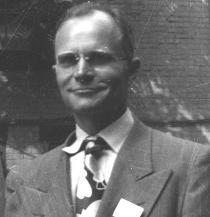 Russell L. Mixter
 (1906-2007) Biology
(August 7, 1906 - January 16, 2007) was an American scientist, noted for leading the ASA away from anti-evolutionism, and for his advocacy of progressive creationism. Mixter graduated from Wheaton College, Illinois in 1928 with a major in literature and a minor in biology. He thereafter gained an M.S. in zoology from Michigan State College, and a Ph.D. in anatomy from the University of Illinois School of Medicine in Chicago, shortly after returning to Wheaton to teach.
He was professor of zoology there from 1945, and was chairman of the Science Division from 1950 to 1961. Mixter joined the ASA in 1943, served as its president from 1951-54, and the editor of its journal from 1965-1968. After a brief flirtation with flood geology, Mixter advocated the viewpoint that he called progressive creationism for the rest of his life. Along with Wheaton compatriot J. Frank Cassel, he led the ASA away from antievolutionism, bringing evangelicals into harmony with modern biology, whilst
sto
ping short of an outright endorsement of theistic evolution.
His parents were Floyd B. Mixter, a salesman, and Florence (Barlow) Mixter. He married Emilie Claus (died August 2, 1998) on June 27, 1931, and they had four children: Wilbur, Joan (Mrs. Jerry Sweers), Ruth, Priscilla (Mrs. Gordon Gault).
Wheaton College awards the Mixter Award for junior or senior Biology majors in his honor, in recognition of his "significant role in the development of biology at Wheaton College". --Wikipedia Also article by D. Chappell http://www.asa3.org/ASA/PSCF/1992/PSCF3-92Chappell.html,
Newsletter*
top
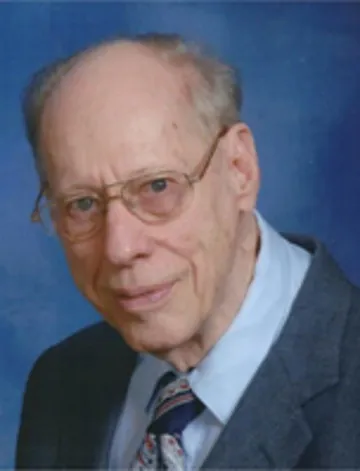 David Oscar Moberg (1922-2023) Sociology
David Oscar Moberg, PhD, died September 6, 2023, in Glendale, Wisconsin, at the age of 101. He had been suffering from Alzheimer's for about seven years, but still enjoyed reading, crossword puzzles, and Scrabble. David, the oldest child of Swedish emigrants, was born in Montevideo, MN, on February 13, 1922, to Rev. Fred L. Moberg (Sigfrid Ludwig) and Anna Euphrosyne Sundberg. David is survived by his children Lynette (David) Janssen, Jonathan (Donna), and Philip (Darlene), daughter-in-law Silvia, six grandchildren, and two great-grandchildren. He was preceded in death by his parents, his siblings Ruth, Nancy Simmons, Stanley and Alden, his wife Helen, his second wife Marlys, his daughter Joyann, and his son D. Paul.
David served in the Army during World War II and left as a Staff Sergeant. His service was primarily in the Intelligence Corps.
David was Emeritus Professor of Sociology at Marquette University. His areas of specialization included methodology in qualitative research, sociology of religion, sociology of American evangelicals, and gerontology. Professor Moberg taught sociology for nineteen years at Bethel College, St. Paul, Minnesota, ending as Department Chair, and in 1968 he accepted a position as Professor of Sociology and Department Chair at Marquette University, leaving the Chairmanship in 1977 and retiring in 1991.
David was a prolific author, writing and editing 28 books and hundreds of articles in professional journals. Some of his books include Inasmuch, The Church as a Social Institution, The Great Reversal, Wholistic Christianity, The Church and the Older Person, Aging and Spirituality, and Spiritual Well-Being. A complete collection of his works is kept at Wheaton College, Wheaton, IL.
He joined the American Scientific Affiliation in 1956 having learned of the ASA at Bethel College and from the Journal of the ASA. He quickly became involved in the ASA leadership and was elected an ASA Fellow. He was a nominee for the executive council in 1959. He was a strong advocate of the social sciences in ASA, organizing the Social Science commission in 1961. David was on the editorial board of the Journal of the ASA and became editor in 1961 until 1964. He served on the program committee for the 1963 ASA Annual Meeting. He published 23 articles and correspondence in the ASA journals.
"He was exceptionally modest, and never bragged about all his accomplishments," to quote a colleague.
David chose to donate his body to the Medical College of Wisconsin.
top
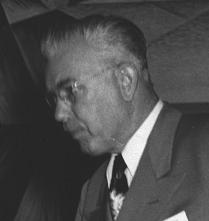 Edwin Monsma
 (1895-1972) Biology
(picture 1950) biology professor emeritus of Calvin College, died in his Grand Rapids, Michigan, home on January 17, 1972. Born in the Netherlands, Monsma received his B.A. from Calvin College, M.S. from the U. of Illinois, and Ph.D. from Michigan State University. He joined the Calvin College faculty permanently in 1932, was chairman of the Biology Department 1954-1961, and retired in 1965. He was a member of the Michigan Academy of Science and president of its botanical section, and also held membership in Sigma Xi and Phi Sigma, honorary scientific societies. He had served as president of the Christian Reformed Board of Missions in 1952 and was an elder in the Calvin Christian Reformed church.
ASA members of long standing will remember that Edwin Monsma once served on the Executive Council of the American Scientific Affiliation, including a term of office as vice-president.
Newsletter*
top
 John Warwick Montgomery
 (1931–2024) Barrister, Apologist, Theologian
John Warwick Montgomery passed away on September 25, 2024. He was born on October 18, 1931, in Warsaw, New York, to Maurice Warwick Montgomery and Harriet Smith Montgomery. John's father owned a retail feed company, so when they discovered that young John had severe, life-threatening allergies to farm animals, he was sent to live with his grandmother, who was a believing Christian and a Fundamentalist Baptist with a very high view of Scripture and its accuracy.
John attended Cornell University and majored in classics, and it was while at Cornell that he first encountered serious orthodox and evangelical theology. He was converted to Christianity in 1949. Montgomery immediately sought to determine which expression of Christianity most clearly mirrored the Scriptures, so he set the Greek text of the New Testament alongside the thirty-nine Articles of the Anglican Church of England, the Reformed Heidelberg Catechism, and the Lutheran Augsburg Confession. He concluded that Lutheranism adhered most closely to the biblical text and promptly became a confessional Lutheran, later operating within the conservative Lutheran Church, Missouri Synod. Montgomery appreciated how Lutheran theology emphasized the doctrine of justification as the central doctrine on which the church rises or falls, and early in his academic studies he decided to focus on the defense and proclamation of the gospel of Jesus Christ while advocating for the total reliability of the Scriptures.
Montgomery finished his studies at Cornell University, graduating in 1952 with distinction and a degree in philosophy and classics. His academic studies were far from over, as he later earned an additional eleven degrees, including: a BLS (1954) and MA (1958) from University of California-Berkeley, an MDiv (1958) and STM (1960) from Wittenberg University, a PhD (1962) from the University of Chicago, a ThD (1964) from the University of Strasbourg, an LLB (1977) from LaSalle University, a diploma (1978) from the International Institute of Human Rights in Strasbourg, France, an MPhil (1983) from the University of Essex, an honorary doctorate (1999) from the Institute for Religion and Law in Moscow, an LLM (2000) and LLD (2003) from Cardiff University in Wales.
A full and extensive obituary of him is available at the Apologetics Academy. In summary, John Warwick Montgomery's impact can be best understood by seeing him as an evangelical, evidential, and confessional Lutheran apologist.
John Montgomery joined the ASA prior to 1960. He was elected an ASA Fellow and joined the Journal editorial board in 1965. He presented a highly rated plenary session at the 1965 ASA annual meeting at King’s College in Briarcliff Manor, NY. He organized a well-attended (~90 people) "Birthplaces of the Reformation" tour of Europe in 1970 which was repeated the following year. He authored about 50 books and wrote extensive articles. Four articles were published in the Journal of the ASA as well as one letter to the editor.
top
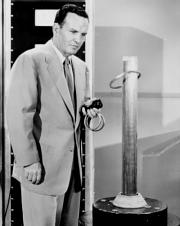 Irwin A. Moon
 (1918-1986) Science Educator, Evangelist
Died on 7 May 1986 at age 78 and was buried in Placenia, California. He is survived by his wife Margaret and four children. Irwin was known throughout the world as producer and host of the famous Moody science films. He founded the Moody Institute of Science, a branch of Moody Bible Institute, Dr. Irwin A. Moon presented his famous million-volt demonstration before hundreds of thousands in his unique Sermons from Science lectures and directed it until his retirement in 1972. Under his direction MIS produced 39 educational films, which won 27 national and international awards. After retirement he remained active in its work as an advisor and friend of the staff.
Working with youth as a young pastor in Los Angeles, Moon found the visual approach especially effective in reaching young people with the gospel. He devised a set of the old 31/4 by 41/4 inch glass slides entitled, "The Microscope, the Telescope, and the Bible." That presentation eventually formed the basis of the first Moody science film, "The God of Creation."
In the 1930's according to Alton Everest, "The American Scientific Affiliation owes its existence directly to Irwin Moon. He saw that many of the students he counseled had questions about the relationship of science to Christian faith. He convinced Will H. Houghton, president of Moody Bible Institute, of the need to do something. Houghton then arranged that first meeting in 1941 from which sprang the ASA."
Out of a flood of memories, Alton was surprised to find one in particular that kept coming back, from a time when they were working together 40 years ago on the film, "Voice of the Deep." Alton wrote, "We were both in Navy deep-sea diving outfits on the bottom of the Pacific Ocean at Emerald Cove, Santa Catalina Island. Suddenly the reassuring throb of the engine driving the air compressor sped, leaving only a couple of minutes of air in our suits. Also eliminated was the usual method of ascent by blowing up the suit and shooting up like a balloon. Now it was grunt work, hand over hand up a line. When we finally reached the line, I motioned for Irwin to climb up first. He motioned for me to do the same. That Alfonso-Gaston procedure went ' on for some time, wasting precious seconds, until I realized anew that Irwin would rather suffocate than give in. Not being endowed with such competitive drive and rather yearning for a breath of air, I gave in. "That was the Irwin we knew and loved, and whose talents and ability we respected. He is gone now, but the institutions he established continue to do the Lord's work."
Newsletter, Also, Everest,
History of the ASA. *
top
Stanley Wayne Moore (1937–2022), Political scientist
Stanley Wayne Moore, age 84, of Pasadena, California, passed away on Wednesday, January 5, 2022. Stanley was born February 11, 1937, in New Jersey. He was a member of the Political Science faculty of Pepperdine University.
Stan joined the ASA in 1973. He and his wife, Nancy who was a Presbyterian minister, faithfully and enthusiastically supported the ASA for the rest of his life. They attended many annual meetings, most recently the 2012 and the 2016 meetings at Point Loma and Azusa Pacific, respectively.
Stan was the program chair for the ASA annual meeting at Pepperdine in 1988. That meeting included Richard Bube as a plenary speaker. Stan was the local arrangements chair when the ASA annual meeting was once more held at Pepperdine in 2002.
top
Henry M. Morris (1918-2006) Civil Engineer
(Oct 6, 1918
- Feb 25, 2006) Ccreationist leader, dies at Age 87. Henry M. Morris died February 25 after a series of strokes. Eugenie C. Scott told the
New York Times that Morris was the most important creationist of the 20th century, much more so than William Jennings Bryan. As director of the National Center for Science Education, Scott dismissed Morris books as having no scientific merit, but she recalled his cordial, gentlemanly manner and said: I feel he was absolutely sincere about his convictions that the Bible was literally true and that science would support it and creation science was good science.
"Morris grew up in Texas in the 1920s and 1930s. He graduated from Rice University with a bachelor's degree in civil engineering in 1939. He married Mary Louise on January 24, 1940, and they later had six children. After his graduation in 1939, and through 1942, he was a hydraulic engineer working with the International Boundary and Water Commission. He returned to Rice, teaching civil engineering from 1942 until 1946. In 1946 he wrote a short book entitled That You Might Believe (1946). From 1946 through 1951, he studied at the University of Minnesota, where he was awarded a master's degree in hydraulics (1948) and a Ph.D. in hydraulic engineering (1950). In 1951 he became a professor and chair of civil engineering at the University of Louisiana at Lafayette."
Wikipedia
After fifteen years in faculty positions at Rice U., U. of Minnesota, U. of Southern Louisiana, and Southern Illinois U., Morris became head of the civil engineering department at Virginia Polytechnic Institute. During his thirteen years there, the school program grew to become one of the nation's largest. His 1963 textbook on applied hydraulics is still in use.
When his book
The Genesis Flood (co-authored with theologian John Whitcomb) became popular, a new administrator decided Morris was too controversial. In the words of the
Los Angeles Times, When he was asked to drop his creationist writings from his resume, Morris knew it was time to move on He founded the Institute for Creation Research and co-founded what is now San Diego Christian C. His biographical listings appear in Who's Who in Science, Antiquity to Present; Who's Who in America; American Men of Science; Who in Engineering; Who's Who in Science and Engineering; Who's Who in the World and Contemporary Authors.
Morris was an ASA member and Fellow during its early years. His passing is an opportunity for those of us in ASA to demonstrate our appreciation for differing perspectives and interpretations. In the spirit of Robert Fischer's book,
God Did It, But How, we may differ in the methods and the
timeframe in which the Creator did it, but we show solidarity with
anyone who acknowledges, It is he who has made us, and not we ourselves.
Newsletter*
topWilliam Douglas Morrison (1927-2000) Biology
He was born to homesteading parents in Provost, Alberta, Canada, on October 16, 1927, and died of cancer on April 6, 2000. He graduated from the U. of Toronto in 1949, and got his PhD from the U. of IL in 1955. He then directed research for Maple Leaf Mills, Ltd. until 1971, when he became professor and chairman of the dept. of animal and poultry science at the U. of Guelph until his retirement in 1992. His research area was the nutrition of animals. Doug had a foundational role in the CSCA and was also recent (1999) CSCA Executive Director. Doug's obituary noted that "His faith in Jesus Christ as Lord and Saviour was the central theme and primary philosophy of his life and determined his decisions and actions."
Doug addressed the Guelph graduating class two months before he died, wishing them success as he defined it: "Over 2,000 years ago, a Hebrew writer penned what I believe to be a true description of success. He wrote: 'And what does the Lord require of you? To act justly and to love mercy and to walk humbly with your God.' This definition acknowledges God and presupposes absolutes." He then explained these three character qualities. Gary Partlow noted in passing the word of his death to ASA that Doug "epitomized Micah 6:8", the verse of his commencement address.
Newsletter, Guelph Obit.*
top
Glenn Morton (1950-2020) Petroleum Engineer
Glenn Robert Morton went to be with his Lord on August 5, 2020 with his wife and sons by his side. Glenn was born on April 16, 1950. After a childhood in Oklahoma and attending Oklahoma University, he had an illustrious career in the oil business and explored an incredible number of interests outside of his career.
He joined the ASA in 1996 and published more than a dozen articles and letters in PSCF. He was an active participant on the ASA listserv. Ted Davis noted “A former YEC who published many articles in creationist journals, Glenn became an OEC after very thorough research into some of the scientific problems with the YEC view of a global flood. He became an influential voice in the creationist conversations. By his own account, he nearly fell into atheism in the process, but came out of it with his Christian faith intact.”
top
John C. Munday (1940-2025) Physicist
John Clingman Munday, Jr., 85, of Chesapeake, Virginia, passed away peacefully at his home, surrounded by his beloved family, on July 18, 2025. He lost his battle to aggressive lymphoma but finished his final race by entering Heaven to run the streets of gold.
Born on June 10, 1940, in North Plainfield, New Jersey, John was the son of the late John Clingman Munday and Anna Fegley Munday. He grew up in Cranford, New Jersey and participated in cross-country and track, Boy Scouts, and music activities. He was a trained classical pianist and an Eagle Scout. John was valedictorian in high school and graduated from Cornell University (Sigma Alpha Epsilon) with a B.A. in Physics. He earned his Ph.D. in Biophysics from University of Illinois, Urbana-Champaign.
Establishing a distinguished career as both an instructor and a published research scientist, John taught science and environmental policy—among other subjects—at both graduate and undergraduate levels over a span of nearly 50 years. He held teaching positions at the University of Toronto and the Virginia Institute of Marine Science at William & Mary before becoming one of the founding faculty members of Regent University’s Robertson School of Government (originally the School of Public Policy) in Virginia Beach, Virginia.
Throughout his career, he served in various academic roles, including adjunct professor, interim dean, and department chair. His final full-time appointment was as Professor of Natural Sciences in the College of Arts and Sciences at Regent University. In May 2016, Dr. Munday was honored with the title of Professor Emeritus by Regent University.
Hundreds of students have attested to the profound and lasting impact of his teaching, mentorship, and guidance throughout their education. He was a deeply respected and beloved professor, dedicated to sharing his love for science and its integration with matters of Christian faith.
John joined the ASA in 1984 shortly after joining Regent University in Virginia. He learned about ASA from the dean. He presented a talk at three consecutive ASA annual meetings from 2009 to 2011. A fourth paper was accepted for 2017 but illness prevented him from presenting it. He was a member of the DC chapter of the ASA.
In addition to his respected status in academia, John was known for his love and devotion to his wife and family. Judi met John in Massachusetts in 1964, and a lifelong journey of their covenant marriage and deep love of family spanned the decades. Together, they had 3 children, whom they raised in New Mexico, Canada, and Virginia. The family enjoyed numerous trips to the Midwest, countless journeys to the ocean and mountains, and opportunities to prioritize visits with extended family. Family memories included hiking the Grand Canyon, camping in Rocky Mountain National Park, and holiday visits to John and Judi’s home state of New Jersey.
John played piano and stringed instruments in a wide variety of settings—from pizza parlors and mountain chalets to churches and ragtime festivals. The family’s dearest memories are the worship songs, love songs, folk music and ragtime pieces he played on his grand piano. He led worship in local prayer meetings and home groups and encouraged the music education of his children. Having composed 14 ragtime pieces over the span of 50 years, it was his lifelong, crowning achievement to receive the published copy of this ragtime portfolio just four days before he entered glory.
As a lifelong local runner, John completed 13 marathons, 26 half marathons—including New York and Boston—and numerous sprint triathlons. He was deeply grateful for his Tidewater Striders community, with whom he logged countless miles on the road. Lasting friendships were forged along the running paths, and encouragement to race to the finish was always mutual. His commitment to health and nutrition enabled him to live an active, vibrant life—culminating in his final half marathon in March 2024 at the remarkable age of 83.
What words could encompass the life of this most beloved man, but to describe him as the most compassionate, gentle, humble and dedicated husband, father, and servant to his Lord and Saviour Jesus Christ, his family, and his career. John lived selflessly, becoming the hands and feet of Christ to those in need. He cherished nature and all of God’s creation, and he reflected God’s love to everyone who knew him.
Left to cherish his memory and carry on his legacy are his faithful and dedicated wife of 60 years, Judith B. Munday, his three children, ten grandchildren, and two great-grandchildren.
top
Donald W. Munro (1937-2019) Zoologist; ASA Executive Director
Donald William Munro, 81, of Secane, Pennsylvania, passed away on September 3, 2019. Don was born to Donald and Emily Munro, on December 27, 1937, in Narberth, Pennsylvania. He graduated from upper Darby High School and received a Bachelor's Degree cum laude in biology from Wheaton College, Illinois, and a MS and PhD in zoology from Penn State University. He served for a time in the US Army and was stationed in Fort Dix, NJ. He married Joyce Thomas in 1961, and they lived together in Houghton, NY; Ipswich, MA; Elizabeth City, NC; and Orlando, FL. Don was a biology professor at Houghton College, NY, and then the director of the American Scientific Affiliation in Ipswich, MA, until he retired.
Don learned about the ASA as a Wheaton student from his professor, Russell Mixter. He joined the ASA in 1962. During his 28 years at Houghton College, Don’s ASA activities included serving on the executive council from 1981–1986, as local arrangements chair for the 1986 Annual Meeting at Houghton, as chairman of the bioethics commission, and as program chair of the 1994 Annual Meeting at Bethel University in Minnesota on the topic Bioethics: Perils and Promise. When Bob Herrmann stepped down as executive director, Don applied for the position. He began to serve as executive director in July of 1994, serving through 2004.
During his tenure, he managed the Templeton-ASA lecture series through a major grant from the Templeton Foundation. The Templeton involvement included at least 360 lectures in almost 200 different colleges, universities, or seminaries with an average attendance of over 250 per lecture. In 1994 in his first annual meeting as director, the ASA website was created by Terry Gray and Jack Haas. Later the ASA listserv was established for dialogue among ASA members. While he was the ASA executive director, he also served as adjuct pre-med advisor at Gordon College, effectively increasing the number of students accepted into graduate programs.
Don’s final Executive Director’s Corner and more information about his time as ASA director can be found in the March/April 2005 ASA Newsletter.
topGeorge F. Myers ( - 1986) Electrical Engineer
Of University Park, Maryland, died on 5 March 1986. He was buried on March 8 at Adelphi, Md., after funeral services at Riverdale Presbyterian Church in Riverdale, Md. Our records of George's career are incomplete, but we know he was a long-time member of ASA. He was trained as an electrical engineer. He is survived by his wife Elma, two children.
Newsletter. (incomplete)
topGeorge Neal (1922-2002) Mechanical Engineer
George survived Pearl Harbor and walked away from a B-24 shot down over Australia during World War II. He graduated from the U. of Denver and became a mechanical engineer working on jet propulsion. He worked on the Apollo manned space flight program with NASA and was personally acquainted with several of the early astronauts.
George was very involved in recent years with the science and faith dialogue. He organized a "Science and Theology" mission unit at the First Presbyterian Church of Golden, CO, and was the prime mover behind the formation of the Rocky Mountain Chapter of the Presbyterian Association for Science, Technology and the Christian Faith, on whose board he served. He was concerned for young people and began an educational program on science and the Christian faith for high school age youth.
Newsletter*
top
W. Jim Neidhardt (1934-1993) Physics
Jim, an active ASA member, died unexpectedly at age 59 of a sudden heart attack on July 15 1993, in bed.
His recently published book, coauthored by James E. Loder, was
The Knight's Move: The Relational Logic of the Spirit in Theology and Science, Helmers & Howard, 1992. He was an influential physics professor at the New Jersey Institute of Technology, Newark, NJ for 31 years and an active member in the local NY ASA section.
Jim befriended numerous scientists and theologians from various countries at the Center for Theological Inquiry in Princeton and helped many seminarians and graduate students at several universities. Jim was author of numerous
JASA papers and a promoter of Michael Polanyi's ideas. Many of us will remember his frequent use of graphic illustrations to explain various relationships.
Tribute was paid Jim by his co-author of
The Knight's Move, Dr. James Loder, in a memorial service on 20 Jul 93. Loder emphasized in his eulogy that, as a whole person, Jim did not detach his intellect from his heart" and loved to place himself in the biblical tradition "so the labor of his mind was generated in and from his heart." His remarkable energy "was matched by genuine humility and a delightful sense of humor. His humor seemed usually to embody the comment from Niels Bohr that he loved to repeat Bohr's comment to a young physicist who complained that there was too much humor at the Bohr Institute. "People should be more serious," the young physicist exclaimed. To which Bohr replied, "Some things are so serious that they must be taken with a sense of humor." I think this was the source of Jim's humor. He took serious things seriously and that was the source of much of his humor about lesser things. Jim also "seemed to have more sorrow or compassion rather than anger at those physicists, theologians, scientists who apparently could not see or comprehend the grace of God" but also, "nothing gave him more joy than the triumph of a sound Biblically-based theological argument in the face of a reductionist and secularized concept of humanity, nature, cosmology."
Believing, as his mentors Tom Torrance and Harold Nebelsick, in the contingency in all things upon the grace of God, his "service was rendered most of the time in an atmosphere of scientific hostility, to the deepest conviction of his- heart, that science and theology belonged together." In closing, Loder alluded to the good that could continue from Jim's effort, though he is no longer among us. And indeed, even now in the ASA, such fruit is being manifested. Robert T. Voss was introduced to the ASA by Jim and has recently relocated from the New York-New Jersey ASA local section (of which Jim Neidhardt was a member) to Pittsburgh, where a new local section is in formation. (See "Pittsburgh Local Section Forming.") . Jim Neidhardt's estate has donated a 7,000 volume collection "of unusual quality" to Messiah College's Murray Learning Resources Center in Grantham, PA.
Jim chose Messiah C. "because his interest in relating his Christian faith to modern science led him to consider only Christian colleges" and his longtime friends there, including Ted Davis, associate professor of science and history, Messiah's alumni magazine reported (Feb. 94). Jim Neidhardt's estate has donated a 7,000 volume collection "of unusual quality" to Messiah College's Murray Learning Resources Center in Grantham, PA. Jim chose Messiah C. "because his interest in relating his Christian faith to modern science led him to consider only Christian colleges" and his longtime friends there, including Ted Davis, associate professor of science and history, Messiah's alumni magazine reported (Feb. 94). Ted Davis,
Newsletter*
top
 Maurine "Mo" Nelson (1960-2025) Educator, Materials Science
Maurine “Mo” Nelson, 64, of Lakewood, Colorado, passed away on November 14, 2025, surrounded by her loving family, after a heroic five-year battle with ovarian cancer. Mo was born on November 16, 1960, in Denver, Colorado, as the youngest of four children to Paul and Sally Howell. From her earliest days she showed the strength, resilience, and spark that would define her life.
After three years teaching high school math and PE, she provided membership and conference registration services for the National Council of Supervisors of Mathematics (NCSM) for sixteen years. She joined the National Renewable Energy Laboratory (NREL) in 2007 and became a deeply valued member of the Materials Science and Computational Science Centers. Mo shaped work cultures with her warmth, can-do attitude, humor, and unshakeable dependability. She was the person who could make the impossible possible; the one who quietly kept teams running, lifted up others, and made everyone around her feel like family. Her colleagues will remember her as the heart of the center and a source of steady kindness and unwavering support.
She is survived by her husband of 40 years, Brent Nelson, who also worked at NREL. Brent joined the American Scientific Affiliation (ASA) in 2017. With her interest and skill in math and materials, in 2023 Mo also joined the ASA as an Associate Member with a family membership.
top
 Teresa Marie Nesman (1957-2016) Anthropology, Science teacher
Teresa Nesman died peacefully in her sleep August 6, 2016. She was born on July 5, 1957, in Oriente, Cuba where her parents were teaching in a rural vocational school. Her grade school years were spent in Alajuela, Costa Rica and Gainesville, Florida, high school in Tampa and college at Florida State University. She spent 15 years as a science teacher locally, before entering USF for a master’s degree and then a PhD in Applied Anthropology. Teresa’s remaining years were in research and evaluation projects and teaching courses on cultural competence at the Child and Family Department of the Mental Health Institute at USF. Teresa authored numerous writings from her research studies in the field of children’s mental health and cultural assimilation and directed many training workshops. She also volunteered one year in Haiti at a Presbyterian mission, helping with teacher training, while volunteering on their mission’s executive board for many years.
Teresa joined the ASA in 2010 at the recommendation of Martin Price. She also joined the Christian Women in Science group.
top

Eugene A. Nida (1914-2011) Linguistics
Revolutionized Bible Translations, Dead at 96
his name might not be prominent, but Eugene A. Nida's influence can be found in most Christian homes-more specifically, in their Bibles. Nida, one of the leading advocates for dynamic equivalence translation, died August 25, 2011 at a hospital in Brussels, Belgium. He was 96.
Dynamic equivalence translation (a phrase which Nida coined) is a "meaning-based" approach to biblical translation; it focuses on translating "thought-for-thought" rather than "word-for-word." In a 2002 interview with
Christianity Today, Nida said that this shift in translation was his most important contribution: "To help people be willing to say what the text means, not what the words are, but what the text means." Nida's career in translation began in 1936, when he graduated summa cum laude from the University of California, Los Angeles with a B.A. in Greek and a minor in Latin.
The summer after he graduated, Nida attended the Summer Institute of Linguistics (SIL), a faith-based nonprofit that serves language communities by using research, training, and development to "build capacity for sustainable language development." After his introduction to SIL, Nida returned every summer from 1937 to 1953 to teach there.
Nida continued his studies at the University of Southern California, where he earned a master's degree in New Testament Greek. He completed a doctorate in linguistics at the University of Michigan in 1943. That same year, he was hired by the American Bible Society as associate secretary of versions. He became the executive secretary for translations in 1946, a position that he held until his retirement in 1980. He was present at the founding conference of the United Bible Societies in 1946, and in 1949 he founded
The Bible Translator, a journal featuring articles about the theory and practice of Bible translation.
By the late 1960s, Nida had published two books,
Toward a Science of Translating (Brill, 1964), and
The Theory and Practice of Translation (Brill, 1969, with C.R. Taber), advancing his new dynamic equivalence theory. He had also published a first edition of the Greek New Testament, which became a basis for other translators in their work. Nida spent much of his career traveling around the globe. By 1952, he had traveled to more than 30 countries and encountered more than 80 languages. In his travels, he met and trained teams to help them in their translation work. In 1978, he was praised by the
Christian Herald as a man who "has done more than any one person to provide people with Scripture they can read in their own language." The popularity and positive reception of The
Good News Bible (also called the Today's
English Version) lent credence to Nida's work, as it was translated using dynamic equivalence theory. Other versions, such as the
New Living Translation and
Contemporary English Version, are also heavily influenced by Nida's approach.
In his work, Nida emphasized the importance of cultural context - both the cultural context of Bible and the cultural context of the language into which the Bible is being translated. One example he liked to use was the parable of the sheep and the goats in Matthew 25, where the sheep represent those who have done the Lord's will, and the goats are those who haven't. "Look out, because in most of Africa, sheep are regarded as very bad animals!" he said in his 2002 interview. "The translator, of course, cannot change all the sheep into goats and the goats into sheep. But you've got to have footnotes to explain the cultural difference. Otherwise, you're going to give an entirely wrong impression." However, Nida also emphasized something over the need for multiple, relatable translations: a desire to understand and spread the meaning of the Bible. "What is really needed is for people to take the message seriously and share it with other people, focused primarily on what this message has meant to me," he said. "So many Christians love to argue about the Bible rather than take it seriously as a message that is important for their own lives.
Franklin, 1979, Eugene Nida (from Morgan Feddes
CT 8/26/2011 )*
topDonald Noren (1925-2010) Electrical Engineer of Santa Barbara CA; died January 6, 2010; he was 85.
topHarold J. Northrup ( ) Chemistry
ASA has been notified of the August 24 death of Harold J. Northrup of Pawcatuck, Rhode Island, at age 82. Harold graduated in chemistry from what is now the U. of Rhode Island and was employed in the dyeing and electrical industries before his retirement. He was active in "people-to-people" peace efforts between the U.S. and U.S.S.R., which he described in papers at our 1987 and 1988 Annual Meetings.
It's hard to think of chemist Harold Northrup of Pawcatuck, Connecticut, as an "old-timer" even though he's an octogenarian. After all, immediately after the Colorado Springs meeting he went to China on the ASA tour.
His paper on "Pathways to Good Will between Hostile Countries" was based on his own experience traveling to the Soviet Union with a group exploring "citizen diplomacy." He showed slides of his trip and handed out a bibliography on peace and peacemaking efforts. Harold urged ASA members not to overlook "the influence for good of a single individual."How did Harold Northrup get interested in "waging peace"? For many years he did goal-oriented research in the storage-battery industry. Even after retirement he has been called back from time to time to help solve problems. It occurred to Harold that the Lord had given him a gift for solving problems, and he couldn't think of a more important problem than world peace. So he thought he'd take a crack at it. He knows its a tough problem but that's the kind he likes best. Besides, he says, all the easy problems have already been solved. He went on the ASA tour to China in 1987. Harold was active in the Central Baptist Church of Pawcatuck hosting a ASA Talk there in late 1990.
Newsletter
top
 Scott Northrup
 (1951-2018) Chemistry
Scott Northrup of Silver Point, TN, died suddenly on Thursday, January 11th, 2018 at Center Hill Lake, a reservoir in Tennessee, from an apparent boating accident. Born November 10, 1951 in Lamar, Colorado to the late Robert and Ruth Williams Northrup, Dr. Northrup earned his bachelor’s degree from Northern Colorado University and his master’s degree and doctorate from University of Colorado. Moving to Cookeville in 1980, Dr. Northrup joined Tennessee Tech faculty as a professor. His distinguished, impactful and influential career spanned 35 years. He served as chemistry department chair from August 1997 to August 2005 and also as the department’s master’s program coordinator. Widely published, he was awarded TTU's Caplenor Faculty Research Award for outstanding faculty research accomplishments in 1988 and the university's Sigma Xi Research Award for outstanding contribution at TTU in 1982 and 1987. He was awarded the University’s Outstanding Faculty Award in Teaching in 2015. Post retirement, he continued to serve as faculty advisor for the Tech Bass Fishing Team.
Scott’s bright mind and giving heart were also displayed at Trinity Algood, where he has been actively involved in Trinity’s Music Ministry since he joined the church in 1992. He was a director of the church’s NetMinders Ministry, a men’s discipleship and outreach ministry that provides Christian fellowship and fun for men who enjoy fishing, since its inception in 2008. He was also a founding member of God’s Jail Ministry. Scott and his wife and ministry partner of 38 years, Christine Conniff Northrup, have led Little Flock Bible study for 25 years. He was a member of the ASA for 40 years.
*from www.hhhfunerals.com
top
 Wesley L. Nyborg
(1917–2011) biophysics.
Born May 15, 1917, in rural
Ruthven, Iowa, he was the last of six children born to Isaac Nyborg and
Leva Larson. He died on September 24, 2011, at the age of 94. As a
child, He lived on a farm before rural electrification was widely
available and was taught in a one-room schoolhouse
He earned B. S. in Physics and Mathematics at
Luther College in Decorah, Iowa, which was founded by Norwegian
immigrants. He earned an M.S. in 1944 and a Ph.D. in 1947 in physics
from the Pennsylvania State University. His research there had an
application of ultrasonic signaling for the U.S. Army Signal Corps.
In 1945 he married Beth, his wife of 44
years, until her death in 1989. His physics dissertation was
titled “High Frequency Whistles: Edge Tones and Resonance,” with adviser
Harold K. Schilling. He helped Wes form his own style of teaching and
research, including striking a balance between the aims of science and
religion. "Wes was also a deeply religious man who loved God and tried
to serve Him. He was active in his church (Community Lutheran) and in
his community, and gave freely and generously to many charities. He
loved to sing, and was in a barber shop quartet as a young man and in
church choirs for many years thereafter." He had been an ASA
member since 1989.
He was an assistant and associate professor at Brown
University from 1950 to 1960, and since 1960 was a professor and on
retirement, an
emeritus professor of physics at the University of Vermont.
Wes’ career was devoted to biophysical acoustics, first at low
frequencies and since the early 1950s primarily at ultrasonic
frequencies of biomedical interest. He made significant contributions in
many areas of ultrasound biophysics. His early work established a basis
for much of our current knowledge of nonthermal mechanisms by which
ultrasound interacts with biological materials—particularly important is
the basic information that he had provided on the effects associated
with acoustically driven bubble activity. He developed the theoretical
basis of acoustic streaming, and he extended his work to investigating
all sorts of ultrasonically induced movements and other nonthermal
effects of ultrasound
As an ultrasound beam traverses tissue, it causes the local temperature
to rise. The underlying theory was worked on by Wes, and he derived
a number of important relationships that we use today in determining the
anticipated temperature elevation that can result from medical
applications of ultrasound.
In addition to being elected into membership of the
National Academy of Engineering, he has been honored with the
title
fellow by the Acoustical Society of America, the American Institute of
Ultrasound in Medicine (AIUM), and the American Association for the
Advancement of Sciences. He has served on the editorial boards of the Journal
of Biological Physics, Ultrasound in Medicine and Biology, Ultrasonics,
and Clinics in Diagnostic Ultrasound. He has written many chapters in
scientific books and published many papers in scholarly journals.
For 22 years, Wes was the chair of National Council on Radiation
Protection and Measurements Scientific Committee No. 66, devoted to
establishing guidelines for the safe use of ultrasound in medicine.
Three volumes were published: (1)Biological Effects of Ultrasound:
Mechanisms and Clinical Implications, in 1983; (2) Exposure
Criteria for Medical Diagnostic Ultrasound: I.
Criteria Based on Thermal Mechanisms,
in 1992; and (3) Exposure Criteria for Medical Diagnostic Ultrasound:
II. Criteria Based on All Known Mechanisms, in 2002. These volumes are
considered the most authoritative documents in this field. It should be
emphasized that Wes was not only the leader of this effort but also the
major contributor of concepts and scientific input. A tribute to Wes by one of his graduate students, Hal Frost, can found at this site.
Bios:
Daughter, Dr. Elsa Mondou; American Institute of Ultrasound in Medicine;
National Academy of Medicine*
top
 Karl M. Oberholser
(1942-2013) Chemistry.
Karl,
70, of Mechanicsburg PA went home to be with the Lord on Thursday, July 25, 2013
at the Select Specialty Hospital, Camp Hill PA. He was born September 21, 1942 in
Mechanicsburg, the son of the late Christian L. and Miriam A. (Wenger)
Oberholser. He was a retired Professor at Messiah College, where he taught in
the
Department of Chemistry and Biochemistry.
Karl was a graduate of
Chambersburg Area High School class of 1960, a graduate of Messiah College
and Auburn University (Ph. D). Karl was an associate professor at Black Hawk
College, Moline, IL, 1968-69; and Penn State Hershey School of Medicine from
1972-1976.
He was a member of the Grantham Brethren in Christ Church,
where he taught Sunday School and enjoyed leading the Boys Brigade. Karl was a
life time member of the Appalachian Trail Conservancy, and the American
Scientific Affiliation (ASA) >30 years. He presented a poster session at the 2000 Annual
meeting:
that allows for a personal examination of interactive computer exercises which
were made with Toolbook and HyperChem or Chime, a web page plug-in.
He was a member of the American Chemical Society (ACS) for 45 years and the
American Association for the Advancement of Science (AAAS) for 42 years.
PA
Patriot-Ledger, Newsletter
top
Robert Charles Olsen
(1925-2014) High School and University Science Education.
Robert
"Bob" Olsen, 89, passed away peacefully Saturday, October 18, 2014 at Willow
Valley Retirement Community, Lancaster, PA. Born on June 2, 1925 in Staten
Island, NY, he was the son of the late Carl and Ruth (Thorsen) Olsen. Bob was
the beloved husband of Doris "Pinky" (MacMillan) Olsen to whom he was married
for 65 years.
Bob
graduated from Wheaton College (IL) where he earned his B.S. in Science, and
attended Columbia University, earning his Master's Degree, followed by his PhD
at the University of Maryland. He was a long-time resident of Ridgewood, NJ
where, as a devoted husband and father, he had a long and distinguished career
of teaching science at the Ridgewod High School and at the university level.
He was an
active member of Grace Church in Ridgewood and loved and served the Lord in all
aspects of his life. Bob had a lifelong love for music and played the trumpet in
musical groups at Wheaton and Grace Church. Bob also enjoyed spending his
summers in the Adirondack Mountains in Speculator, NY with his family.
To cherish
his memory, Bob is survived by his dear wife and three children: Sandra (Olsen)
and Mike Sweigart of Coopersburg, PA, Lynn (Olsen) Craven of Paoli, PA, and Jim
Olsen of Albany, NY. He was the much-loved "PopPop" of Rebecca Craven of
Philadelphia, PA, Julie Craven and Karen Craven of Paoli, PA, and Holly (Craven)
and Justin Power of Newtown Square, PA. Lancaster Online Obit.
(incomplete)
Donald W. Olson (~1916-1970) Secondary Education
associate member of ASA since 1964, died on February 17, 1970. He had become a
Christian in 1946, after receiving his B.A. from Jamestown College,
Jamestown, North Dakota, in 1938. He went on to obtain an M.Ed. from the
University of Washington, Seattle, in 1954, and at the time of his death
was living in Olympia, Washington, and serving as consultant in
administration and finance for the Office of the State Superintendent of
Public Instruction.
He had been superintendent of schools in Morton,
Washington, and served as lay leader and Sunday school teaching in the
Morton Methodist Church. He was a member of the American Association of
School Administrators.
Newsletter (Incomplete)
topKenneth Victor Olson (1920-2005) Biology, Education
Died at age 85, a Fellow of the ASA, from Greeley, CO, died March 26. 2005. He received his bachelor 's degree from Augsberg C. in Minneapolis and his master 's and Ph.D. degrees from the U. of Minnesota. He taught high school in Monte Video, MN, and at the State Teachers C. in Aberdeen, SD. He taught at the U. of Northern CO for many years, retiring in the late 1980s. Kenneth served as a lieutenant in the Navy during WW II. He also sang in the choir of his church, the First United Presbyterian Church of Greeley, and loved to fish and play the piano and organ. Ken led ASA's Commission on Science Education for many years.
Newsletter* (incomplete)
topEdwin Andrew Olson (1925-1999) Chemical Engineering, Geochemistry
As told by his wife, Marlene, Ed "peacefully left us and went Home on October 18 [1999]." Ed was diagnosed with a tumor the third week of September, which an open biopsy revealed to be cancer of the liver and lungs. "Ed was too stoic," Marlene wrote, "and the pain didn't drive him to seek hospitalization until the final days of September. When all the tests were in, the doctor characterized the cancer as 'angry'." Too far gone for hospital care, Ed's last four days were spent in a hospital bed in the living room of the Olson home in Spokane, WA.
Ed was born 74 years ago in Gary, Indiana, grew up in Pittsburgh, PA, majored in chemical engineering at the U. of Pitt., and then worked for DuPont. In 1950, through the influence of two DuPont colleagues, he became a Christian. He left engineering in 1953 to attend seminary and teach chemistry and physics at Northwestern C. in Minneapolis, MN. He married Marlene, a student there, in 1954. They moved to New York in 1954, where Ed entered the doctoral program at Columbia U., in geochemistry, with a specialization in radiocarbon dating. He received his doctorate in 1963. Ed joined the Whitworth C. faculty in 1960, and established the Dept. of Geology.
Ed was a member of Trinity Baptist Church for nearly forty years.
Stephen C. Meyer of Whitworth C. included in his tribute to Ed:
"Somehow he saw potential in me that others didn't and that interest transformed me. He told me he liked reading my tests because my essays were clearly written. Now I write about science as a central part of my profession. During a term that Ed was faculty president, he asked me to teach his structural geology lab. Now I teach as a professor at Whitworth C. The summer after my sophomore year, Ed wrote me a letter encouraging me as a Christian and as a budding scientist. I remember reading the letter sitting on a tractor in the middle of a Montana alfalfa field, stunned that a professor would take the time in the middle of his summer to write me. Ed was never too full of himself to see potential in others. That's why I say he was humble. He was other directed. And his interest in others inspired them. And it changed lives."
An ASA Fellow, Ed was a ASA Council member (1984- 1988) and was interested in the science and politics of the environment. His recent 99-page work on the subject has yet to be published.
S.C. Meyer,
Newsletter*
top
Kenneth C Olson (1942-2023) Biochemist
Kenneth Charles Olson, a biochemist best known for his work in the field of recombinant DNA, passed away peacefully on June 23, 2023, in Stockton, CA. He lived independently until three months prior to his passing at age 80 from complications of acute kidney failure and sepsis.
Ken was born on December 5, 1942, and grew up in Longmont, Colorado, where he played on the high school tennis team and played trombone in band and orchestra. The first in his family to attend college, Ken attended Westmont College in Santa Barbara, California, and received his BA in Chemistry in 1964. During his college years, he enjoyed competing on the tennis team, tutoring in chemistry, working on the grounds crew, and playing the trombone in the college pep band. Ken earned an MS in both Biochemistry and Microbiology from Oregon State University in 1967. He then moved across the country to launch his career as a biochemist at Hoffman LaRoche (Nutley, NJ) in nucleic acid enzymology, from 1967 to 1979.
His career path took him to Genentech (South San Francisco, CA) from 1979 to 1997, as a scientist with a focus on recombinant DNA technology. He was one of the original 50 employees who had a vision to change the way that drugs were produced. One of his longtime colleagues stated, “You are a real icon in the biotechnology business” and “you turned a page of history.” He developed novel methods of protein purification and helped develop manufacturing processes for recombinant protein drugs, including Protropin (human growth hormone), Nutropin, Interleukin 12, and Somavert (PEG-Growth Hormone Antagonist).
After Genentech, from 1999 to 2008 he served as Director of Research and Development at Allergan Pharmaceuticals in Fremont, CA. He led the development program for human collagen using fibroblasts from cell culture to the FDA-approved drugs CosmoDerm and CosmoPlast. In 2008, he began consulting services for multiple biotech companies in product development, process, and regulatory support. In his early retirement, he continued to share his expertise, mentoring the next generation of scientists.
Ken joined the ASA in January of 1965 while he was at Oregon State University. During his career at Hoffman LaRoche in New Jersey, he was very active in the ASA Metropolitan New York City chapter. He gave a plenary talk on “Development of Therapeutic Proteins by Recombinant DNA Technology” at the ASA Gene Splicing Conference at Eastern College in 1987. He served on the ASA Executive Council and was the founding donor of the ASA Endowment Fund. He and Eunice attended many ASA annual meetings, and he has been a dedicated advocate for and contributor to ASA.
His commitment to God and his ministry was widespread and lifelong. Over the years, as a member of his home church, he served as a church deacon, served in youth ministries, taught men’s Bible study, and, most recently, was involved in Seniors’ ministry at Quail Lakes Baptist Church. He supported many missionary families and organizations globally. He took his role seriously and lived a lifetime of stewardship. He was always willing to share a meal and open his home for missionaries as they traveled, with his wife, Eunice, graciously hosting. He coordinated singers and concert opportunities at his church home. His was a quiet and kind presence that spoke to others of God’s grace and love for his neighbors.
He was consistent in providing for his family and was well known for being the father of five girls. He allowed his silly side to come out, with his mischievous grin, dry humor, and Dad jokes. Ken loved to travel, and instilled this in his family as they would navigate across the country, from coast to coast. He visited all 50 states and traveled overseas for conferences and for tours, such as The Holy Lands and the Wesley Heritage and Hymns Tour in England. Later in life, he and Eunice enjoyed taking cruises, especially when they were able to hear some of their favorite gospel groups sing and to join up with fellow church friends.
He was preceded in death by his wife of 58 years, Eunice (Boldt) Olson. Ken was clear in mind as he faced his final weeks and was at peace knowing that he had done what he wanted to accomplish in life. He was confident in his faith and continued to read his Bible daily and minister to others. “Well done, good and faithful Servant.”
top
Hendrik J. Oorthuys (1910-1996) Electrical Engineer
Died on July 22, 1996 at age 86 of an acute heart attack. He
had been a member of the ASA since the mid-1940s and served as Secretary for four years. He was also active in the Oregon Local Section. Hendrik received his degrees in electrical engineering at Oregon State U. where he and F. Alton Everest were fellow students.
Alton taught at OSU but when he was called to work in the Navy Electronics Laboratory in San Diego at the outset of WWII, Hendrik took over his teaching. Alton subsequently recruited Hendrik to work with him at the Lab from 1944-46. Hendrik was an EE prof. at Purdue U. from 1946-57, then returned to OSU until his retirement in 1975.
He married Ruth Denney in 1950 and had three sons and a daughter. Hendrik and Ruth were involved in a ministry to inmates at the Oregon State Prison. Hendrik attended First Baptist Church of Corvallis, where former ASA president and biologist David L. Willis taught Bible class. One of David's students at First Baptist was also an EE student at OSU, the Editor, who would record his articulate and inspiring lectures. I took no courses from Hendrik, however, but recall him to often be in the motor lab, the EE dept's "fishbowl." I readily concur with Dave when he wrote: "Hendrik was a most enthusiastic person. ... He was always cheerful and hopeful. He is remembered locally as "the Flying Dutchman," because to the end of his life he could be seen daily on the city streets furiously pedaling his bicycle here and there." David also added, "He was a dear Christian friend and a strong supporter of ASA. He will be missed by many." E. Dave Willis,
Newsletter *
top
Evelina M. Orteza
(1929 - 2014) Philosophy of
Education.
Born March 19,1929, Dr. Evelina M. Orteza of Calgary, Alberta
Canada, went home to be with the Lord on Saturday, July 26, 2014. She was survived by her brother, Ephraim
and his wife, Edna, of Morgantown, WV and another sister-in-law, Lavinia R. A.
Orteza of Quezon City, Philippines, nephews, nieces, great-nephews and
great-nieces. She was born in Butuan, Philippines, the
daughter of the late Jose and Rosario Orteza. She was preceded in death by her
sisters, Corazon and Josefina; brothers Cornelio, Leoncio, Benjamin, Jose Jr.,
Ruben, and Arsenio.
Evelina was a professor emerita of
Philosophy of Education, University of Calgary, Calgary, Alberta, Canada. She
received a Bachelor of Science in Education with a major in English Literature
and a minor in Sociology from the University of the Philippines, a M.A. in
Education from Case Western Reserve, Cleveland, Ohio, and an Ed.D. in Philosophy
of Education from the University of California Los Angeles. With this
educational background, she became equipped to teach at various institutions
starting as an instructor at UCLA, then as an assistant professor at the
University of Regina, Saskatchewan, Canada, and finally moving to the University
of Calgary where she was granted the associate and later full professor status.
She served this institution for 26 years until her retirement. During some
summer sessions, she had the opportunity to teach at the University of
Lethbridge in Alberta, University of Regina, in Saskatchewan, and West Virginia
University in Morgantown, WV. Apart from this wide teaching experience, she was
also a visiting professor at the University of the Philippines, a visiting
colleague at the University of Hawaii, and an Honorary Research Fellow at the
University of Birmingham in England.
She joined the ASA as early as 1968
and was appointed a consulting editor for JASA in 1977. She
attended several Annual meetings in the 70s and 80s.
Because of her honest desire in improving
the teaching of Philosophy of Education and the development of a better
understanding of what the Department of Foundations of Education under the
Faculty of Education is through her dedicated teaching and extensive writing,
she received various kinds of honors, certificates of recognition, and awards.
She was not only an author and co-author of books, but also a contributor to a
number of books. Her involvement in both national and international journals on
philosophy of education, values, and religion ranged from being editor,
co-editor, book review editor, advisor, and contributor resulted in her being
known and admired by local, national and international colleagues. Her other
areas of interest in addition to philosophy of education in general were
analytic philosophy of education, in particular, philosophical basis of moral
education, existential philosophy, Pragmatism, Ethics, and later on she included
the areas of religion, Christian mind, religious pluralism, interreligious
dialogue, morality and values. Her main concern in teaching was to teach her
students to think clearly and understand what university education is about. In
addition to her distinguished academic career, Evelina was devoted to her family
and friends, known for her generosity and love of art, the performing arts,
classical music and collections of old books.
Her clear thinking also applied
rigorously to her Christian beliefs as shown in leading Bible Studies both in a
number of churches she attended and in individual homes where sharing or caring
groups met weekly. The members of every group showed their appreciation and
thanks for the marvelous lessons learned from her, in terms of a verse by verse
study and clarification, in each book being studied, and an increasing love for
reading the Word of God. And because she believed in God distributing gifts to
His people, we can say that she used her gifts from God to the fullest extent
that she could.
The family received friends at the
Reformation Orthodox Presbyterian Church, 450 Arch Street, Morgantown, WV on
Saturday, August 16th from 9:30 AM until the time of the funeral service at 11
AM with Rev. Luis Orteza and Rev. Jonathan Hutchison officiating. Obit,
Newsletter, Rev. Luis Orteza.*
top
John Osepchuk (1927-2024) Electrical Engineer
 John M. Osepchuk, passed away on Thanksgiving afternoon, November 28, 2024, at the age of 97. He was born on February 11, 1927, in Peabody, MA, to Moses and Mary Osepchuk, who had immigrated from Russia’s Ukraine region. He spent his childhood in Peabody but spent most of his life (nearly 60 years) in Concord, MA. John is predeceased by his wife Shirley Greenwood Osepchuk in 2011.
John’s parents’ emigration from Volinski province in northwestern Ukraine was complicated by both WWI and the Russian Revolution, but Moses, a tailor, and his wife Mary managed to settle and thrive in a diverse neighborhood of Peabody where John and his siblings grew up as staunch members of the Baptist Church (later called the Calvary Baptist Church). During his formative years, John and his older brother Philip also worked in a leather factory before or after school. In 1944 while still in high school, John enlisted in the Army Specialized Training Reserve Program and was trained as a high-speed radio operator. After being discharged from the army in early 1946, he received Bachelor of Arts, Master of Arts, and Doctor of Philosophy degrees in engineering from Harvard University in 1949, 1950, and 1957, respectively. He joined Raytheon Company in 1950, met Shirley Greenwood Small in the fall of 1955 and married her in June 1956. The couple then lived 1.5 years in Paris, France, where John helped facilitate post-war industrial reconstruction efforts by working at the CSD Company on behalf of Raytheon. They returned to the United States in late 1957 and had three children over the next decade.
John had an outstanding career focused primarily on microwave tubes (magnetrons) and related heating applications (such as ovens) and bioeffects (safety factors). His accomplished career began in 1950, when he was hired by Raytheon as a power tube division development engineer. He was later promoted to become a liaison engineer in the company’s microwave and power tube division and a principal research engineer and consultant scientist in the research division.
Writing extensively as a result of his research, John disseminated much of his findings in over 80 scholarly journal articles, and edited a book published in 1983 entitled "Biological Effects of Electromagnetic Radiation". He also acquired approximately 50 patents, including many magnetron-related patents that have had a considerable impact on the the entire microwave oven industry. From the 1970s, he was a prominent figure in countering rising concerns about potential health/safety problems related to diverse applications of electromagnetic energy.
John retired from Raytheon in 1995, at which time he established Full Spectrum Consulting to continue providing services related to magnetrons and microwave safety issues. Supported by several pertinent organizations, John was an elected fellow and past president of the International Microwave Power Institute. He was also an elected fellow of the Institute of Electrical and Electronics Engineers (IEEE,) where he served on several committees and chaired the standards coordinator committee. He was a member of the Microwave Society of the IEEE, an advisor to the board of directors of the Electromagnetic Energy Police Alliance, and a member of the American Science Affiliation (ASA) and the Bioelectromagnetics Society.
John joined the ASA in 1952 while working at Raytheon, having learned of the ASA from various church members. John published 4 letters in PSCF, all warning against bad science that alleges harm in technologies such as microwave radiation, low frequency electromagnetic radiation, genetically modified organisms, and global warming. He was instrumental in founding the ASA Affiliate of Christians in Engineering, Science, and Technology, of which he served as vice-president and later as president. He was elected an ASA Fellow and remained an ASA member for a record 72 years.
A dedicated community advocate, John was long a member of the Republican town committee in Concord since 1974. He also served as a clerk and trustee at Park Street Church in Boston. In his leisure time, he was an avid tennis player, an aficionado of cats, and until a very advanced age he enjoyed doing diverse yard and home maintenance work. Travel played a big part in his life, and he visited many places such as France, and the rest of Europe, Latin America and especially Japan, where his son Jonathan has been employed since the 1980's as a translator. John was a man of strong faith in Christianity who strived to apply his strict conceptions of Christian morality with respect to science and electromagnetic radiation-related social issues.
top
Daniel Harcourt Osmond
(1934 - 2015) Physiology, Medicine
It is with
great sadness that I share with you news of the sudden passing of Dan
Osmond last Saturday. Dan was a founding member of the CSCA in
1973, and his influence on the founding and subsequent development of
the CSCA was deep and extensive. He was a tireless witness to his
Christian faith in all areas of his professional work. We were fortunate
to have had Dan share his memories on the founding of the CSCA in our
40th Anniversary Newsletter.
See
http://issuu.com/nsitu/docs/csca-newsletter-rev1?e=1528961/3881799
It was also a pleasure having Dan at the joint ASA/CSCA/CiS meetings
last summer at McMaster, where he participated very actively in the
sessions. It had been under Dan's urging that we brought John Welton in
for the special workshop on Genesis.
A number of us will share
more detailed reflections on Dan's life and work in a separate notice.
In the meantime, I have included here the obituary notice that was
placed in the Globe and Mail yesterday. Please note that a memorial
service for Dan will be held Saturday May 23rd in Cobourg.
Toronto Globe and Mail, Thursday, April 30,
2015
Daniel Harcourt Osmond, Ph.D., University of Toronto
August 22 1934 - April 25 2015
Beloved husband of Faith Margaret
(nee Kilburn) his lover, soul mate and best friend for 58 years. Loving
father of Mark, Grace (Brian), Paul (Tania) and Deborah (Remi).
Loving granddad of Hannah, Thomas, Gabriel, Michael, Elijah and Zoé.
Professor Emeritus of Physiology and Medicine, University of Toronto.
Farmer, maple syrup producer and beekeeper. Lifelong promoter of the
need to integrate the historic Christian worldview with a sound
scientific outlook.
Friends and family are invited to attend a
memorial service at Calvary Baptist Church, 237 Ball St., Cobourg on
Saturday May 23rd at 2:00 p.m. Private family burial at The Heritage
Cemetery of St. Peter in Cobourg. Inquires may be made through Newcastle
Funeral Home.
In lieu of flowers, donations to Northumberland
Youth for Christ, P.O. Box 462, Cobourg K9A 4L1 or Calvary Baptist
Church, Cobourg would be appreciated.
"If the Lord had not been
my help, my soul would soon have lived in the land of silence". Psalm
94: 17; "If we died with Him, we will also live with Him". 2 Timothy
2:11.
Online condolences may be left at
www.newcastlefuneralhome.com
Grace and peace,
Don McNally,
Executive Director CSCA
top
 Robert M. Page (1903-1992) Physics
Of Minneapolis, he died of heart failure on 15 May 1992 at the age of 88. A physicist and former research director of the U. S. Naval Research Laboratory (NRL), he had been decorated by four U.S. presidents. In 1946 President Harry Truman awarded him the Certificate of Merit and in 1960 President Dwight Eisenhower presented him with the Presidential Award for Distinguished Civilian Service. Born in St. Paul, the son of a Methodist minister, Bob Page entered Hamline University to study religion but in his senior year switched to physics.
After graduating in 1927 he joined the staff of NRL, which had been established only four years earlier. With colleagues there he invented the technology to make pulsed radar effective; also the planned position indicator (die now common PPI scope, with radial beam sweeping the circular face of a cathode ray tube to locate radar echoes from planes, ships, or hurricanes) and Project Madre, the first radar capable of "seeing" over a horizon. His contributions, pooled with those of British scientists in 1940, were crucial to winning WWII. Later, Project Madre improved surveillance of long-range missile launches during the cold war with the Soviet Union. Bob Page earned an M.S. degree from George Washington U. while working at NRL, where he was research director from 1957 to his retirement in 1966. He also received an honorary doctorate from Hamline.
He was a long-time member and Fellow of ASA. During his tenure at NRL he was active in ASA's Washington-Baltimore local section, and in the sixties participated in a number of ASA Annual Meetings. Robert M. Page, Director of Research at the Naval Research Laboratory in Washington (and the first man to send a message by reflecting it off the moon, he casually informed us during a talk), presented a fascinating picture of what science has learned about extra-terrestrial phenomena through different types of research. He taught Bible classes and frequently lectured on the relationship of science and Scripture. According to his son, Rev. John Robert Page of Medford, Oregon, he had recently been working on a full-length study on that subject. ASA old-timers will remember Bob's striking appearance: a tall, thin, white-haired man with a distinctive goatee. Others (especially anyone who worked on early radar gear) might know his 1962 Doubleday Anchor paperback,
The Origin of Radar.
In addition to his son, Bob is survived by a niece in Minnesota, a brother in Texas, and one grandson. Page closed nearly forty years of service as he retired as Director of Research of the Naval Research Laboratory at the end of 1966. At NRL, Dr. Page was instrumental in maintaining the laboratory as one of the nation's outstanding physical science research institutions. As director of research he planned long-range programs and provided leadership to a staff of 1500 scientists, engineers and technicians. Prior to his latest post, Dr. Page served five years as Associate Director of Research in electronics and seven years as Superintendent of a Radio Division. He first joined NRL in 1927.
From his initial work in radar during the early 1930's, Dr. Page has been a giant in its development. Today he holds more than 50 patents in the field including substantially all basic radar patents. He has authored hundreds of technical and popular papers and lectures, including a book, "The Origin of Radar." Honors include 1, President Dwight D. Eisenhower's award for Distinguished Federal Civilian Service in 1960, the Navy's Conrad Award and the Harry Diamond Award of the Institute of Radio Engineers and the Stuart Ballentine
Award of the Franklin Institute. Wikipedia, Newsletter*
top
Richard B. Parker ( -1999) Microbiology
Of Portland, OR recently died of cancer (1999). Rick was an active ASAer and Director of the Institute of Science and Christian Faith, located at Western Evangelical Seminary in Portland. Rick received Ph.D.s from Oregon State U. in 1954 and U. of WI-Madison in 1954-55. As a microbiologist, Rick was associated with the U. of Oregon dental school, and was founder of a Portland biotech firm that was later acquired by Pioneer (the Iowa seed company) as its microbial products division. The Editor's brother, Lewis Feucht, and Nate Olsonon worked closely with Rick during the earlier days of the company. Rick later started a yogurt company, again using his superb skills in microbiology.
Newsletter (incomplete)
top
 Stanley M Parmerter (1920–2020) Chemist-Attorney
Stanley Marshall Parmerter, age 99, passed away on July 22, 2020, in Ft. Myers, FL. He was born on October 24, 1920 in Rochester, NY, to Rev. Wesley Parmerter and Mable (Winegard) Parmerter. He earned a BS degree in chemistry from Greenville (IL) College, and MS and PhD degrees in chemistry from the University of Illinois in the field of synthetic organic chemistry. Later he obtained a JD from the John Marshall Law School in Chicago and had a successful career as a patent attorney.
Stanley married Ellen Barton, his college sweetheart, in 1943. They were married for 76 years until her death, preceding him by only 9 months. After graduation, he performed research at the William S. Merrell Company and then worked for the Eastman Kodak Company. In 1952 the Parmerter family moved to Wheaton, IL, where they lived for over forty years. Stanley taught chemistry at Wheaton College for eleven years before he returned to industrial employment with CPC International in Argo, IL. There he was employed in research, administration, and finally as a patent attorney. For many years the Parmerters were active members of the Wheaton Bible Church where they both taught Sunday School classes and where he served as an Elder for several terms.
In January of 1952, Stanley joined the American Scientific Affiliation. It is not clear how he learned about the ASA, presumably while he was working at Kodak. Perhaps it was through the ASA that he met key ASA leaders such as Russell Mixter, and perhaps those connections led him to join the chemistry department at Wheaton College in the fall of 1952. He would later serve as chair of the science division at Wheaton. During his tenure there, he held discussions on science and faith in his home which directly influenced a Wheaton grad student in biblical theology by the name of Robert Fay. Bob went on to follow in Stanley’s footsteps by earning a PhD in chemistry and completing a great teaching career at Cornell.
Stanley was also awarded a research grant by the Alumni Association of Wheaton College. In 1961 Stanley moderated a panel called “Origins and Christian Thought” as part of the larger Wheaton symposium by that name organized by Russell Mixter who had just edited the seminal book Evolution and Christian Thought Today. This influential symposium resulted in considerable controversy in the larger Christian community beyond the campus. The reaction led to concerns that rose to the level of the college’s trustees and ultimately resulted in a modification of the Wheaton Statement of Faith. A footnote was added stating that Adam and Eve were created directly and not from previously existing forms of life. This new condition of employment prompted several faculty to leave, including Stanley Parmerter, in 1963. It should be noted that the specification “not from previously existing forms of life” was removed in 1992. (ASA Newsletter July 1960 and History of the Chemistry Department—private communication)
Stanley published extensively in his field of organic chemistry. He was the author and agent for many patents. Though he did not publish in PSCF, he was an effective servant of Christ in his frequent interactions with students and colleagues. He was a 68-year member and supporter of the ASA, faithfully submitting his dues and adding a donation every year, even at the age of 99. One of his friends at Shell Point, where he spent his final years, remarked “Stan Parmerter was a wonderful man, a scientist with a warm heart for God.”
top
Mark S. Peterson (1929-1995) Electrical Engineering Mark joined the ASA in 1970 as a Texas A&M Campus Staff Member for, Inter-Varsity Christian Fellowship. BS in Elec. Engr. of Elgin, Illinois passed away Aug. 24, 1995, after a long illness.
(incomplete}
top
Timothy R. Phillips (1950-2000) Theology
Associate Professor of Theology at Wheaton C. at 50 years of age, went to be with the Lord on Sept. 27, 2000 after suffering a long bout with cancer. Timothy graduated from Wheaton C., completed the M.T.S. from Gordon Conwell Seminary, and the Ph.D. in Theology from Vanderbilt U.
In 1986, he returned to Wheaton C. to teach classes in historical and systematic theology where he wrestled with questions about life and death with students. The struggle was always centered in God's self-disclosure in Jesus Christ and Scripture and Tim never let anyone get away with glib answers. One of Tim's legacies to his students is his insistence that they understand and respond to how others outside the evangelical community deal with theological issues. He was a valuable participant in the "Evangelical and Catholics Together" meetings and mentored his love for Christ's people to the larger Church.
A co-author/editor of four books with friend, Dennis Okholm, Tim pressed on to engage thinking about theology and culture. In this endeavor and passion, he helped initiate the annual Theology Conference at Wheaton. He entitled the most recent and very successful conference, "The Relationship of Theology and Science." Tim valued teaching, scholarship, and service to others in Christ's name. His influence is felt in churches and educational institutions around the world. His international grad. students in Wheaton and his trips to Nigeria and Kenya brought many closer to their Lord. According to Dennis Okholm, one of Tim's best friends, Tim considered himself as a modest scholar with a lifelong agenda, who was in love with the God he studied. Timothy is survived by his wife, Sandy, and two sons, Aaron and Caleb. Newsletter*
top
 Pletcher, William D. (1929–2022) Medicine
William “Bill” DeWitt Pletcher, 93, of Goshen, passed away peacefully on December 20, 2022. He was surrounded by family, his longtime nurse Diane Yoder, and his wife Rosemary (Rouch) Pletcher. Bill was born in Goshen, Indiana, on September 9, 1929, the only child of William E. Pletcher and Ethel P. (Ingleright) Pletcher.
Bill attended Parkside School, Goshen High School, Goshen College, and Northwestern University Feinberg School of Medicine in Chicago where he graduated in the class of 1955. He did an internship at the University of Chicago (Evanston). He and his wife Sarah completed three years of 1-W alternative service at the Ryder Hospital in Humacao, Puerto Rico, in pediatric/adult medicine and obstetrics. He then did a residency in Internal Medicine with a focus in hematology at the University of Michigan.
In 1963, he started at the Elkhart Clinic where the burgeoning field of oncology became his focus and treated thousands of patients during 53 years of practice. He served as Chief of Staff at the Elkhart Hospital and was on the Boards of Elkhart Hospice and the Center for Healing and Hope.
A representative of the Hoosier Cancer Research Network applauded Bill’s years of service with the organization during which time he worked with educational programs, clinical trials, and co-authored nine studies in cancer research.
Bill married Sarah Fike on July 15, 1956. They enjoyed 42 wonderful years until Sarah’s passing on March 13, 1998. On November 12, 2005, he married Rosemary Rouch.
Survivors include his beloved wife of 17 years, Rosemary, of Goshen, his four children: Dr. Steven (Gina) Pletcher of Fargo, ND; Barbara (Kevin) Kaufman of Carmel, IN; Dr. Stanley (Shelley) Pletcher of Niles, MI, and Brian (Jennifer) Pletcher of Indianapolis, IN, 13 grandchildren and 10 great-grandchildren; Rosemary’s children: Dr. Rosalie (Ryan) McBride of Elkhart and Dr. Carl (Dorinda) Rouch of Grand Junction, CO, and her 5 grandchildren: Jamie, Alexander and Nolan McBride, Reed and Sophie Rouch.
He is survived by many other beloved international sons and daughters including Kazumi and Kazuo Kinouchi of Japan, Getachew Wodajo of Ethiopia, and John Keshishian of Jordan, whom he and Sarah sponsored in their education in the United States and became lifelong friends of the family. In addition, he is survived by his beloved lifelong nurse and family friend, Diane Yoder.
Bill was involved in missions throughout his life and accompanied his family, grandchildren and friends to Ecuador, Dominican Republic, and Guatemala numerous times. He joined the ASA in 1952 and remained a member for the rest of his life. He lived a life of service to others and faithfulness to God and will be missed greatly by all who knew him.
top
Charles Patton Poole Jr. (1927-2015) Physicist of Columbia, SC
Charles Patton Poole Jr. passed away on Sunday, November 1, 2015. Born June 7, 1927, in Panama City, Panama, he received a B.S. in preMed from Fordham University in 1950 and an M.S. in Physics in 1952. He obtained a Ph.D. in Solid State Physics from the University of Maryland. After Charles obtained his master's degree, he took a job at Westinghouse designing microwave components for radar. He participated in the design of an electron spin resonance (ESR) spectrometer and spent six years using ESR in the related field of nuclear magnetic resonance (NMR). He was professor of physics at the University of South Carolina until his retirement. He served as an ordained deacon at St. Joseph Catholic Church and the Newman Center in Columbia. Charles joined the ASA in January of 2012 and contributed letters and book reviews to PSCF.
top
Donald H. Porter (1907-1985) Mathematics
Of Marion, Indiana, died of a massive heart attack on 7 February 1985. Donald was 78, a mathematics professor retired from Marion College (he started teaching there in 1930)l, a member of ASA for over 35 years and Fellow for perhaps the last fifteen. He took an active role in the Indiana ASA local section and was a member of a Wesleyan church in Marion. After graduating from Marion College in 1929, Donald earned his M.A. and Ph.D. degrees at Indiana University. He taught math and physics at Taylor as well as at Marion.
Mrs. Olive Porter wrote ASA that the suddenness of her husband's death was responsible for the long delay in notifying us of his passing. She added that "the American Scientific Affiliation was very dear to Donald's heart." He was professor emeritus at Marion College, which had named Porter Auditorium in its science building for him. Don was an active member of the Eighth Street Wesleyan Church in Marion, and for many years was an officer in the Indiana ASA local section. (Our thanks to Wally Roth of Taylor for sending a clipping from the local newspaper.)
Newsletter*
top
Howard W. Post (1896-1992) Chemistry
Of Getzville, New York, died on 19 Feb 1992 at the age of 95. He was an emeritus professor of organic chemistry from the State University of New York at Buffalo. He received his B.S. and M.S. from Syracuse and his Ph.D. from Johns Hopkins (1927). His research on organometallics and especially on organosilicons was published in some 85 technical papers and two books. Howard W. Post; Silicones and Other Organic Silicon Compounds; (Reinhold Publishing Corp., N. Y.; 1949).
From a Buffalo News article: " Always interested in international good will, Howard has become an "ambassador extraordinaire", partly by maintaining contact with fellow scientists in other countries. One of his "extra mile" gestures of friendship was recently reported in a Buffalo newspaper.
Back in 1958-59, Dr. Isao Shiihara, a chemist at the Industrial (National) Research Center at Ikeda City (near Osaka), Japan, spent a postdoctoral year with Howard Post on a Fulbright grant. Over the years, as Shiihara rose to become director of his institute, Post continued to correspond with him and the two even collaborated at a distance on research projects. Besides publishing four joint papers from that work, Post wrote a chapter for a book edited by Shiihara and helped edit the English of a number of institute manuscripts written in English. Within the past year Post's friend resigned to take a VIP position with a Japanese chemical manufacturing company in Tokyo.
Howard Post is a history buff. Digging through old archives saved by his father, from whom Howard got his interest in history, he found a Syracuse newspaper dated May 29, 1905. It carried an account, with drawings, of the battle of Tsu-Shime on that date, in which Admiral Togo destroyed almost all of what was left of the navy of Imperial Russia. The Czar had sent his Baltic squadron around western Europe, the Cape of Good Hope, and through the Indian Ocean in hopes of turning the tide in the Russo-Japanese War.
Thinking that his Japanese friend might be interested in the newspaper, Post sent it to him and received "a veritable outburst of thanks", also learing that Shiihara was a captain in the Japanese Naval Reserve, having served with the scientific sector in WWII. Shiihara took the old newspaper to the official Museum of the Imperial Japanese Navy at the naval base of Maizuru, where it was mounted permanently along with a Japanese translation of the account. Howard Post's own album now contains several photographs of the museum exhibit he contributed, the naval base and its commandant, Admiral Kato, and of course, his friend Isao Shiihara.
Howard has worked with the U.S. government in various ways to build better relations with other countries. Of his 20-year friendship with a now-prominent Japanese scientist he says, "I think it's an excellent example of the ties we could set up if we were willing to try hard enough, both personally and nationally, to develop international good will." For years Howard was active in the Williamsville United Methodist Church, where he taught Sunday school to high schoolers. At his university he served as faculty advisor for the IVCF chapter for 20 years.
Newsletter*
top
J. David Price (1926-2005) Philosophy of Science Science, Education
Springville CA. ASA Fellow, Chaired ASA's Committee on Integrity in Science in the 80s and 90s. Active in the Annual Meetings and local ASA Sections. PhD in Philosophy of Science, Claremont Graduate School. Taught in High School.
Abstract of Local Obituary: "John David Price, beloved husband, father, grandfather and friend, met his Lord face to face on August 18, 2005. Dave was born to John C. Price and Eva Brownsberger Price in La Verne, CA, August 23, 1926. Dave attended Bonita High School where he lettered in three sports and played under his father on championship football teams. He graduated from Occidental College in 1947, completing college studies in three years while he lettered in football, water polo and track, achieving world-class status as a hurdler for the Oxy track team.
Following a brief stint with the Navy and the US Bureau of Mines, he became a high school science teacher and track coach for Bonita High School where he taught for over thirty years. Other teaching experiences included Chaparral Continuation High School, California Polytechnic University in Pomona, Claremont Grad School, Cal State Fullerton and University of La Verne. In 1969 he received his Ph.D. degree from Claremont Graduate School.
He served in both the US Navy and Army during WWII and the Korean Conflict. Dave met Mary Beth Gillette, the love of his life and they married in 1950. Together they raised five children; four sons and a daughter. Throughout his life he continued a generational tradition of farming citrus. Dave cultivated a love for all living things (almost - excepting citricola), and delighted in raising and sharing a plenitude of fruits, vegetables and citrus with all friends and family members. He and Mary Beth served overseas with US AID in Yemen for two years where Dave served as a horticultural specialist and Mary Beth taught English. They returned to California where they built their ranch home in the Sierra foothills overlooking their citrus ranch in Springville, CA."
"Dave was a philosopher, writer, educator, farmer, surfer, fisherman and naturalist. He was a man who loved life. Filled with faith, joy and love, he became a spiritual mentor to many whose lives bear the mark of his concern and care. Most of all he was a devoted husband, father and family man filled with unshakeable faith in God's boundless grace. He is survived by his wife Mary Beth, son Daniel and his wife Karen and their children Michael and Heather; son Stephen, his wife Joan and their children Alyssa, David, and Jonathan; son Jonathan and wife Maureen and their children Nathan and Ryan; son Dana and his wife Janet and their sons Elliott, Andrew and William; daughter Laurel and her husband Andrew and their children, Luke, Tim, John and Caroline. Dave is also survived by his sister, Doris Martini, his brother, Stan Price and wife Anne, and a multitude of nieces, nephews and cousins and other family members." Obituary,
Newsletter*
top
Barbara A. Pursey
(1929 - 2014) Chemistry, Christian Ministry
 Barb (nee Parker), 84
died peacefully at Bethany
Home in Dubuque on May 21,
with her husband and son at her
bedside. She was born in Los Angeles on
August 3, 1929. Barb earned
a BS in chemistry and a
PhD in
organic chemistry from UCLA, and
was elected to Phi Beta
Kappa. After she received her PhD, she taught chemistry
at California State University Northridge until her
marriage to Dr. Derek Pursey in 1962.
Barb (nee Parker), 84
died peacefully at Bethany
Home in Dubuque on May 21,
with her husband and son at her
bedside. She was born in Los Angeles on
August 3, 1929. Barb earned
a BS in chemistry and a
PhD in
organic chemistry from UCLA, and
was elected to Phi Beta
Kappa. After she received her PhD, she taught chemistry
at California State University Northridge until her
marriage to Dr. Derek Pursey in 1962.
The Puseys lived
in Glasgow, Scotland, for two years where Barb was a
postdoctoral research fellow in chemistry at Glasgow
University. In 1964, they immigrated to Ames, Iowa,
where Barb continued to do postdoctoral research at Iowa
State University until her son was born in 1970. A lifelong
Christian, in the late 1980s Barb was called to
structured ministry, and studied for a Master of Divinity
degree at University of Dubuque Theological Seminary
(her husband says that UDTS gave her the "third
degree"). After her graduation in 1988, she was ordained
as a minister in the Presbyterian Church (USA), and
served on the faculty of UDTS until her retirement in
1996, teaching mostly Christian formation. The Purseys
established their home in Dubuque in 1993 when Derek
retired from Iowa State University.
In the late
1960s and early 1970s, Barb was active in the
charismatic movement. As well as speaking at various
venues, she served on the board of Presbyterian and
Reformed Ministries International, and wrote three
teaching booklets (The Gifts of the Holy Spirit, The
Charismatic Renewal and You, and Prayer Beyond the
Beginnings) for that organization.
These booklets reflect
Barb’s strong sense of balance in matters of faith.
In the last
half of her life, her ministry passions were for
healing ministry, helping people mature spiritually
through spiritual direction, and the relation between
science and Christian faith. Hearing the late Fr. John Park
speak at a conference triggered her interest in healing
ministry. Fr. Park was Director of the Order of St. Luke
the Physician (OSL). Barb joined OSL, and served as
Director of Region XI of OSL for a number of years. As
well as leading healing events in churches and retreats,
she made major contributions to several OSL
publications, especially the Going Deeper series. Her
final contribution was an article Promise or Contract?
published in the January/February 2014 issue of the OSL
journal Sharing. Barb
received her training as a spiritual director at Pecos
Benedictine Monastery, in New Mexico. Most of her
ministry as a spiritual director was with students at
UDTS and with UDTS graduates, providing a needed
spiritual balance to the intellectual emphasis that is
inevitable in any academic setting.
Barb’s
interest in how science and Christian faith relate
date from her youth, thanks to her beloved Uncle Ad—a
chemist working in the oil industry and a mature
Christian. This interest was revived by a Presbyterian sponsored
conference in 1987, which led to a PC(USA)
Working Group on Christian Faith, Science, and Technology,
on which Barb served. This in turn led to the
Presbyterian
Association on Science, Technology and the
Christian Faith (PASTCF). Barb was a founding Board
member of PASTCF, and later served as
Secretary/Treasurer. Her work for PASTCF included a
series of courses at Ghost Ranch with PASTCF colleague
Rev. Dr. James Miller, courses at the Synod of Lakes and
Prairies Summer School, seminars at several conferences,
and essays in the PASTCF journal SciTech†. In 2012 she
was inducted into the Society of Ordained Scientists.
For
recreation Barb loved hiking (and tent camping),
especially in the mountains, but also locally on the
Heritage Trail and at Pike’s Peak State Park. She was
also a keen gardener. She loved symphonic music and
live theater, and reading all kinds of literature. She
worked New York Times crossword puzzles, and was
fond of Sudoku puzzles. She loved to cook, especially
dishes from many different cuisines. Barb is
survived by her husband Derek, her son John (Eva),
grandsons Derek and Maxwell, her brother Tom Parker
(Kathy), her brother-in-law Lindsay Pursey
(Connie), and many nieces and nephews.
She
joined the ASA in 1989 and participated in Annual and Local Section
Meetings. Obituary, Newsletter*
top
Orville Edward Pyle (1914-1994) Physics
Of DuQuoin, IL died in Carbondale, IL on Jan. 2, 1994 at 80 years of
age. He joined the ASA in 1967.(incomplete)
top
Bernard Ramm (1916 - 1992)
Born August 1916, Butte, Montana - 11 August 1992, Irvine, California.
Although active in several theological areas, The Christian View of Science and Scripture (Eerdmans, 1954)
was the work for which he was best known within ASA, and which led to his election as an Honorary Fellow of ASA in 1963.
"Bernie" Ramm grew up in the northwest, thought about majoring in chemistry but switched to speech at the U. of Washington. To his A.B. from Washington he added a B.D. at Eastern Baptist Seminary, and M.A. and Ph.D. degrees in philosophy at the U. of Southern California. While studying at USC he taught a course in science and religion at Biola College. He later served on the faculties of Bethel College and Seminary, Baylor University, American Baptist Seminary of the West (Covina), Eastern Baptist Seminary, and American Baptist Seminary of the West (Berkeley), and taught at a number of other schools, including Haigazian College in Beirut, Lebanon.
For other details of Bernie's life, and the impact of his writing on others, see the Dec 1979 issue of
Journal of the ASA, a Festschrift marking the 25th anniversary of publication of The Christian View of Science and Scripture. (For that issue, I had the privilege of interviewing Bernie and his wife Alta, who survives him. I knew I was in the presence of a true scholar and a dear brother and sister.
After Parkinson's disease forced his retirement and move to southern California, he complained that nobody else in the retirement home where they lived ever read a book. "They just want to play bridge or golf," he said.--Ed.)
Bernard Ramm was a Baptist theologian and apologist within the broad Evangelical tradition. He wrote prolifically on topics concerned with biblical hermeneutics, religion and science, Christology, and apologetics. The hermeneutical principles presented in his 1956 book Protestant Biblical Interpretation influenced a wide spectrum of Baptist theologians. During the 1970s he was widely regarded as a leading evangelical theologian as well known as Carl F.H. Henry. His equally celebrated and criticized 1954 book
The Christian View of Science and Scripture was the theme of a 1979 issue of the Journal of the American Scientific Affiliation, while a 1990 issue of Baylor University's
Perspectives in Religious Studies was devoted to Ramm's views on theology.
Ramm's tertiary education included a B.A. (University of Washington), initially studying chemistry then switching to philosophy of science in preparation of ministry, B.D. (Eastern Baptist Seminary), M.A. in 1947 & Ph.D in 1950 (University of Southern California). He also undertook additional studies at the University of Pennsylvania, the University of Basel, Switzerland (1957-1958 academic year with Karl Barth), and the Near Eastern School of Theology, Beirut, Lebanon.
His academic teaching career began in 1943 when he joined the faculty at the Bible Institute of Los Angeles (now Biola University, La Mirada, California). He became Professor of Philosophy at Bethel College and Seminary, and then Professor of Religion at Baylor University, Texas. Most of his academic teaching was conducted at the American Baptist Seminary of the Wet at Covina, California, where he taught between 1958-74 and again from 1978-86. At that seminary he held the post of Professor of Systematic Theology. Ramm wrote eighteen books, contributed to chapters to other books, and composed over one hundred articles and book reviews in various theological periodicals.
In his contributions to Christian apologetics, Ramm began his career in the evidentialist camp. However his later work reflected a shift in viewpoint over to a modified form of
presuppositional apologetics that had some affinity with the work of Edward John Carnell.
In spite of harsh criticisms of Karl Barth from other theologians such as Cornelius Van Til, Gordon Clark, and Carl F. H. Henry, Ramm would explore much of Barth's theological viewpoint, eventually embracing Barth's theology almost wholeheartedly as outlined in Ramm's own book
After Fundamentalism (Harper & Row, 1983) Ramm did not utilize the classical or Thomist approach in arguments for God's existence. He maintained that apart from faith God was unknowable. He likewise emphasized that the noetic effects of sin rendered the theistic proofs useless. For Ramm the proof of God's existence is in Holy Scripture.
In some respects Ramm's emphasis on the inner witness of the Spirit reflected the view of John Calvin, but it also reflected the influence of Karl Barth under whom he studied in Switzerland. Near the end of his life Ramm was honored with a book of essays by his colleagues and younger contemporaries.---Wikipedia,
[Five]Personal Reminiscences [on the influence of The Christian View of Science and Scripture] Everest, Carpenter, Willis, Haynes, Yamauchi From:
JASA 31 (September 1979).
.
top
Walter C. Randall (1916-1993) Physiology
Of the Taylor U. science department passed away 29 Aug. 1993. Walter had previously taught and done research in cardiovascular physiology at Loyola U. in Chicago, and also at Western Reserve U. in 1942-43. He got his Ph.D. in physiology at Purdue U. in 1942 and started where he finished, at Taylor U., where in 1938 he received his A.B. degree in biology. Walter wrote Nervous Control of Cardiovascular Function,
Oxford U. Press, 1984, and was president of the American Physiological Society (1982-83) and chair of its Long-Range Planning Committee.
"From his birthplace and boyhood home in the farming community of Akeley, Pennsylvania, Randall studied at Taylor University in Upland, Indiana, able to go to school during the Depression only because of financial sacrifices on the part of his parents and sisters and by virtue of the honor scholarships he received. Graduating in 1938, he enrolled for further study at Purdue University, where he received his Ph.D. degree in physiology in 1942. The following year he was a postdoctoral fellow in the laboratory of Carl J. Wiggers at Western Reserve University; Wiggers then recommended him for appointment as instructor in Alrick Hertzman's Department of Physiology at St. Louis University, and by 1949 he was an associate professor. Five years later (1954) he moved to Chicago as professor and chairman of the Department of Physiology in the Stritch School of Medicine of Loyola University. He held these positions until 1975, when he relinquished the chairmanship to continue essentially full-time research.
In 1962 Randall was a visiting scientist at the National Spinal Nerve Injuries Center in Aylesbury, England, and in 1965 he held a similar position at the National Spinal Injuries Center at the VA Hospital in Long Beach, California. During the summer of 1970 he was visiting professor of physiology at the University of Washington in Seattle. Taylor University designated him Alumnus of the Year in 1963, and since 1968 he has served that university in various capacities, most recently as a member of its Board of Trustees (1971-)." (From APS Bio)
He was also a member of the American Heart Association, the AAAS and Sigma Xi. Walter recommended that the ASA develop a "reader's corner" where "individual members may share their science/daily-living testimonials." APS Bio ,
Newsletter*
top
James W. Reid (1912-1974)
James Reid of Norristown, Pennsylvania, died on September 18, 1974. He was born on August 12, 1912 to James and Viola (McConahy) Reid. He joined the ASA in 1966. Jim directed Associates for Biblical Research and authored God, The Atom, and the Universe(Zondervan 1968).
top
 John E. Richardson (1939-2025), Electrical Engineer
John E. (Jack) Richardson died peacefully in his sleep on December 16, 2025, following an eight-month journey with pancreatic cancer. He was a devoted husband of 35 years to Marion (Ryder) Richardson.
Jack was born to Wilfrid and Elda (Wemp) Richardson on a farm in Wallaceburg, Ontario, on September 2, 1939. His affinity for building things and fascination with electronics from an early age led him to Massachusetts Institute of Technology, where he graduated with a degree in Electrical Engineering in 1963. He later earned an MBA at the University of Toronto. Jack was a life-long student of the Scriptures and kept a rich library of his favorite Christian authors and theologians.
The day after he submitted his undergraduate thesis at MIT, Jack began working at Digital Equipment Corporation as an engineer in a “very new field called the computer field.” There, Jack enjoyed a 37-year career with Digital in a variety of roles, including sales, marketing, and education. He also produced conferences for major customers worldwide. At his core, he was a teacher—teaching customers how computers could improve their business, helping sales and marketing employees be more effective, and engaging with customers to see what future needs Digital could meet.
In 2000, Jack retired from Digital and began working at Vision New England, a Christian non-profit that supports and encourages churches and individuals across New England. He originally planned to stay for 5 years before settling into retirement, but found the work fulfilling and meaningful. Jack was dedicated to developing leadership skills in pastors and many other members of church leadership. He stayed on in an official capacity for 25 years until December 2024 and remained involved until his death.
Jack deeply valued both family and friendships. He always made time for family vacations near and far, and often included friends on his adventures. He was a good listener, asking thoughtful questions and remembering details years later. Friends often would describe his humility, integrity, dependability, and ability to make anyone feel like they had known each other for years within minutes of meeting. In 2017, he began volunteering at Joni and Friends Family Retreats, serving as a one-on-one with campers impacted by disability. In this role, he built relationships with campers of all ages and actively invested in these friendships throughout the year outside of camp.
Jack was a faithful follower of Jesus. He developed a personal relationship with Christ during his sophomore year of college at MIT, served in a local church wherever he lived, and particularly found meaning in teaching adult Sunday School classes to those new to the Christian faith. For over 20 years, he participated in and often led lessons with a men’s Bible study that met at 7am on Saturday mornings. His interest in both his faith and his engineering expertise led him to join the American Scientific Affiliation (ASA) in 1963. He frequently attended ASA annual meetings and local Boston area ASA chapter meetings. He remained a member until his death.
Jack had a lifelong love of the outdoors, which spanned from his childhood years on the banks of the Sydenham River in southwestern Ontario to multi-week long canoe trips in Northern Canada and the US for decades in adulthood. Recent travels included Waterton Lakes and Banff National Parks, the Alaskan Highway, and Prince Edward Island and the Bay of Fundy. Jack continued to pick up new outdoor pursuits late in life with enthusiasm, including learning to downhill ski at the age of 65 and trying rock climbing for the first time in his 80s. From his childhood chickens to woodland creatures he encountered while hiking, and the birds and squirrels he faithfully fed in the yard for over 45 years, Jack cared for all “little animals” in the natural world. Jack also enjoyed classical music, especially Bach, and appreciated it most with others by attending concerts, musicals, operas, and singing in a choir. He had a keen interest in astronomy, and many may remember his delight in sharing the wonders of the night sky with those of all ages.
Following a diagnosis of pancreatic cancer in April 2025, Jack took it upon himself to live his life to the fullest, in the same way he had throughout the past 85 years. He approached the terminal nature of his disease with an extraordinary depth of peace, witty pragmatism, and joy at the promise of being united with his Lord and Savior. Over the final eight months of his life, he set out daily with the mission of “making memories,” which included smelling lilacs, canoeing, biking, taking four road trips to Canada, and embarking on a summer-long tour of nearly every ice cream shop in the Greater Boston area.
top
Donald L. Riggin (1924-2008) Mathematics, Philosophy, Greek.
A teacher and a preacher, died Saturday (Feb. 2, 2008). He was born Oct. 8, 1924, in Uniontown, Pa., and graduated from Uniontown High School in 1942. He attended Bethany (W.Va.) College and graduated from the University of North Carolina at Chapel Hill in 1945 as a commissioned officer in the Navy. He served 30 months as navigator aboard the destroyer, USS Glennon. He did graduate studies at the University of Pittsburgh, Ohio State University, Minnesota Bible College, the University of Minnesota, the University of Iowa, the University of Wisconsin, and Mankato State University, from which he received a master's degree in 1974.
On June 16, 1957, he married Gwendolyn Ganz in Marion; she survives. Mr. Riggin taught high school mathematics in Johnstown, Pa., for one year before entering graduate school at Ohio State University. In 1950 he moved to Minneapolis and enrolled at Minnesota Bible College, where he prepared for a 29-year career as a professor of Greek and philosophy at Minnesota Bible College, now Crossroads College.
He retired in 1980 and began a career in accounting and computer programming at the Grant County auditor's office in Milbank, S.D. In 1953 Mr. Riggin was ordained at Central Christian Church, Disciples of Christ in Uniontown. He served many interim ministries throughout his career, both as a professor and in South Dakota, including 18 years with the Strandburg (S.D) Baptist Church. He was always active in his church as an elder, Sunday school teacher, choir member and fill-in preacher. Mr. Riggin also loved to read and work crossword puzzles. He was a member of the Rochester Masonic Lodge, Community Presbyterian Church in Rochester and MENSA Rochester Chapter. In South Dakota, he was a past member of the Milbank Masonic Lodge, Milbank Barbershop Chorus, and the Yelduz Shrine in Aberdeen, where he sang with the Shrine's Chanters. He was also a lifetime member of American Legion Post 9 in Milbank. He is survived by his wife; a son, Ethan Allen (Erika Ann) of Rochester; and a sister, Rena Dressler of Pittsburgh.
Newsletter*
top
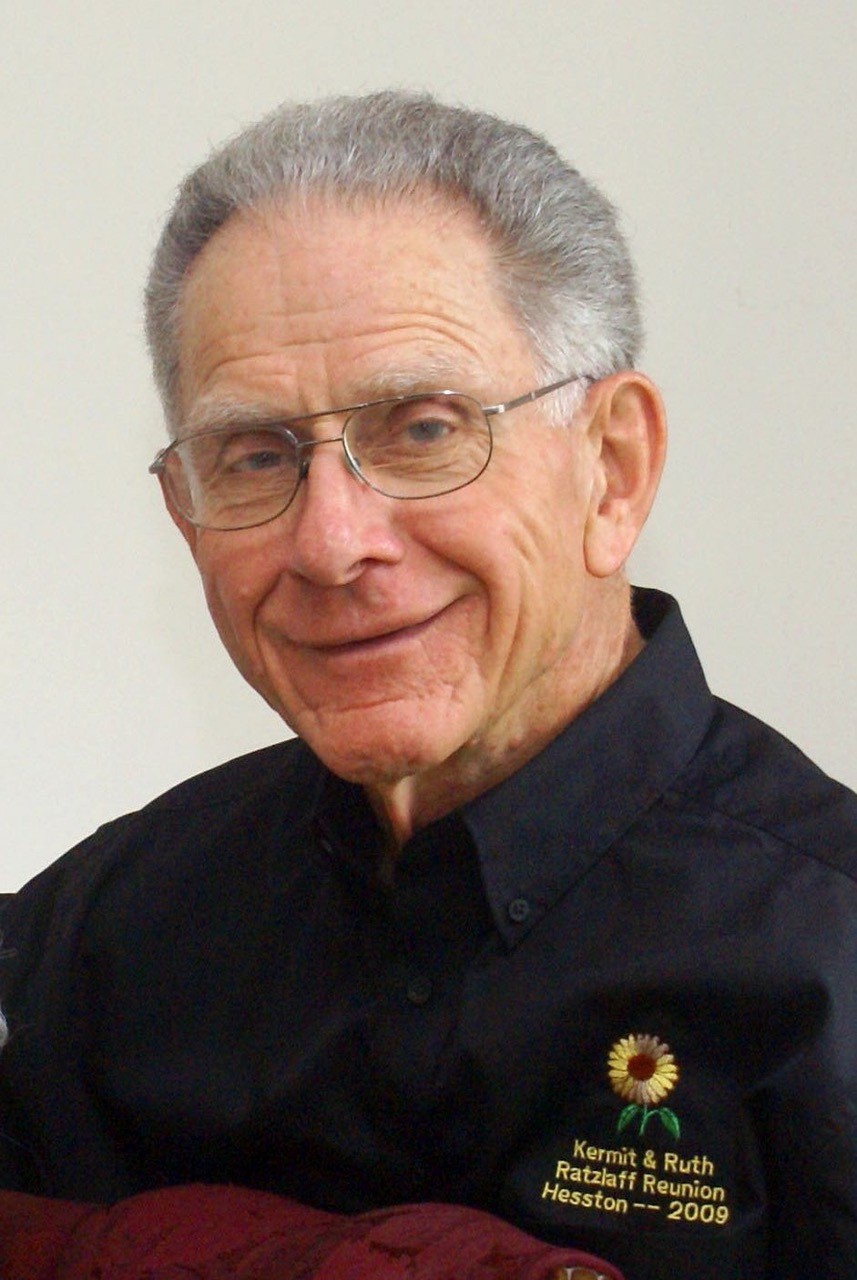
Kermit Ratzlaff (1921–2022) Biologist
Kermit Omer Ratzlaff, Hillsboro, Kansas, passed away peacefully on September 27, 2022, at Parkside Home in Hillsboro at the age of 100. He was predeceased by his wife of nearly 72 years, Ruth.
Kermit was born December 26, 1921, in the Hillsboro Hospital to Jonathan J. and Marie Plenert Ratzlaff. In 1928, they moved to the Balko area in the panhandle of Oklahoma, in time for the hardships of the dust bowl. The family was part of the Balko Mennonite Brethren Church, and he was baptized at the age of 12. Kermit was valedictorian at Corn Bible Academy and at Bethany School in Balko.
He enrolled in Tabor College, and here he met Ruth Warkentin. In the fall of 1942, they were engaged just days before he was inducted into Civilian Public Service as a Conscientious Objector. He served in Oregon, Wisconsin, and California. Kermit and Ruth were married in Los Angeles on August 11, 1944. They lived in Pasadena and west Los Angeles, California, for 18 years where their five children were born. During this period, City Terrace Mennonite Brethren Church in east Los Angeles was central to their lives. Kermit received his PhD in Biology from UCLA in 1962.
In 1962, the family moved to Edwardsville, Illinois, where Kermit joined the Physiology faculty of Southern Illinois University at Edwardsville. He remained at SIUE until retirement in 1992. Kermit was a member of the American Scientific Affiliation for over 70 years.
After retiring, Kermit and Ruth moved to Hillsboro, Kansas. There he kept busy with gardening and volunteering. He immediately joined the Lions’ Club and became an active proponent of recycling in Hillsboro. Kermit led the Senior Center board and was involved in multiple capacities with Grand Oaks low-income housing. He was the long-time sexton of the Hillsboro MB Cemetery. Always needing to be busy, he was a paperboy for the Hillsboro Free Press until age 97, possibly the world’s oldest paper carrier.
Kermit joined the ASA in 1951. He was in graduate school at UCLA when a fellow biologist and ASA member John Sinclair, who was then an instructor in science at California Baptist Theological Seminary, told him about it. Kermit has been a member ever since, becoming the longest-term member in ASA history.
Kermit was very active in the Southern California chapter of the ASA, serving as chair for several years until he moved to Illinois. He was elected an ASA Fellow in 1964. A few years ago, Vicki Best interviewed Kermit and his Transformation Profile was posted on the ASA website.
top
Frank Roberts (1930-2010) Geology Secondary Science Education, theology
Frank who died February 9, 2010, in Newtown Square, PA, at age 80 was a budding scientist and once emptied the house during a dinner party when a chemistry experiment he was conducting caused a sulfurous odor that sent guests running out onto the lawn.
He Haverford School and then Haverford College, where he majored in physics.
At a Christian Endeavor meeting he met Shirley Pyle, a young woman from Devon. They were married in 1951. Shirley Roberts died in 2006.
The young couple moved to Dallas in the early 1950s while Frank Roberts was attending Dallas Theological Seminary. He earned a master's in theology at Dallas and was ordained in the Presbyterian church.
Frank and Shirley Roberts moved to Newtown Square in 1955, where Frank Roberts joined the faculty of Delaware County Christian School. The Christian school movement was young then, and Frank Roberts helped to create a place for rigorous science. He believed and taught that science and faith were not mutually exclusive. He served as chairman of the science department for 36 years, while teaching geology, physics and math. He was known for his field trips across eastern Pennsylvania that took students to some of the outcrops he discovered doing his field work for his studies at Bryn Mawr. He also taught an elective class in Greek and a senior seminar on the history of science.
In 1971 was honored by the National Association of Geoscience Teachers as teacher of the year for the mid-Atlantic states.
He continued his education, earning a Masters in Education from Temple University, and an MA and, in 1969, a Ph.D. in geology at Bryn Mawr College. His students began calling him
Doc Rock. With his graduate studies completed, he, Shirley and son Timothy began a series of summer trips to sites of geologic importance that included a visit to Iceland to see glaciers and a still-smoking volcano. After finding that there were volcanoes in Hawaii, Shirley insisted on a geological field trip there too.
ASA Fellow, Frank Roberts was deeply involved in the conferences and publications of the American Scientific Affiliation. He also was a life member of the American Association for the Advancement of Science. At the time of his death he had just completed work on a manuscript for a book about science and the miracles of the Bible. After retiring from Delaware County Christian School in 1991, Frank became an adjunct professor of earth and space science at Montgomery County Community College, where in 1997 he was awarded the adjunct faculty award for teaching excellence. His health declined in his late 70s as his kidneys began to fail. He was hospitalized frequently in the last weeks of his life. His visitors included many former students. He is survived by his son, Timothy Roberts, of El Paso, Texas. N
ewsletter*
top
Donald S. Robertson (1921-2016) Geneticist
Donald Sage Robertson was born on June 27, 1921, in Oakland, CA, and passed away at 95 years of age on December 24, 2016, in Story City, IA. Donald and Roxana Ruth Sidensol were married September 13, 1942, and Roxana survives her husband after nearly 75 years of marriage.
Donald received his A.B. in 1947 from Stanford University and his Ph.D. from the California Institute of Technology in 1951. In the 1950’s, he taught at Biola where he became chairman of the Sciences Department. He was Emeritus Professor of Genetics, Development and Cell Biology at Iowa State University, retiring in 1991. Donald was a member of the Genetics Society of America; Sigma Xi, The Scientific Research Society; the American Scientific Affiliation and received the Governor’s Science Award in 1984. He loved his work in genetics.
He had a strong relationship with Jesus Christ and loved his family unconditionally. He was a long-time member of Christ Community Church in Ames. He loved to paint, doing landscapes and whatever his wife requested. He and Roxana worked closely with international students, and were sponsors for students through InterVarsity Christian Fellowship.
Donald joined the American Scientific Affiliation in 1951 at the same time as Walt Hearn who was later his colleague at Iowa State. He is shown in the photo of attendees of the 1955 ASA annual meeting at Star Ranch in Colorado Springs, CO. (see page 3 of the Complete December 1955 Journal of the ASA) In 1957 he published a short article called “Out of the Lab” in the BIOLA publication “The King’s Business.” This article was reprinted as Appendix 17 in the book by F. Alton Everest, History and Development of the American Scientific Affiliation. He spoke on a panel of the meaning of “kinds” in Genesis at the 1958 ASA annual meeting. In 1959 he served on the ASA nominating committee. In the 1960’s, he served on the Natural Sciences Commission and on the Biological Sciences Commission of the ASA. In 1964 and in 1967 he helped organize the ASA Annual Meeting at Siloam Springs and Stanford University, respectively. When Walt Hearn left Iowa State in 1968, Donald was elected to lead and receive all the documents related to the Iowa Section of the ASA. The February/March 1987 issue of the ASA Newsletter devotes several paragraphs to describing his work on corn genetics. In June, 1987, he spoke on corn genetics at the ASA conference on "Gene-Splicing: Current Progress and Ethical Concerns."
top
Richard J. Rommer (1920-2004) Geology
Of Pearl River, NY, passed away April 7, 2004, at age 84. He served in the U.S. Army Air Force during WWII and attained the rank of Lt. Col. Ret. Air Force Reserve after 36 years. He taught geology and meteorology at City C. of NY, Columbia U., Long Island U., Marshall Law C., Nyack C. and Kings C. He participated in many research studies through the years in these subjects.
(incomplete)
top
Roger G Rowe (1942-2019) Geologist
Roger G. Rowe, age 77, of The Villages, Florida passed away at his home on Saturday, September 21, 2019. He was born and raised in Duluth, Minnesota by the late Mildred and Grant Rowe. Roger graduated from Duluth Central High School in 1960 and continued his studies at The University of Minnesota, Duluth. In 1971 he graduated from Bowling Green State University with a Master’s of Science in Geology. He worked as a Geologist for ExxonMobil for 38 years and then as a Geological Modeler for Subsurface Computer Modeling for 12 years. He retired to The Villages, Florida with his wife, Jane, in 2008 where he enjoyed flying his plane and bicycling. Roger was a strong man of faith and believed in the soon return of Jesus Christ to earth.
As some of you may know Roger has an extremely mentally challenged and physically wheelchair bound son who periodically attends SCARC which is a handicapped center in Bushnell for this type of individual. In lieu of flowers, a small donation to this facility in the name of Roger and Glen Rowe will help SCARC achieve its goals: scarcinc.org/objandhist.asp. Mailing address: SCARC, 213 W. McCollum Avenue, Bushnell, FL 33513. (352)793-5156.
Roger joined the ASA in 2001 and participated in the Houston section of the ASA.
From Hiers-Baxley Funeral Services in The Villages, FL.
top
Sattley Clark Rowland (~1938-2021) Physicist
S. Clark Rowland, who taught in the Andrews Physics Department for 48 years, passed away in early 2021. He fell in January and fought off one pneumonia in the ICU, but his lungs were not strong enough to withstand a second round.
Clark graduated from Pacific Union College in Angwin, CA, along with his wife, Bonnie, in 1960 with a degree in physics. He earned his PhD in physics (materials science) from the University of Utah in 1967. He also studied at the Seventh Day Adventist Theological Seminary. He then joined the physics department at Andrews University in Berrien Springs, MI, where he taught for 48 years until his retirement in 2015 when he moved to Davis, CA. Many Physics alums remember Dr. Rowland for his research goals, academic excellence and reconciling science with Christian faith.
Clark and Bonnie participated on many trips with Maranatha Volunteers International. They enjoyed doing volunteer projects and traveling to see new people and cultures while making a difference. Gifts given in Clark’s name to the Memorial Fund at Maranatha will be used to equip the science classroom at the Kajiado girls’ school in Kenya.
Clark learned about the ASA from a conversation with Richard Bube. He joined the ASA in 2006 and remained a member until his death. He and Bonnie attended the ASA annual meetings in Point Loma (2012) and Belmont (2013).
top
G. Edward Rozar (1949-1993) Medical Doctor
Of Morgantown, WV he was with the WVU School of Medicine, Dept. of Surgery. A native of Athens, GA, he received a chemistry degree from U. of GA and MD from the Medical C. of GA in 1973. His specialties were thoracic and cardiac surgery. An active surgeon Rozar would be devastated in 1989 to find that he had AIDS.
A Chicago Tribune death notice described the situation: "G. Edward Rozar Jr., 44, a former surgeon whose disclosure that he had the AIDS virus led to the testing of hundreds of his patients; had performed more than 800 open-heart surgeries between 1984 and 1988 before learning in April 1989 he was infected; no case of a patient contracting the disease was reported; he felt he may have contracted the virus in 1985 while performing surgery as a resident at Allegheny General; appeared on numerous television and radio programs and testified before Congress on the effects of the disease on physicians and patients; wrote a 1992 book titled "Laughing in the Face of AIDS: A Surgeon's Personal Battle"; died July 17, 1993 in Marshfield, Wis., of AIDS complications." JWH*
top
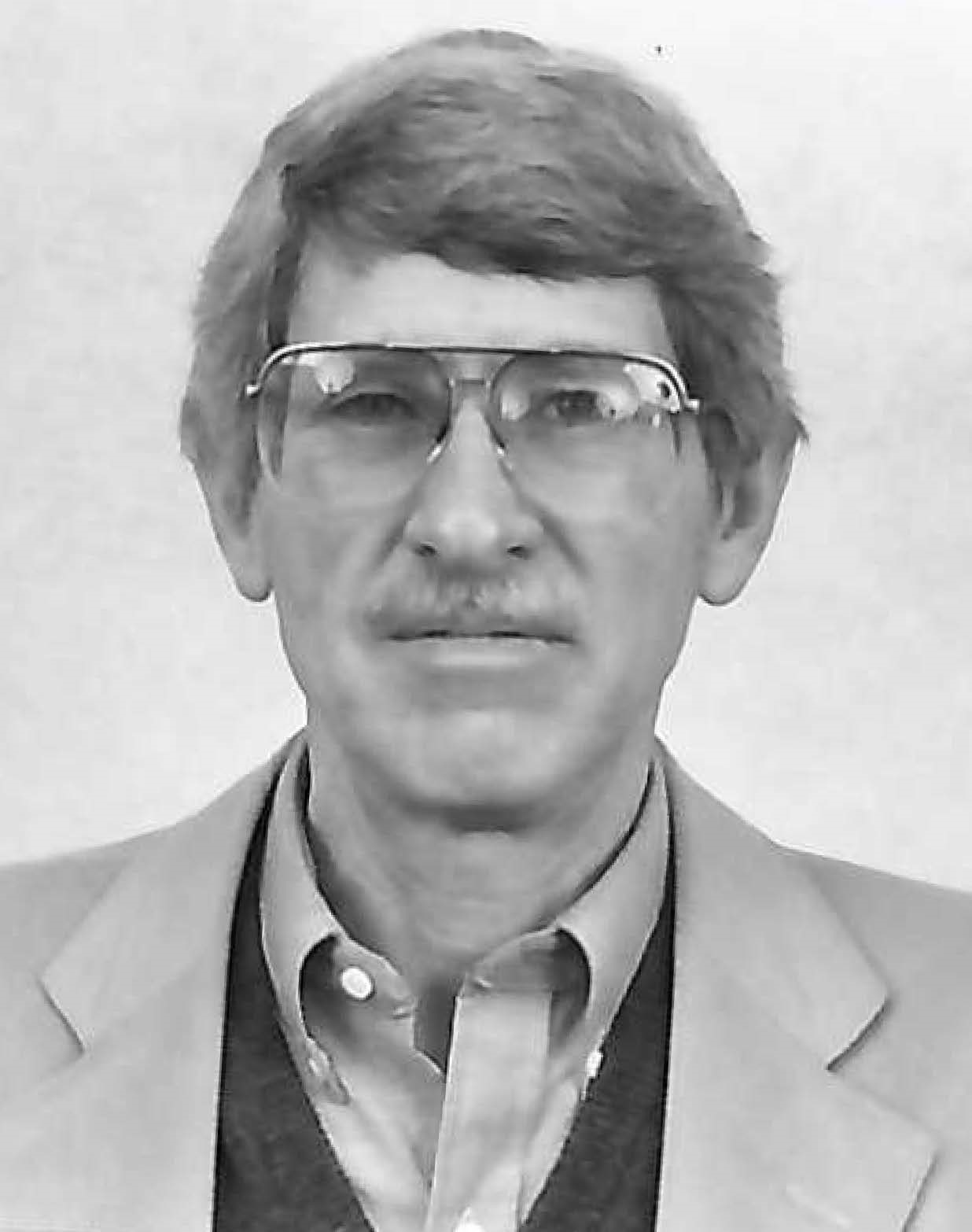
Richard Lee Ruble (1933-2023) Theology; Psychology
Richard Lee Ruble, 89, of Siloam Springs, Arkansas, passed away peacefully on August 16, 2023. He was born on December 16, 1933, in Lexington, Virginia.
Driven, determined, and unwilling to give up, Richard attended numerous institutions and received a multitude of degrees. He first studied at Bryan College in Dayton, TN, where he received his degree in history. In addition to having a stellar academic record, Richard was also a prolific runner for the cross-country team during his time at Bryan. Following his undergraduate degree, Richard moved to Philadelphia and attended Faith Theological Seminary to receive his master’s degree. Ever curious and eager to learn, he continued furthering his education at Dallas Theological Seminary, achieving a doctorate in theology. Richard acquired his second master’s degree, this time in psychology, from the University of North Texas. Rounding out his academic career, Richard was hired as a professor of religion and psychology at John Brown University. While teaching, he completed his PhD in psychology at the University of Arkansas.
John Brown University became home to Richard. He pioneered the start of the psychology department in 1964, and by the end of his time, he had worked as a professor of theology, a professor of psychology, and as the vice president of academic affairs.
It was at JBU that he met his wife, Anne Horton, to whom he was married for 57 years. A couple years following their marriage, Anne and Richard had their only child, Stephen. When asked how he would describe Richard as a father, Stephen remarked that he was “loving, caring, playful, engaging, present, attentive, and a mentor.” Some of Stephen’s favorite memories with his father surrounded playing pickup basketball with the neighborhood kids, going to Lake Weddington to collect sticks, and having Sunday picnics after church. In his later years, Richard was an equally excellent grandfather, and spent as much time as he could with his granddaughters, playing games, singing songs, sharing his knowledge, and engaging in their lives.
A worldly man with a passion for God and spreading messages of love and kindness, Richard also served as the pastor at Highland Community Church for 30 years. When he wasn’t preaching, studying, or spending time with family, you could find Richard traveling the world, collecting artifacts and learning about the cultures that existed in Europe and the Middle East.
While at JBU, Richard joined the American Scientific Affiliation in 1966. He became an ASA Fellow and was the most prolific writer of book reviews published in the Journal of the ASA. It was no surprise that in 1987, when the name of the Journal of the ASA was changed to Perspectives on Science and Christian Faith, that Richard was named the book review editor for PSCF. He served in that capacity for over 20 years until 2008.
Richard is survived by his wife (Anne), son (Stephen), daughter-in-law (Lori) and two granddaughters (Ella and Olivia). He will be missed tremendously, and his family finds peace knowing that he finally has the answers to all of life’s lingering questions.
top
James P Runyon (~1938-2021) Chemist; Engineer
James Philip Runyon, age 73, of Noblesville, Indiana (formerly of Wheaton, Illinois), passed away on November 26th, 2022 surrounded by his family at St. Vincent Hospital in Indianapolis, Indiana.
James (Jim) was born October 25, 1949 in Alma, Michigan to Lawrence and Leilah (Hartgerink) Runyon. He graduated from Bronson High School in Bronson, Michigan. He also graduated from Taylor University with a Bachelor of Science degree in Chemistry Education, and later a Masters in Education and Masters of Science degree in Computer Science from the U of Wisconsin-Madison.
Jim taught high school chemistry for 7 years and later retired from Nokia Bell Labs where had a 32 year career. He married Merrilee Church on June 20th, 1981 at Pleasant Hill Church in Bronson, Michigan and loved her deeply. Together, they had 4 kids and 4 grandchildren. Jim was a devoted husband and a faithful father who studied his kids, and learned and encouraged each of their unique interests alongside them. After seeing his sons show an interest in endurance racing, Jim became a dedicated athlete - running several triathlons with his sons and even running the Chicago Marathon.
Jim & Merrilee were faithful members of Willow Creek Community Church in South Barrington, IL and Jim was actively involved in Reasons to Believe, a science/faith-based organization exploring the connections between science and faith. Jim also joined the American Scientific Affiliation in 2011 when he attended the Wheaton ASA Chapter meeting which preceded the ASA annual Meeting in North Central that year. At that time he befriended Randy Isaac and introduced his friend Perry Marshall to Randy. Later, Jim maintained his membership in the ASA and participated in the ASA Wheaton Chapter meetings.
Donations or remembrances can be made to Reasons to Believe (https://support.reasons.org/donate-now) or a local church of your choice.
topLewis S. Salter (1926-1989) Physics
Of Crawfordsville, Indiana, died 19 Nov 1989.
"Salter was born in Norman, Oklahoma. He spent three years in the United States Army during World War II, then received his undergraduate education at the University of Oklahoma, where he was elected to Phi Beta Kappa.[1] He was selected as a Rhodes Scholar, and spent 1949 to 1953 at the University of Oxford, where he received his master's degree and doctorate in theoretical physics.[2]
After leaving Oxford, Salter joined the faculty of Wabash College in 1953. He took leave from Wabash from 1958 to 1960 to help establish a research program in theoretical physics at the Bandung Institute of Technology in Indonesia. He left Wabash in 1967 to become dean of Knox College He continued his international activities, working for the World Bank Survey team in Indonesia and consulting on science education there in 1972, and consulting on science education for the United States Agency for International Development. Salter was also a physics consultant to the Argonne National Laboratory and the Canadian National Research Council.
Salter returned to Wabash College as its president in 1978. The issue of Wabash remaining an all-male college was addressed multiple times while Salter was president.[3]
After he was diagnosed with terminal cancer, he resigned the presidency of the college and returned to teaching physics in August 1989, but he died before the fall term ended.[2] He continued to work on research problems until his death, and had a paper published posthumously in the American Journal of Physics".
Lewis was president emeritus of Wabash College. The 1989 Annual Meeting at Indiana Wesleyan was the first national ASA meeting he had been able to attend. Wikipedia,
newsletter*
topT. Gordon Scott (1941-2018) Organic chemist
Thomas was born on November 27, 1941 and passed away on Friday, August 10, 2018.
He was a resident of Winston-Salem, North Carolina at the time of passing.
Dr. T. Gordon Scott won many honors over his lifetime including, Valedictorian of his Senior Class at Lincoln High in Ellwood City, PA; he was awarded the Thouron Scholarship from the University of Pennsylvania, which allowed him to attend graduate school at any University in the U.K., he attended Cambridge University, England in 1961; and Marquis Who's Who as a Lifetime Achievement Inductee in 2018.
To prepare for a career in chemistry, Dr. Scott earned a Bachelor of Arts (Chemistry) from the University of Pennsylvania in 1963, a second Bachelor of Arts (Natural Science) from Cambridge University in 1965, a Master of Arts from Cambridge University in 1970, and a Ph.D. from the University of Illinois. He has remained at the top of his field through his professional memberships with the American Chemical Society, the Cambridge University Chemical Society, and the American Scientific Affiliation which he joined in 1967.
Retired since 2009, Dr. Scott dedicated more than 45 years to the field of education. With a focus on the field of science, he concluded his career as an associate professor of chemistry at Winston-Salem State University (NC), a role that he held for five years. Previously, he excelled as an adjunct instructor of pharmacology at National College, adjunct professor of natural sciences for Danville Community College (VA), associate professor of chemistry at Jarvis Christian College (TX), associate professor of chemistry at Union College (KY), associate professor of chemistry at Knoxville College (TN), associate professor at Bryan College (TN), assistant professor of chemistry at Alderson Broaddus University (WV), and lecturer of biochemistry at the University of California, Santa Barbara. He also served as visiting professor at Louisiana College and (interim) assistant professor at Oberlin College (OH). In addition, Dr. Scott served in roles at the secondary level as an instructor of mathematics at Winona Independent School District in Texas, and supervisor of secondary studies at Westminster Academy (PA).
Along with his work inside the classroom, Dr. Scott is known for two prominent contributions to chemistry, both with international effect. In applied science, (R&D) with Dupont he developed an efficient process for production of a resin that would successfully bind glistening acrylic pigments for use as automotive finishes. The first application world-wide of this formulation was on 1964 model Cadillacs and Buicks. In pure science with a co-investigator (Richard D. Spencer) at the University of Illinois, he determined the lifetime of the fluorescent excited state of coenzyme NADH, under half-a-billionth of a second. It is now an internationally-accepted constant in biochemistry. Using this constant, the time needed to conduct a rate experiment involving NADH in living systems was reduced from two or more weeks to two to four hours, a significant saving in research time and materials. As a direct consequence of using the constant within a decade of publication six hereditary metabolic diseases were either controlled or cured through research at established research stations in the United States and Europe. Dr. Scott, along with other professional experts in his field, authored "Synthetic Procedures in Nucleic Acid Chemistry," and "Spectroscopic Model Studies of NAD(H)," Nicotinamide-Adenine Dinucleotide (Reduced). Today, he continues to study the created order and consults periodically with active professionals.
*Taken from Marquis Who’s Who, https://www.24-7pressrelease.com/press-release/436241
topRaymond J. Seeger (1907-1992) Physics
Of Bethesda, Maryland, died of a heart ailment on 14 Feb 1992 at the age of 85. Born in Elizabeth, New Jersey, Ray graduated from Rutgers and received a Ph.D. in theoretical physics from Yale in 1929. He taught physics at George Washington University until 1942, then went to work for the Navy during WWII.
He worked on high explosives at the Naval Ordnance Lab at White Oak, becoming chief of the aeroballistic research department.
From 1952 until his retirement in 1970 he was on the staff of the National Science Foundation. He served as assistant to the NSF director and retired as a senior staff research associate. He was an adjunct professor at American University (1954-72) and at various times also taught at Johns Hopkins, Catholic, and George Washington universities in the area. He published more than 200 technical papers, on quantum mechanics, fluid dynamics, solid state, and applied mathematics. Ray Seeger had received the U.S. Navy Distinguished Service Award, had chaired the fluid dynamics division of the American Physical Society, and had been vice president of the history & philosophy of science division of AAAS.
He was best known to ASA members for his writings about noted scientists, including 25 articles in our own journal. The last of that series, on "
F. Bacon, Iconoclastic Herald," appeared in Perspectives on Science and Christian Faith in June 1989. As in his other biographical articles, Ray described Francis Bacon's interest in religious matters as well as his scientific work. Ray was a member of Bethesda's Pilgrim Lutheran Church. He is survived by his wife Vivian, to whom he was married for 62 years, and by a son, daughter, and four grandchildren. See: http://www.asa3.org/ASA/PSCF/1986/JASA6-86Seeger.html
, Newsletter*
topLarry Seward (1945-2017), Biologist.
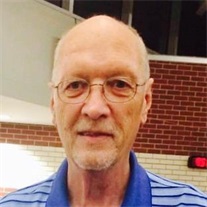
Larry Gene Seward passed away June 27, 2017 in Springdale, Arkansas. Born December 17, 1945 in Tuckerman, Arkansas, he married Mary Rebecca (Reba) McConnell on June 10, 1967 in Mount Ida, Arkansas.
Dr. Seward graduated from Arkansas College (now Lyon College) with a degree in biology in 1967. He taught Biology at Lakeside High School in Hot Springs before going on to earn an MS in Biology and an Ed.D. in Higher Education with an emphasis in Natural Sciences from Oklahoma State University in 1979. He joined the faculty at John Brown University (JBU) in 1970 in the Division of Natural Science and joined the American Scientific Affiliation (ASA) that same year. His commitment to teaching and to the field of natural sciences, and his strong advocacy for the ASA, were recognized as he was named a Fellow of the ASA in 2005. He led a local ecology field trip at the 1998 ASA meeting when it was held on the JBU campus in 1999. He also ensured that a JBU biology position was featured on the ASA listserv, thereby attracting ASA member Brian Greuel.
During his 37 year tenure at JBU, Dr. Seward served the university and his community in multiple ways outside his teaching commitment. He served in ways that married his love of nature and the courses he taught in the Natural Science Division including serving as JBU Grounds Manager, JBU Arbor Society founder, a member of the Planning and Zoning Commission of Siloam Springs and Chair of the Sager Creek Commission. His other passion was the support of student athletes. He served JBU as Faculty Athletic Representative for 25 years and Chair of the Faculty Athletic Committee for 27 years, retiring from both roles and from the ASA in 2007 due to his diagnosis of multiple myeloma. The cause of death was complications from myeloma.
Dr. Seward spent his career helping students in the classroom, in the laboratory and on the sports fields of John Brown University. He loved spending time with his family, playing golf with friends, and keeping his beautiful gardens. Well known for his special love for trees, Dr. Seward posted on Facebook in May, “Planting trees makes one look for a hopeful future.”
top
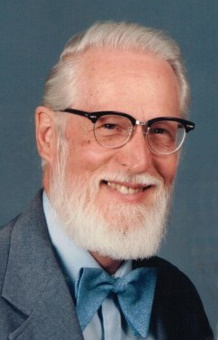 David F Siemens, Jr
 (1925-2020) Philosophy
David F. Siemens, Jr., of Mesa, AZ, died July 29, 2020, at the age of 94 of complications
of Parkinson’s. David was preceded in death by his wife of 66 years, Esther. He
was born in California and raised mostly in Ecuador, where his parents were missionaries.
He attended high school in Van Nuys, California, where he received the Bausch &
Lomb Honorary Science Award. Later education included a diploma from Ft. Wayne Bible
Institute, BA from Defiance College in 1947, MA (philosophy) from Indiana State
Teachers College in 1954, and PhD (philosophy) from Claremont Graduate School in
1976. He received the Defiance College 2010 Alumni Citation for Academic Excellence
Award.
During his working life, he was a pastor (ordained by the Central Valley Baptist Church,
Donna, TX), high school teacher, Bible institute teacher (in Spanish), writer-producer
of films and filmstrips, junior college professor, and adjunct professor in a theological
seminary. In the 1960s, he worked as a writer/producer at the Moody Institute of
Science where he was in contact with F. Alton Everest. During his years at
Los Angeles Pierce College from 1976 to 1985, he served as department chair, on
the Faculty Senate both for the department and at large, and on accreditation committees.
His publications include four books: Exploring Christianity: A Guided Tour (Moody Press, 1963); Induction: A Philosophical Study (1984);
Naturalism: Its Impact on Science, Religion
and Literature (Canyon Institute for Advanced Studies, 2001); and La Ciencia y la Biblia, A ¿Son opuestas o compatibles?, with Oscar Gonzalez
(2012). He also wrote more than two dozen articles in refereed journals, three filmstrips
(one award), and two educational films (three awards).
Dave joined the ASA in 1960 and would remain an active member and supporter for the 60
remaining years of his life. He published more than two dozen articles and letters
in PSCF. He was elected a Fellow of the
ASA and served on the executive committee of the Southern California chapter of
the ASA. The ASA Newsletter reports:
Alton Everest was second in command at Moody Institute of Science
(MIS) when David Siemens was hired as writer/producer in 1961. David recalls, “As
my boss, Alton insisted on accuracy and clarity. Since the product was audiovisuals,
both language and pictures were checked and rechecked.” As a result, MIS films consistently
won top awards. (https://www.asa3.org/ASA/newsletter/novdec05.pdf)
Dave was also a member of the American Association for the Advancement of Science, Association
for Symbolic Logic, Evangelical Philosophical Society, Philosophy of Science Association,
and Society of Christian Philosophers.
His daughter, Laurel, wrote,
As far as memories of what ASA meant to Dad, it seems to me that
he was a member almost forever. He treasured that membership. He was the smartest
man in most of the rooms he entered, and to be honest, he could become frustrated
with individuals who were not blessed with his intellect. ASA provided an outlet
and a challenge for him, a chance to connect with others who were usually also the
brightest people in most of the rooms they entered. He valued learning so highly,
and in ASA he found people who could stretch his thinking, add to his knowledge
base, and offer new insights. He looked forward to ASA conventions with great excitement.
He loved listening to other members contribute, and he was deeply honored when he
was afforded the opportunity to read his own papers at a convention. Above all,
ASA was a place where members shared his love of the elegant consistency between
science and Christian faith. These were his people.
top
Paul G. Simpson (1939-1978) Chemistry
Of Pensacola, Florida, he died suddenly of a heart attack on November 2, 1978, at the age of 39. After receiving his Ph.D. in chemistry from Harvard, Paul joined the chemistry faculty of Stanford University, then moved to Oregon State University. He left academic life for employment with Monsanto chemical company in Pensacola where he was employed at the time of his death. Paul is survived by his wife Sonja, three daughters, and one son. The family requested that memorial gifts be given to Fairfield Presbyterian Church of Pensacola, or to the work of Inter-Varsity Christian Fellowship. Paul had served as faculty advisor for the Stanford IVCF chapter, and more recently for the Pensacola group.
(incomplete)
top
James W. Sire (1933-2018) Editor and author
James W. Sire died February 6, 2018. He was born October 17, 1933 in Inman, Nebraska. He was a widely-respected apologist, author, and lecturer who served for more than thirty years as senior editor at InterVarsity Press. He is the author of more than twenty books, including the seminal apologetics title The Universe Next Door, which was first published in 1976 and has sold over 350,000 copies in five editions and has been translated into eighteen foreign languages.
Born on a ranch on the rim of the Nebraska Sandhills, Sire served as an officer in the Army, a professor of English literature, philosophy, and theology, and a lecturer at over two hundred universities in the U.S., Canada, Eastern and Western Europe, and Asia. He received a PhD in English from the University of Missouri, an MA in English from Washington State University, and a BA in chemistry and English from the University of Nebraska.
Sire's teaching and books often covered the concepts of worldview and Christian apologetics. He focused on the application of worldview thinking to the integration of Christian faith and the academic disciplines, as well as the nature of "signals of transcendence" and their relation to Christian life. His many books include The Universe Next Door, Apologetics Beyond Reason, Beginning with God, Scripture Twisting, Discipleship of the Mind, Chris Chrisman Goes to College, Why Should Anyone Believe Anything at All?, Habits of the Mind, Naming the Elephant, Learning to Pray Through the Psalms, Why Good Arguments Often Fail, and A Little Primer on Humble Apologetics.
Sire joined the ASA in 1960. Many of his books have been reviewed in the ASA journal. Frequently, the ASA Newsletters in the 70’, 80’s, and 90’s reported his frequent travels and numerous lectures. For example, the Aug/Sep 1989 issue reports “James W. Sire, senior editor and campus lecturer for InterVarsity Press in Downers Grove, Illinois, recently tallied up his year of academic itineration. Jim made some 156 presentations (14 to faculty groups) at 34 secular institutions and 4 Christian colleges. Instead of resting up this summer, though, he is off to the Lausanne 11 Congress in Manila, where he will lead a workshop on the rise of New Age spirituality in a section on the forces of modernization organized by Os Guinness.” He was an ASA member for 58 years.
top
William A. Smalley (1923-1997)
Linguistics, Anthropology William A. Smalley, who as a young American linguist, anthropologist and missionary sat with the ancient Hmong peoples in the mountains of Laos, listened to the patterns of their speech and helped them develop their first permanent written language, died on Dec. 16, 1997 in New Haven. He was 74 and lived in Hamden, Conn. Mr. Smalley, a retired professor of linguistics at Bethel College in St. Paul, died at the Hospital of St. Raphael after a heart attack, his wife, Jane, said. It was during the early 1950's, when Laos was a French colony and torn by war with the Communist Pathet Lao, that Mr. Smalley, who was working toward his doctorate at Columbia University, did his work with the reclusive Hmong. The Hmong had developed their own dialect and tradition of oral speech but had no lasting system of written language except for a few signs and symbols sewn into quilts or dresses. Hundreds of thousands of them were driven out of China in the 19th century and trekked south to the mountains of Laos, Thailand, Cambodia and Vietnam.
NYTimes
"William A. Smalley was born April 4, 1923 in Jerusalem, Palestine. His parents were American missionaries for the Christian and Missionary Alliance, working among Arabs in Jerusalem and Transjordan. In 1934, Smalley and his family moved back to the United States. In reflecting upon his upbringing, Smalley writes, My parents were thoroughly, deeply devoted both to Christ and to the Alliance, but they drew their boundaries more widely than many. According to Smalley, My home was intellectually more open than some Alliance homes; my upbringing was somewhat less doctrinaire. (Smalley 1991) Smalley attended Houghton College, where he developed an interest in anthropology, which he saw as relevant to missionary work. After graduating from Houghton in 1945 with a degree in English literature, he attended the Missionary Training Institute (1945-46) and received linguistic training in Bible translation at the Summer Institute of Linguistics (SIL) at the University of Oklahoma (1946, 1947). In 1946 he also enrolled in Columbia University graduate program in anthropology with a concentration in linguistics. According to Smalley, he discovered his intellectual niche studying at SIL, while the anthropological training at Columbia gave linguistics a broader cultural context. "I became absorbed in the challenge to understand my faith in Christ in light of all I was learning about human culture. (Smalley 1991)
In 1950, Smalley was sent to Vietnam by the Christian and Missionary Alliance. There, Smalley worked on language analysis problems in the southern region of the country. The following year, he was sent to Luang Prabang, Laos to analyze the Khmu language and prepare language lessons for other missionaries to learn the language. While in Laos, Smalley also worked with Reverend G. Linwood Barney and Father Yves Bertrais in developing a writing system for the Hmong people. Together, they developed the Hmong Romanized Popular Alphabet (RPA), which is the most widely used Hmong writing system today.
With the outbreak of civil war in Laos, Smalley and his wife were forced to return to the United States in 1954. He completed his dissertation on the Khmu language and was awarded his doctorate in 1956. An abbreviated version of his dissertation was later published in 1961 as
Outline of Khmu Structure. Over the next several years, Smalley worked primarily in Southeast Asia as a translation consultant for the American Bible Society (1954-1969) and as a regional translations coordinator (1969-72) and translation consultant (1972-77) with the United Bible Societies. Due to his work, he resided in Thailand from 1962 to 1967 and from 1969 to 1972. (He also lived in Thailand as a Fulbright research fellow in 1985 and 1986.)
In 1977, he decided to leave the United Bible Societies after 23 years.
Unable to find employment, he worked briefly at a discount toy store. In 1978, Smalley relocated to St. Paul, Minnesota to accept a position as professor of linguistics at Bethel University (1978-87). In Minnesota, he unexpectedly found that thousands of Hmong refugees were also settling in the Twin Cities, which guided his research over the next decade. As an Honorary Fellow (1982-84) with the University of Minnesota Southeast Asia Refugee Studies Program, he took part in a project studying Hmong adaptation to life in the United States, publishing
Adaptive Language Strategies of the Hmong: From Asian Mountains to American Ghettos: Stages of Hmong Cultural
Adaptation (1986). He also studied the different Hmong scripts that had developed since RPA, in particular Pahawh Hmong script, which was created in 1959 in Laos by Shong Lue Yang. Smalley published two books on the script and its creator
Mother of Writing: The Origin and Development of a Hmong Messianic Script
(1990) and The Life of Shong Lue Yang: Hmong Mother of Writing (1990), both of which he co-authored with Chia Koua Vang and Gnia Yee Yang. (1949).
In 1955, Smalley took over editorship of Practical Anthropology (now known as Missiology), which he edited from 1955 to1968. He also served as associate editor for Bible Translator (1957-59) and Language Sciences (1983-92).
When he retired from Bethel College in 1987, he was awarded the college first annual Distinguished Teaching Award. In his retirement, he continued to write extensively and also edited Jacob A. Loewen's book, The Bible in Cross-Cultural Perspective, for which he wrote an introduction. He was involved with the ASA in the 1950s. In 1997, Smalley died of a heart attack at the age of 74."
Biographical Notes: http://www.nmnh.si.edu/naa/fa/smalley.pdf, Register to the Papers of William A. Smalley - Smithsonian Institution.*
(incompleat)
top
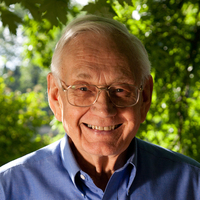
Albert Smith (1932-2021) Biologist.
Albert J. Smith, age 88, a resident of Windsor Park in Carol Stream, formerly of Winfield, Illinois, went to be with the Lord on Wednesday, February 10, 2021. He was born February 14, 1932, in Gasport, New York, to Albert and Marion Smith.
After losing his father at a very early age, Albert, who preferred to be called Al, was a hard-working, diligent young man who worked for local farm families and excelled in his studies. In high school, while living with a local family, Al began attending church and accepted Jesus as his Savior. His pastor encouraged him to pursue a career in ministry and suggested he attend Wheaton College. At Wheaton, he took a biology class to meet a general requirement and it became his chief area of study as he and his wife, Audrey, planned to pursue full-time ministry combining education and missions.
After receiving his BS in biology with highest honors in 1953, he attended Northern Baptist Theological Seminary and went on to teach at Elgin Academy in Elgin, IL, as well as pastoring a church and working for the post office. During the early years of his career, he earned his MS in ecology from Northern Illinois University and set up the biology department at the newly formed Judson College, also in Elgin, IL, where he taught from 1964–1967.
In 1967, he returned to Wheaton College as a biology professor and was thrilled to be working with some of the same professors who had encouraged him as a student. He was awarded a National Science Foundation Science Faculty Fellowship which enabled him to complete his PhD from the University of Chicago. During his 32 years on the faculty at Wheaton, Al taught genetics, bioethics, environmental ethics, and creation/evolution and supervised teacher education. For many summers, he taught and directed Wheaton’s Science Station in the Black Hills of South Dakota. He also taught at Wheaton’s Honey Rock campus in Wisconsin. His many accomplishments were recognized when he was awarded the Senior Teacher of the Year in 1979 and the Faculty Emeritus award in 1999.
In 1965 Al joined the American Scientific Affiliation. At that time he was at Judson College in Elgin, IL, which was then the home of the ASA office. Al served as secretary of the Chicago-area ASA local chapter. He worked on various local ASA projects and gave a paper at the 1973 Annual Meeting. He became a Fellow and was a candidate for the ASA Executive Council in 1980. He was designated a Fellow Emeritus in 2015.
Looking back on his career, Al reflected, “There were numerous ways in which God had guided us. Often, we did not know it as such but in each of these experiences—Wheaton College, NBTS, Judson College, Valley View Baptist Church, Elgin Academy—God was preparing me to minister to many of the future leaders in evangelical Christianity by being able to show how learning methods such as science and theology could be integrated. This was a far greater ministry than the pastorate would have been. I am overwhelmed to find out one by one what some of our graduates are doing. For me, this is especially true of the teachers we have trained as we hear from near and far of their work in the Kingdom.”
After retirement, Al stayed active in ministry to seniors in his local Evangel Baptist Church congregation and enjoyed his lifelong hobbies of gardening and traveling with his beloved wife, Audrey. He and Audrey first met in the 4th grade as classmates but attended different high schools. In 1950, after a “chance encounter,” Al invited Audrey to a high school graduation party and they soon became sweethearts for life, marrying in 1953. Clearly committed to his wife and children, Al took great pleasure in watching their children and grandchildren and great grandchildren grow up and express themselves as individuals. He was able to participate and even officiate in many of their marriages and newcomers to the family were always greeted with the warmest of hugs from “Dad,” “Father Dear,” and “Grandpops.”
His entire family is forever grateful for the loyalty and deep faith that he exemplified throughout his life as he humbly followed God’s lead. In his own words, “Looking back over the years, I am seeing more and more of how God has directed even though I haven’t understood how he was doing it at the time. My earnest conviction is that he is in charge and that anything accomplished will be up to him.”
He is survived by his wife of 67 years, Audrey, and 22 descendants in 3 generations.
topJohn L. Smith (1946-1994)
physics, science education
Physics associate professor Lectures on "The Earth, Humanity and of physicsat Mt. Vernon Nazarene College, died of kidney cancer on Dec. 28, 1994, at an age of 48 years. John was born in Blackwell, OK in 1946 and earned B.S. and M.S. degrees from Emporia (Kansas) State College, and an Ed.D. degree in science education from Oklahoma State U. in 1978. John was chairman of the Natural Sciences Division of MVNC from 1986 to 1989. Besides the ASA, he was a member of the National Science Teachers Assoc., American Assoc. of Physics Teachers and the Ohio Academy of Science.
John was a good example of a Christian propagating the gospel. Besides his activity with the Gideons, he was appointed Chaplain of the Knox Co. Jail. In Nov 1992, John earned a M.A. in Biblical Studies from Ashland Theological Seminary and was appointed a pastor of the Sparta (Ohio) Advent Christian Church in Aug. 1993. He served there until failing health in May 1994 forced him to take a leave of absence. Joseph H. Lechner
top
Lowell J Smith (1928-2024) Physics
Lowell James Smith, age 96, died August 7, 2024, at Canton Potsdam Hospital surrounded by his loving family. Lowell was born March 25, 2928, at his home in Lisbon, NY, the second son of the late Luther and Jennie (Thompson) Smith. He married Helen Geary, daughter of Leon and Pearl (Keyes) Geary at the Reformed Presbyterian Manse on April 11, 1963. He is survived by her and their two children: Carole and Robert Degenford and their three children, Hannah, Daniel, and Elisabeth of Ellicott City, Maryland; and Calvin and Rhonda Smith of Lisbon, NY.
Lowell received his elementary education in the one-room schoolhouse of District 24 located next door. His fellow students and the teacher walked to his house for their water supply. He graduated from Lisbon High School in 1945 as valedictorian, the only boy in his class of five (WWII had depleted young men in the area). In 1950, he graduated from Geneva College, Beaver Falls, PA, receiving the award as the outstanding student in the field of physics and was hired on a teaching fellowship by St. Lawrence University, Canton, to teach physics. Being drafted that fall into the Korean War changed this. During his two years in the service and for one year following, he worked in the Evan Signal Core Engineering Laboratory testing atomic weapons.
He then returned home and joined his brother Dale, to form Smith Brothers Electric Service. He also helped on the family farm and was self-employed with Electronics & Television Sales and Service. When time permitted, he enjoyed playing his fiddle.
Lowell had a lifelong interest in pistol target shooting, achieving the expert rating in rifle shooting in the Army and the NRA Masters Rating in the Lisbon Gun Club. The Range was in the basement of Lisbon Central School. He was a member of the Blue Mountain Lake Hunting Club.
He has been a deacon in the Lisbon Reformed Presbyterian Church, beginning in 1961, and is a member of the American Legion since 1953 and was a member of the Lisbon Volunteer Fire Department for about 40 years. Lowell joined the American Scientific Affiliation in 1990 and was a member until his death.
top
Theoren P Smith III (1954-2007) Physicist.
Trey Smith, age 53, went home to be with his Lord on September 27, 2007 after a valiant battle with lung cancer. He was born on September 1, 1954, in Denver, Colorado, and is survived by Kathy Smith, his wife of 30 years. He is also survived by four children, three of whom graduated from Wheaton College.
Trey received a Bachelor’s degree in physics at the US Naval Academy and earned a PhD in physics at Brown University. Trey served in the US Navy and did research at AT&T Bell Labs before joining IBM Thomas J Watson Research Center in 1985 as a Research Staff Member. In 1990, Randy Isaac, now ASA Director Emeritus, promoted him to his first management position and he later became Director of Physical Sciences and then CTO of the IBM PC company. In 1999 he joined Compaq and then worked at Roadrunner, Cable and Wireless, and SAIC.
Trey joined the ASA in 2005. His energetic and enthusiastic style helped him garner many friends and devoted colleagues and employees. He was always passionate and open about his faith and he recorded his thoughts which were later published as a book D
2: Daily Devotions. The appendix of the book contains the article in PSCF (September 2003), “Faith and the Human Genome” by Francis Collins.
topJack Sparks (1928-2010) Statistics,
Psychology, Theology
Ddied February 8 2010 at age 82. He was born Dec. 3, 1928, growing up on a tenant farm in Indiana. He earned a BS and played football at Purdue and received his MA (1951) and PhD (1960) from the University of Iowa. In 1952 he was drafted into the Army. He was hired by the University of Northern Colorado as Professor of Applied Statistics and the Director of Research Design.
In 1965 he became a Professor of Psychology at Penn State. He and his wife, Esther, had four children, Stephen, Robert, Ruth, and Jonathan. In 1967 he took an assignment with Campus Crusade for Christ in Arrowhead Springs, CA. His family began an eight-year ministry to students and street people at the University of California, Berkeley. A new body of believers was operating as the Christian World Liberation Front. In 1977 he and Esther moved to Santa Barbara and began the St. Anthanasius Academy of Orthodox Theology. He said, From that time it has been the center around which my life and work has revolved. He was ordained into the Orthodox Priesthood in 1987.
Jack was the author of many books including
Letters to Street Christians, God Forever Family, The Mind Benders, The Resurrection Letters, St. Irenaeus the Preaching of the Apostles, and
Victory in the Unseen Warfare. He was the editor of
The Apostolic Fathers and wrote many booklets, poems, articles, and short stories. One of his major projects was the
Orthodox Study Bible.
Jack and his wife moved to Alaska in 2004 to be near their children and grandchildren. He would get up at 5 a.m. to go to the church office. He never officially retired and was active until his death.
Newsletter
topJoseph P Spradley (1933-2016) Physicist, Historian of Science
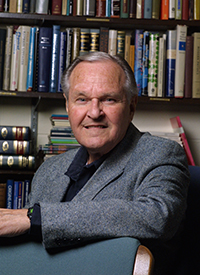
Joseph Spradley passed away after a battle with cancer on March 29, 2016 at home. He leaves his wife, Marilyn Spradley, four children, and 14 grandchildren. Joe earned his PhD in Physics from UCLA. He taught Physics, Astronomy, Math, and History of Science at Wheaton College from 1959 to 2014. He had additional teaching assignments in Beirut, Lebanon; Zaria, Nigeria; Nairobi, Kenya; Cairo, Egypt; and Jinan, China. Three times a week you could find Joe performing stunts off the 3 meter diving board at Wheaton College until 2015.
Joe joined the ASA in 1961. He published a dozen articles in PSCF and gave numerous plenary and contributed talks at ASA annual meetings local chapter meetings. He served on the ASA History and Philosophy of Science commission in the early ‘70’s. With his soft-spoken, mild-mannered style, he influenced countless students and ASA members. He excelled in a broad range of disciplines in the natural sciences as well as in the history and philosophy of science. “A Christian view of the physical world sees nature in the light of Scripture and with a concern for culture. This involves a creative view of nature that recognizes the world as real and good,” he wrote in a chapter of The Making of a Christian Mind: A Christian World View & The Academic Enterprise. Joe and Marilyn often had Wheaton College students over to their home and hosted dinners for Sigma Pi Sigma (SPS physics honors society) inductees in the Wheaton College Chapter. He was working on a project dealing with women scientists at the time of his death. It was far enough along that it was the basis of a Sunday School class at his church, Immanuel Presbyterian in Batavia, Illinois, from September to December 2015. He had planned to teach the class, but his declining health required that others use his well-researched material each Sunday.
top
Paul B. Stam (1924-1990) Chemistry, Law
Of Durham, North Carolina, collapsed and died suddenly at age 66 on April 11,
1990. At the time of his death he was federal program coordinator for the State Dept of Environment, Health, & Natural Resources. A Wheaton graduate, Paul had a Ph.D. in chemistry from Princeton and held high positions in such textile companies as J. P. Stevens and Burlington before studying law at U.N.C. He received a law degree along with his son, Paul, Jr., now a state representative.
An early member of the ASA Paul's wife Jane said he had been planning to attend the 1990 ASA Annual Meeting and was in the process of reviewing a book on environmental ethics for Perspectives when he died.
"The American Bar Association Journal has a monthly feature called "Law Poll." The I January 1987 Law Poll reported on a survey of 578 lawyers made in October 1986. That survey revealed that 63 percent of U.S. lawyers "believe that the teaching of creationism in public schools does not run afoul of the First Amendment's establishment clause." The article (and perhaps the questionnaire) defined creationism as "a theory that the Earth and its creatures came into being abruptly and in final form."
In February, Paul responded with a letter complaining about that definition, saying that: "Everybody knows that the form of the Earth changes daily and that its creatures have been subject to tremendous variation over the course of history." "Many creationists (probably a majority)," he added, "believe that the Earth is very old and that it did not come into being abruptly and in its final form."
The words of Genesis 1:2 ("and the earth was without form and void") don't require a knowledge of Hebrew to understand that "things have changed since God created the heavens and the earth (Genesis 1:1)." Paul concluded: "A creationist is one who believes that a Creator created. Time and mechanism considerations create subsets of the category."
Newsletter*
top
James W. Stark Jr. 1926-2006) Chemical Engineering,
Mathematics
Of Lansing, MI, died Feb. 4, 2006, at age 79 in Lubbock, TX. James W. Stark Jr., of Lansing, MI, was born in Niagara Falls, NY on June 3, 1926 to James W. Sr. and Nellie Sabina Taylor Stark. He was an Emeritus Professor of Mathematics for Lansing Community College and devoted his life to philosophy and writing. He died in Lubbock on Feb. 4, 2006 while visiting his daughter and her family. His book
Rebuild Your Worldview to be Healthy, Amazon (2006) was published posthumously.
His professional life included chemical engineering for Union Carbide and its Eveready division, followed by becoming math prof at Lansing Community College. He was an active volunteer for Central United Methodist Church and Impression V Science Museum and gave generously of his time to teach people to use computers. In the ultimate display of generosity, Jim donated his body to help cancer and burn victims.
His world-view late in life (2006): "I am a retired Professor of mathematics from a community college. While my training and experience has been technical, I have pursued the issues of morality essentially all my life. Perceiving what is truth and what is morally right is the essence of my worldview. Building that worldview requires the selection of beliefs and values that will need to periodically change. I have three degrees and two military certificates. The degrees are a BSE in Chemical Engineering, BSE in Mathematics, and MS in Teaching Technical Subjects. The military certificates are for the repairing of Radio Teletype Equipment and Radio Intercept Equipment. I worked in industrial development and quality control in electrochemistry for 7 years, taught science and math for two years at 8th grade and taught math for 23 years at a community college. The practice of morality in industry is in sad shape and it is indoctrinated into our students by the way we teach. The teaching of morality needs to be transformed by building it into a process of intentional change that integrates all religious faiths and education. I have been an active member of the United Methodist Church since 1955." Amazon,
Newsletter
top
Lawrence H. Starkey (1920-2001)
philosophy of science, theology
Science Writer, Philosophy died on January 12, 2011, at age 91. He joined the ASA while employed as a research and script writer at the Moody Institute of Science. In 1958 he receive his Ph.D. in philosophy of science from the University of Southern California and joined the Bethel College Philosophy Department. He had his B.A. with honors from the University of Louisville and also graduated from Southern Baptist Theological seminary. Mr. Starkey has taught philosophy at Los Angeles Baptist seminary and in the evening school at the University of California.
Lawrence H. Starkey of Wauwatosa, WI was an active ASA fellow from 1953
through 1971, including two local section presidencies, papers at two
national conventions and commissions work,
ASA Journal. In the mid-`50s, Lawrence was a
Moody Inst. of Science writer and has taught philosophy and religion at
Bethel, Linfield, Alma (MI), and Jamestown (ND) colleges, Moorhead State
U. (MN) and U. of MO, Rolla. He has also worked in industry, at Convair
(Gen. Dynamics), Ency. Britannica, and has done TV studies for ND State
U. In 1995, Lawrence was a citizen ambassador to Russia and Hungary. He
co-authored TV documentaries ,Mystery
of Three Clocks (1956), Red
River of Life (1957)
and Windows
of the Soul (1958).
He has also been on theJASA (now PSCF)
editorial board. For all this (and more), Lawrence appeared in the
Marquis Who's
Who in the World. Bethel College Clarion, Newsletter.
top
John F. H. Stewart (1918-2005) Medical Doctor, Anglican Priest
Died March 27, 2005 at age 87. From childhood he sensed a call to be an Anglican priest, and by age 8 he was performing the rituals of baptism, marriage and funerals, using dolls for practice. After service as a Chaplain in the Canadian Army, he studied medicine at U. of Toronto and became a medical missionary to Liberia for ten years before accepting a position as surgeon in Ontario. One of the founding fathers of the CSCF. He attended many ASA Annual Meetings and was an encouragement to younger members.
top
Claude E. Stipe ( - 1996) Anthropology.
Elected ASA fellow, 1976 President of ASA Council, died April 13, 1996. Claude was an active ASA member since 1956.
Newsletter Editor Walt Hearn) remembers one unusually insightful talk on culture that Claude gave at an ASA Annual Meeting in the 1970s. A graduate of Wheaton C., UCLA and the U. of Minnesota (Ph.D.), Claude retired to Escondido, CA.
His first teaching post was at Bethel College. He then moved to the Department of Sociology and Anthropology, Marquette University. His
JASA paper "Does The ASA Take A "Position" On Controversial Issues?" was a significant response to criticism directed toward the organization at the time.
See also,
The Race
and Intelligence Controversy. He published a paper "Scientific Creationism and Evangelical Christianity" in the March 1985
American Anthropologist. Claude was deeply interested in the relationship between anthropology and Christian missions in a period when missionaries were under attack for destroying native cultures. (incomplete)
top
Rev. James A. Stoddard (1922 - 2012) Missionary died April 12, 2012 in Bradenton Florida. James joined the ASA in 1960. James A. Stoddard, passed away April 12, 2012. Born January 28, 1922.
Faithful Christian. World War II Veteran. Missionary, Guatemala, Thirty
eight years. Member, New Hope Baptist Church. Amateur Poet,
Photographer. Wife, Margaret, almost sixty five years, A member of the
ASA for 52 years .Obit, Newsletter.*
top
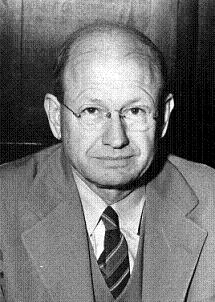
Peter W. Stoner (1888-1980) Astronomy
Onone of the 5 founding members of the ASA, died March 21, 1980, in Long Beach, California. Born in 1888, he would have been 92 in June.
He was an emeritus professor of science retired from Westmont College in Santa Barbara. He had an M.S. from the U. of California (1910). Alton Everest, first ASA president, and wife Elva attended Peter's funeral at Leisure World Community Church, preceding burial in the Santa Barbara Cemetery.
Here is Alton's tribute: ";Peter Stoner was the Complete Teacher, a man of quiet dignity and deep Christian faith. During the halcyon days of the Los Angeles ASA section in the 1960s a planning meeting was held in Peter's home in Altadena. The meeting dragged on and at 10 p.m. sharp Peter rose, told us we could stay as long as we wished but that he was going to bed. Something of a night-owl in those days, I was shocked that anyone would go to bed at 10 p.m. At long last I understand. I'm now the age Peter was at that time and by 10:15 1 droop like last week's crocus. Peter was high on principle but low on prestige, form, and ritual. Knowing the teaching positions he held, people are surprised to learn that he didn't have a Ph.D. Here's the story on that. At a world-renowned California university he had finished all requirements for his doctorate in mathematics when his committee discovered that his completed and approved dissertation on a subject from his minor field of astronomy should have been in his major. Realizing their oversight, they apologetically agreed that all he would have to do to get his degree Was to construct some geometrical models for instructional use. That sop to university regulations was a bit too much for Peter-so, no degree, but lots of peace of mind. While Peter was in graduate school the pastor of the Presbyterian church he was attending came to him asking if he would take a class of 12 science students from China. Realizing America's strength had something to do with her spiritual underpinnings, the students had told the pastor they wanted to learn about Christianity, although they had no interest in becoming Christians. Peter accepted the challenge, and all 12 accepted Christ before returning to China. Many years ago Peter was invited to teach a Science and Scripture course at the Moody Bible Institute summer school. He informed the class that his door was continually open for personal conferences. Day and night for the rest of his stay he was deluged by a steady stream of students with questions. That was surely one of the highlights of his life, remembered with grateful satisfaction in his later years as a solid contribution to the spiritual strength of young people. "At Pasadena City College Peter was Chairman of the Department of Mathematics, Astronomy, and Architecture. He taught there for 41 years. Roger Voskuyl, then president of Westmont College, pulled Peter back from the brink of a well-earned retirement to teach at Westmont. Teaching mathematics led to astronomy and then to head of the Science Department and building an observatory for Westmont's 16-inch reflecting telescope. In 1963 he left the haunting smell of chalk dust, having completed 50 years of teaching. "Peter Stoner's lifelong views on the relationship of science and the Bible are set forth in his chapter, "Astronomy and the First Chapter of Genesis," in the ASA's first book, Modern Science and Christian Faith. The same general thrust is in his book originally titled From Science To Souls and soon changed to Science Speaks published first by Moody Press and later by Van Kampen Press. Robert C. Newman, Ph.D. in astrophysics, is listed as co-author in recent editions. That book has sold over 350,000 copies in English and has been published in six languages. "I have before me a copy of Peter's unpublished manuscript, God's Dealing With One Man, for which I wrote, in the preface, I have known and loved Peter Stoner for almost four decades. In observing him through the years one principle of God's leading is illustrated over and over ... that God guides by deflecting the course of His children who are already under way rather than boosting the indolent into the orbit of His choosing."
Alton Everest Tribute*
top
Charles
Dinwiddie Stores (1906 - 1985) Patent Attorney
of Cocoa Beach, Florida, died of cancer on 4 July 1985 at the age of 79. "Din" was a chemical patent attorney who retired from Exxon Corporation after writing some 300 patents issued to Exxon inventors. He had a B.S. from Roanoke College and L.L.B. from LaSalle Extension University, was a member of the bar of Virginia and the District of Columbia, of the U.S. Patent Office, and of the U.S. Supreme Court. He was a deacon in the First Baptist Church of Cocoa Beach, where he also taught a men's Sunday school class. He was an avid reader of JASA. (Our thanks to retired chemistry teacher Edgar Bloom of Cocoa Beach, who notified the Ipswich office. Edgar added that it was Stores who first told him about ASA.-Ed.)*
top
Albert Charles Strong (1925 - 2001) Mechanical Engineering,
theology, linguists
Pastor of Salem, Oregon, died Sept. 4, 2001 at age 76 of cancer. After graduating from U.C. Berkeley in mechanical engineering in 1947 and from Fuller Theological Seminary in 1950 with an M.Div, for twenty-one years he served as a missionary in Ethiopia, pastoring and translating Amharic literature. He was prepared for this work by further training in linguistics at the U. of OK and Haile Selassie I U. in Addis Ababa, and in theology at Pittsburgh Theological Seminary and San Francisco Theological Seminary. He returned to the US in 1972 as pastor of two west coast Presbyterian churches. He retired in 1988 and moved to Silverton, OR. Albert participated in ASA Oregon Local Section meetings and his obituary in the
Statesman Journal of Salem reports him as a member of the ASA.*
top
Carl Stuebe ( -1970) Organic Chemist
Of Cleveland, OH passed away Mar. 4 1970 He was a research chemist (organic) doing thermal analysis. He had several papers, patents and Ph.D. from Case Western Reserve U. (1954). Carl taught adult Sunday school at his church, Shore Haven Lutheran, and thought that ASA's top priorities should be dealing with issues (such as creation/evolution), Christian teaching, and explaining science to the church.
Newsletter (incomplete)
top
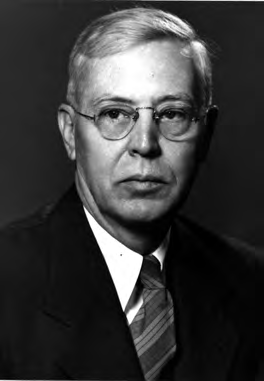
Russell D. Sturgis (1897-1969) Chemistry
Of Collegeville, Pennsylvania, one of the five charter members of ASA, died of a heart attack in November, 1969.
Born in Wilmington, Delaware, on July 9, 1897, he earned the B.S. from the University of Delaware in 1919 and the M.S. (1921) and Ph.D. (1924) from the University of Pennsylvania. He served as instructor in chemistry at the University of Pennsylvania from 1920 to 1924 and taught chemistry at Franklin and Marshall College for one year. In 1925 he joined the staff at Ursinus College in Collegeville, Pennsylvania, as assistant professor, becoming David Laucks Hain professor of chemistry in 1927 and head of the department of chemistry in 1928. He stepped down from the headship in 1964 but remained a professor of chemistry until his death on November 20, 1969.
Dr. Sturgis was a member of the American Chemical Society and Sigma Xi. In 1961 he received the Lindback Foundation award for distinguished teaching, and in 1964 he was awarded an honorary Sc.D. from the University of Delaware. He was a deacon of the First Baptist Church of Norristown, Pennsylvania for forty years, and secretary of the local school board for twenty-five years. He was advisor to the "Bible Fellowship" group at Ursinus College.
The role of Dr. Sturgis as one of the founders of what became the ASA has been pointed out in a paper by F. Alton Everest, "The American Scientific Affiliation--The First Decade", Journal of ASA 3 (No. 3), 33-38 (September 1951). On one of his "Sermons From Science" evangelistic excursions into Oregon, Irwin A. Moon told Alton Everest of the interest of Dr. Will H. Houghton, then president of the Moody Bible Institute of Chicago, in catalyzing formation of an effective organization of Christian men of science. After preliminary correspondence, an invitation from Dr. Houghton brought five men to Chicago in September of 1941: Everest, Sturgis, Irving A. Cowperthwaite, Peter W. Stoner and John P. Van Haitsma.
Only a few months later the American Scientific Affiliation had a name and a constitution--and the U. S. entered World War II, making national meetings impossible for the ASA's first few years. Subsequent growth has demonstrated that the five "founding fathers" laid a good foundation, and we honor Russell Sturgis-as one of the five. ASA News is indebted to Mrs. Russell D. Sturgis, now of Princeton, N. J., and to F. Alton Everest for this information. Mrs. Sturgis wrote of her late husband's regret that he lacked the time and energy to participate in ASA activities in spite of his interest in the work of the Affiliation. Everest (2010)5,
Newsletter*
top
Herbert W. Sutherland (~1913 -1997) of Toronto, Ontario died Sept. 13, 1997. Class of 1935, UNB
(incomplete)
top
Allan E. Swartz (1924-1996) Engineer
Of Muskegon, Michigan, born December 21, 1924 and died of a pulmonary embolism at age 71 on March 29, 1996. Allan was an engineering consultant interested in gasoline and Diesel engines. Don DeGraaf knew Allan well and noted that he was president of the Christian Businessmen's Committee, religious social service organizations and held offices in Forest Park Covenant Church, where he was a lifelong member. Don remarked that "Al devoted his life to serving God and others on a daily basis." Allan was a regular attender of our annual meetings. Last year (1995) he gave a paper on his work as a volunteer engineering consultant overseas. Don DeGraaf
(incompleat)
top
David L. Swift ( -1997) Chemical Engineering, Public Health has died [on July 3, 1997], apparently from complications from an old infection of hepatitis C. Dave had been active in local ASA section and annual meetings, to which he was usually accompanied by his wife, Suzanne. David was an ASA Fellow and prof. of environmental health sciences at Johns Hopkins U. in Baltimore, MD.
David's research was in environmental health engineering, air pollution, and aerosol science. He graduated from Purdue U. in 1957, from MIT in 1959, and got his doctorate at Johns Hopkins in 1963, all in chemical engineering. He did post-doc work at the London School of Hygiene & Tropical Medicine until 1966. He was also a past elder at Central Presbyterian Church in Towson, MD. David expected ASA to primarily deal with issues, explain science to the church, and provide fellowship. He was also a good counselor of younger ASAers, and would stay up late at ASA Meetings discussing personal decisions faced by them. Newsletter*
top
William F. Tanner (1917-2000) Geologist
Of Tallahassee, Florida died on April 9, 2000. Tanner was an ASA fellow and a member of ASA's Affil. of Christian Geologists. A prof. of geology at Florida State U. with emphasis on sedimentology, he was born in Milledgeville, Georgia in 1917. He holds a B.A. from Baylor University, an M.A. from Texas Technological College, and a Ph.D. from Oklahoma University, all in Geology.
He has served as an Instructor at Oklahoma University, a visiting Professor of Geology at Florida State University, and Associate Professor and Professor of Geology at Florida State University. Since 1974 he has been Regents Professor. He has had geological experience in much of the U.S., mostly in the Southeast, Southwest, and Rocky Mountain areas,- maritime eastern Canada and Canadian Rockies,- Mexico, Panama, Colombia, Ecuador, Peru, Chile, Uruguay, various parts of Brazil, and Venezuela. His specialties within geology include sedimentology, sediment transport (including beach and river erosion), paleogeography and paleoclimatology, history of the atmosphere and petroleum geology. Dr. Tanner is Editor of "Coastal Research, " Science Editor for the
New Atlas of Florida, and Editor of six volumes on coastal sedimentology. He is the author of 275 technical papers. He consulted for several large oil companies and various power companies, extensively traveled the Western Hemisphere, the British Isles, and Germany.
His most recent missionary activity was to Barranquilla, Colombia in 1982. He looked to the ASA to explain science to the Church, be involved in Christian teaching, and pursue creation-evolution issues.
Newsletter*
top
Douglas H. Taylor (1915-1997) MD
Of Tahlequah, OK. He was a Wheaton College grad and a surgeon who attended the U. of Oregon Medical School in Portland. Captain U. S. Army Res. Doug made many trips for TEAMission to Zululand, S. Africa, to work with a mission hospital there. He enjoyed ASA's journal "very much all those years." *
top
 Pat Taylor (1932-2022) Physicist
Charles Patrick Stirling (Pat) Taylor of London passed away peacefully at Mount Hope on Sunday, July 10, 2022, at age 92.
Born in Toronto, in his teen years Pat moved with his family to Vancouver, where he finished high school and went on to study biology and physics at the University of British Columbia. In 1952, he won a Rhodes Scholarship. He met his first wife, Elizabeth, while at Oxford and became deeply involved with different Christian student groups. It was here he committed himself to Christ. After marrying, the couple moved to Philadelphia, where Pat completed his PhD at the University of Pennsylvania. Their two eldest children were born during this time. Next stop was Cambridge for a post-doc and then Vancouver, where Pat took up a position as assistant professor of physics at UBC. Some five years later, with three children in tow, the family moved to London, Ontario, where Pat would join the brand-new Biophysics Department at the University of Western Ontario. He spent the rest of his career at UWO, retiring at the age of 65.
Science in general and biophysics in particular were far from Pat's only interests. He was a devout Christian, often giving talks about the relationship between Christianity and science, and he spent a lot of his time on campus meeting and encouraging Christian students, especially international students. His love of music centered on two passions: country dancing and bagpipes. He heard his first bagpipes in Scotland at the age of 8 and never looked back. His love of dance began with square dances held in the family home in Toronto and over the years branched out to Scottish and English country dance, Morris, Playford and even Swedish country dance. Travel-to Japan, China, Turkey, Ireland, Greece, Mexico, Australia, Alaska, and many other lands-was another of his pleasures.
Pat joined the ASA in 2001 and was active in discussions of science and faith. Though there was no ASA chapter in the London area, Pat participated in talks and other activities in nearby chapters. He was warm, humble, and happy to be of service. He was also a very loyal and solid financial supporter of the CSCA, to the time of his passing.
At the age of 85, some 17 years after Elizabeth's death, Pat remarried. He spent his final years with his new wife Jeanine, dancing, playing duets, attending church together, and fully enjoying each other's company. His was a full life and a rich one, and he was grateful for every bit of it.
top
John Marks Templeton (1912 - 2008)
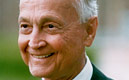 Philanthropist died July 8, 2008 in Nassau, Bahamas, at age 95. Born in the small town of Winchester TN, he received a degree in economics from Yale University in 1934 and was a Rhodes Scholar at the University of Oxford, graduating with a MA in law. Sir John pioneered the use of globally diversified mutual funds. He was deeply involved in a multitude of philanthropic missions.
He established the John Templeton Foundation to encourage the use of scientific methods to discover more about the spiritual realm. In 1972, he created the Templeton Prize for Progress toward Research or Discoveries about Spiritual Realities. In 1987 he was knighted by Queen Elizabeth II in recognition of his extensive charitable work. He collaborated with Robert Herrmann in writing numerous books and articles on faith-science themes. Sir John was a lifelong member of the Presbyterian Church and served as a trustee on the board of Princeton Theological Seminary for 42 years. He also served on the American Bible Society board. His foundation continues to offer grants for science/religion topics.
Newsletter, biographical,
Forbes *
top
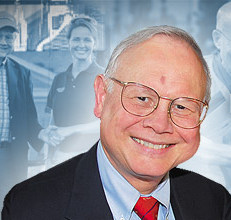 John M.
Templeton, Jr.
(1940 - 2015) Medical doctor, foundation director
John M.
Templeton, Jr.
(1940 - 2015) Medical doctor, foundation director
John M. Templeton, Jr., M.D.,
president and chairman of the John Templeton Foundation, passed away
Saturday, May 16, at his home in Bryn Mawr, Pennsylvania. Dr. Templeton
was 75 years old at the time of his passing, finally succumbing to his
battle with cancer.
Templeton was the oldest of three children
of Sir John Templeton. He began considering a career in medicine during
a summer internship in 1960 at a Presbyterian medical mission in
Cameroon. He received his MD from Harvard Medical School in 1968 and
completed his internship and residency in surgery at the Medical College
of Virginia in Richmond in 1973.
During his time at Children’s
Hospital, the hospital gained an international reputation for
its patients with conjoined twinning. Templeton performed numerous
surgeries on conjoined twins. He trained in pediatric
surgery at the Children’s Hospital of Philadelphia from 1973 to 1975
under the hospital’s surgeon-in-chief, C. Everett Koop, who later became
U.S. surgeon general from 1982 to 1989. After serving for two years in
the Navy he returned to Children’s Hospital where he was the
trauma program director. During his tenure the hospital gained an
international reputation for its patients with conjoined twinning.
Templeton performed numerous surgeries on conjoined twins.
Dr. Templeton, known as “Jack,” retired from
medicine in 1995 to assume leadership of his father's namesake
foundation, the John Templeton Foundation.
The John Templeton
Foundation serves as a philanthropic catalyst for discoveries on what
scientists and philosophers call the big questions of human purpose and
ultimate reality, a vision derived from Sir John Templeton’s optimism
about the possibility of acquiring “new spiritual information” and from
his commitment to rigorous scientific research and related scholarship.
The Foundation’s primary funding areas include science and the big
questions, character and virtue development, individual freedom and free
enterprise, genetics, exceptional cognitive talent and genius, and the
Templeton Prize. Recent grants have explored topics such as gratitude,
beneficial purpose, exoplanets, and religious liberty.
During Dr. Templeton’s 20 years at the helm of the Foundation, the endowment grew
from $28 million to $3.34 billion, with 188 grants awarded in 2014
primarily to major universities and scholars worldwide. A total of $966
million in grants and charitable activities have been funded since the
Foundation’s creation in 1987. It awarded $103 million in 2013, the last
year for which figures are available, which ranked it 55th in total
giving of U.S. foundations, according to the Foundation Center.
Dr. Templeton is survived by his wife, Pina, who retired from Children’s
Hospital in 1999, their daughters Heather Dill and Jennifer Simpson,
sons-in-law Jeff Dill and Scott Simpson, six grandchildren, a brother,
Christopher, and a brother-in-law, Gail Zimmerman. His sister, Anne
Zimmerman, died in 2004.--Templeton Foundation, Catholic News,
Washington Post*
topWilliam J. Tinkle (1892-1981) Genetics, Zoology
MS, PhD in zoology at Ohio State University. Dr. Tinkle taught at LaVerne College and for many years at Taylor University. Following this, he taught at Ball State Teachers College retiring about 1960. He published 11 papers in
JASA in the period 1950-1963. He was an early participant in organizing the ASA but left it in 1961 to help recruit the pioneers of the Creation Research Society.
Tinkle opposed evolution and Darwinian theory, but was an enthusiastic proponent of eugenics, and published several articles on the subject.
In his 1939 textbook "
Fundamentals of Zoology" he devotes a section to "The Need of Human Betterment", where he laments the existence of"defective families" who "give birth to offspring like themselves" , producing "persons of low mentality, paupers and criminals in much greater ratio than the general population"[8, p. 130]. Negative eugenics via institutionalization seems to have been his preferred eugenic solution: His antievolution works include:
Heredity: A Study in Science and the Bible, St. Thomas Press, 1969;
Heredity (Grand Rapids: Zondervan, 1970); and
God's Method
in Creation (Nutley, NJ: Craig Press, 1973. see: William J. Tinkle,
The A.S.A. In Retrospect (1959)
*
top
Ian J. Tinsley (1929-2023) Chemist
Ian James Tinsley passed away at his home in Corvallis, OR, early in the morning of December 10, 2023, at the age of 94.
Ian was born in Sydney, Australia on September 23, 1929. He was the son of William James Tinsley and Edna Lizzie Field Tinsley. He grew up in the town of Blackheath in the Blue Mountains east of Sydney. His childhood home had a clay tennis court which led to a life-long love of the game.
Ian graduated from Katoomba High School in 1946. In 1950, he received a Bachelor of Science in Chemistry from the University of Sydney. After working a few years at Australia's Commonwealth Science Institute and Research Organization, he came to Corvallis in 1953 to pursue graduate studies at Oregon State College, receiving his doctorate in Food Technology in 1958.
The rest of Ian's career was spent at Oregon State in the Department of Agricultural Chemistry. He became a professor in 1970 and served as department chair from 1990 until he retired in 1996. He taught freshman chemistry for several decades. In 1976, he developed a course on chemicals in the environment. Chemical Concepts in Pollutant Behavior, the book he wrote for the course, was first published in 1978. An updated edition was released in 2004. He also enjoyed working with Agriculture Extension offices throughout the state.
When Ian arrived in Corvallis in 1953, he joined its First Baptist Church and remained a faithful and active member for the rest of his life, serving over the years as a Sunday School teacher, youth group sponsor, trustee, and elder.
Ian married Ruth Roberta Govier in December 1955. Ian and Ruth had two sons: Douglas James (born in July 1957) and John David (born in February 1959). Ian was widowed in January 1979, when Ruth passed away. In December 1981, Ian married Joy Melanie Wuestefeld. Ian and Joy had one daughter: Megan Lee (born in May 1983).
Ian was a voracious reader. He also enjoyed sudoku, tennis, golf, and following Beaver sports. He traveled extensively both for work and pleasure, visiting five continents. He joined the ASA in 1959. He was active in the Oregon chapter of the ASA, giving talks at their spring meetings.
Ian is survived by his wife Joy and daughter Megan both of Corvallis, his son Doug of Vancouver, WA, his son John of Lake Havasu City, AZ, and his sister Joyce Briggs of Sydney.
top
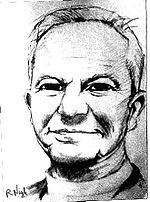
Thomas F. Torrance (1913-2007) Theologian
He was a leading Protestant theologian who served for 27 years as professor of Christian Dogmatics at New College, Edinburgh in the University of Edinburgh. He wrote many books and articles and translated several hundred theological writings into English from other languages. He edited the English translation of the 13-volume, six-million-word Church Dogmatics of Swiss theologian Karl Barth. He is considered to be one of the most important Reformed theologians of his era. He was the son of missionaries in China and served two parishes in the Church of Scotland. He was influential in work on theological method and the relationship between theology and science. Opposed to dualistic thought, he argued that modern science is similar to theology in that it is developed in terms of relation and integration: each has its distinctive method, and each is fully rational. See: Thomas F. Torrance's Integration of Judeo-Christian Theology & Natural Science: Some Key Themes *
top
Margaret G. Towne (1939-2024) Educator, biologist

Rooted in faith, Margaret Gray Towne, a loving wife and mother, went to be with her Lord and Savior on May 7, 2024.
As a dedicated teacher, she found joy in learning. From the Ivy League to community colleges, she taught everything from Anatomy and Physiology to Critical Thinking and the art of Calligraphy.
Born and raised in Detroit, Michigan, Margaret earned two degrees in biology from the University of Michigan (Go Blue!) and attended Princeton Theological Seminary, where she met her husband, Vernon. The couple would celebrate 55 years of marriage and raise two daughters, Cheyan and Jannay.
Margaret joined the American Scientific Affiliation in 1997 and was elected a Fellow in 2005. She became a co-editor of the ASA Newsletter in 2002. She served in that role until 2011. The Nov/Dec 2002 issue of the newsletter published this introduction of her:
“Margaret G Towne has taught biology for over twenty-five years at several institutions, from a community college to an Ivy League university. Presently she teaches at the U. of Nevada, Las Vegas. She has always felt called to being a Christian biology teacher and took a leave of absence early in her career to attend Princeton Seminary in order to become more grounded in that ministry. She earned her B.S. and M.S. in biology from the U. of Michigan. Her doctoral dissertation at Montana State University was titled, “The Influence of Critical Thinking on Christians’ Belief and Belief Change with Reference to the Polarities of Creationism and Organic Evolution.”
The world-famous paleontologist of Jurassic Park and The Lost World fame, Jack Horner, was on her doctoral committee. Margaret has participated in the Science and Religion Course Program through the Center for Theology and Natural Science in Berkeley, CA. She and Jack Horner won an award with their course titled “Bridging Science and Religion: A Critical Approach.” From January 1999 to May 2001, she was a “Distinguished Visiting Professor in Science and Religion” at Juniata College in Huntingdon, PA. She has been involved with bridging science and faith in Adult Education programs in churches at the local and national levels. Margaret also is interested in calligraphy and has taught courses that relate writing with the Christian faith. Margaret’s husband, Vernon, is a Presbyterian pastor. They have two adult daughters, Cheyan and Jannay.”
From backpacking across Europe to handing out Bibles in Peru with Wycliffe Bible Translators, Margaret loved to travel and made many friends on her journey through life. Her adventurous spirit would take her to dinosaur digs, nature walks, countless conferences on science and religion and she could rarely pass a museum without going inside.
More recently, Margaret enjoyed watching game shows, doing word puzzles, reading her Bible and attending OLLI adult education classes at her retirement home, Las Ventanas.
top

Charles Hard Townes
(1915-2015) Physics
Born
July 28, 1915, he died on the way to the Oakland CA Hospital
January 27, 2015 at age 99. One of six children of Baptist parents, Ellen Hard
and Henry Townes, a lawyer.
Townes was born in Greenville, South Carolina and was raised on
a small farm.
A student of wide
interests, including entomology and
ornithology, he graduated from the local high school in 1931 when
he was 15.
At Furman University he majored in physics and modern languages, was curator of the college museum, and a
member of the band, glee club, swimming team and newspaper
staff. He graduated valedictorian with two bachelor’s degrees in
1935 at the age of 19. Focusing on physics, he earned a master’s
degree at Duke University in 1937 and a doctorate at the
California Institute of Technology in 1939.
He joined Bell Laboratories in 1939 at its Murray Hill, N.J.,
headquarters and developed WWII radar bombing and
navigational systems.
Townes did most
of the work that would make him one of three scientists to
share the 1964 Nobel Prize in physics for research leading to
the creation of the laser while he was a faculty member at
Columbia University. He joined the Columbia University faculty in 1948, and
three years later had his inspiration for the laser's predecessor, the maser, while sitting on a park bench in
Washington, waiting for a restaurant to open for breakfast. Scientists were stumped about ways to make waves shorter,
but in the tranquil morning hours the solution suddenly appeared
to Townes, a moment he famously compared to a religious
revelation. Townes scribbled a theory on scrap paper
about using microwave energy to stoke molecules to move fast
enough to create a shorter wave. Since 1967, he served as
professor of physics at the University of California (Berkeley).
He married Frances Hildreth Townes, in 1941. Townes lived
in Berkeley, CA and was survived by his wife and four daughters,
Linda Rosenwein, Ellen Townes-Anderson, Carla Kessler, and Holly
Townes.
In 1966, he published an article entitled "The
Convergence of Science and Religion" in the IBM journal THINK.
The difference between science and religion "are largely
superficial," he wrote, "the two become almost indistinguishable
if we look at the real nature of each." In an era when many
scientists steadfastly avoided ties to religion, the views
expressed in the piece were seen as blasphemy by people in both
communities. Over the years, he wrote and spoke often on the
subject, and in 2005, he won the Templeton Prize for progress
toward research or discoveries about spiritual realities.
"Many people don't realize that science basically
involves assumptions and faith. But nothing is absolutely
proved," Townes said at the time. "Wonderful things in both
science and religion come from our efforts based on
observations, thoughtful assumptions, faith and logic."
Townes held a "friend" status with the ASA His positions
on Science and Christianity were published in PSCF
based on a
Plenary Lecture presented at the August, 2002 ASA Annual
Meeting held at Pepperdine University, Malibu, CA. His 1972 JASA
paper
How And Why Did It All Begin? provides an interesting
contrast. Sources: Boston
Globe, UCNews Center, ASA Newsletter.*
David “Dave” Bradford Tribble, 82, of Chicago passed away on July 13, 2023. He was born on December 24, 1940, to Joseph and Genevieve (nee McCrohan) Tribble in Hartford, CT. He earned a BS from Boston College in 1962, and an MS and PhD in 1966 and 1969 respectively from St. Louis University, all in physics.
Dave joined Loyola University Chicago as a professor of physics in 1968 where he taught until 2007. He also served variously as Freshman Dean, Dean of Mathematics and Natural Science, and Director of the Seismology Station. He was instrumental in developing the pre-engineering program, continuing as pre-engineering advisor.
He was a faithful attendee of the Episcopal Church of the Atonement Chicago. He was also a board member of the Illinois Orchid Society until 2012 and was always interested in environmental issues. To Dave, science and faith were equally divine! He joined the ASA in August 2006.
Dave is survived by his loving wife of 22 years Allison (nee Sibbald) Tribble.
Died Jan. 6, 2003, at age 72. He taught at Timothy Christian Schools in Elmhurst, IL, 1955-64 and 1984-95. Between times, he earned his Ph.D. in Science Education from U. of Wisconsin and worked at Christian Schools International in Grand Rapids, MI, as curriculum consultant and editor-in-chief of numerous textbooks. One of his projects was the "
d" series of 18 paperback modules. He also edited
(National Science Teachers Association, 1972).
He became an ASA Fellow in 1981. Of the couple 's five children, one son is a physician, a daughter is a nurse, and a son teaches molecular genetics at Michigan State. At the time of his death, Triezenberg was a trustee at Trinity Christian C., Palos Heights, IL. His two oldest sons spoke at his funeral, his older son noting that he had died at Epiphany, when the wise men went to see Jesus, and that this year another wise man went to be with Jesus. Mrs. Triezenberg describes her husband's memorial service as "a celebration of his life, rather than a mourning of his death."
(1914-1990) IVCF pioneer died on 18 Nov 1990 in Tucson, Arizona, at age 76. Born in Butler, Pennsylvania, he received a B.S. from Wheaton College in 1936, intending to go into medicine. Instead he accepted a one-year appointment with the fledgling Canadian InterVarsity. His visits to student groups in Michigan led to many years of service with IVCF-USA, culminating in his years as general director (1961-64).
After serving with the Army Corps of Engineers in Australia in WWII, he spent eight years (1953-61) as general secretary of IVF-Australia. From 1966 to 1980, he and wife Lois served with Latin America Mission, working with students in Costa Rica. Lois died on 8 Dec 1990.
 On November 19, 1965, Dr. Frank Allen, Emeritus Professor of Physics at the University of Manitoba died at the age of 91. He rests from his labours and his works follow him. A descendent of the Tuttles who came from London, England, on the Planter, the vessel following the Mayflower. Frank Allen was born in New Brunswick, his later ancestors having moved into Canada among the United Empire Loyalists. He graduated from the University of New Brunswick in 1895 with highest honours in Physics and Chemistry and a Gold Medal in Latin, and was appointed High School Principal the same year at the remarkably early age of 21. In 1897 he received his M.A. from New Brunswick, in 1900 his A.M. from Cornell, and in 1902 his Ph.D. also from Cornell, the last for work on physiological optics, a subject which interested him for the rest of his life. It might well have been otherwise for at Cornell he became interested in the newly discovered thermionic diode but allowed himself to be dissuaded by his professor from investigating the effect of adding a third or grid, electrode as developed by Lee de Forest a few years later. After a short period of high school teaching, he accepted the founding chair of physics in the new University of Manitoba in 1904 and remained there all his life, serving as Head of the Physics Department until his retirement in 1944. He was elected to Fellowship in the Royal Society of Canada in 1912 and was awarded the Society's H. M. Tory Gold Medal for Scientific Research in 1944.
 V. Elving
Anderson (1921 - 2014). Genetics.
V. Elving
Anderson (1921 - 2014). Genetics.
 Oliver Barclay's career in student ministry took him beyond his original
interest in teaching biology in China yet he would play a critical role in
developing organizations that sought to relate science and Evangelical
Christianity and was an encouraging influence to the "cousins" across the
water. In appreciation for his pioneering work, with the Research Scientists Christian Fellowship (later Christians in Science)
he elected by the ASA as an Honorary Fellow of the ASA. He fostered the 1965
"select" meeting of RSCF and ASA in England and general meetings of the
organizations in an 1985 meeting at Oxford
Oliver Barclay's career in student ministry took him beyond his original
interest in teaching biology in China yet he would play a critical role in
developing organizations that sought to relate science and Evangelical
Christianity and was an encouraging influence to the "cousins" across the
water. In appreciation for his pioneering work, with the Research Scientists Christian Fellowship (later Christians in Science)
he elected by the ASA as an Honorary Fellow of the ASA. He fostered the 1965
"select" meeting of RSCF and ASA in England and general meetings of the
organizations in an 1985 meeting at Oxford 
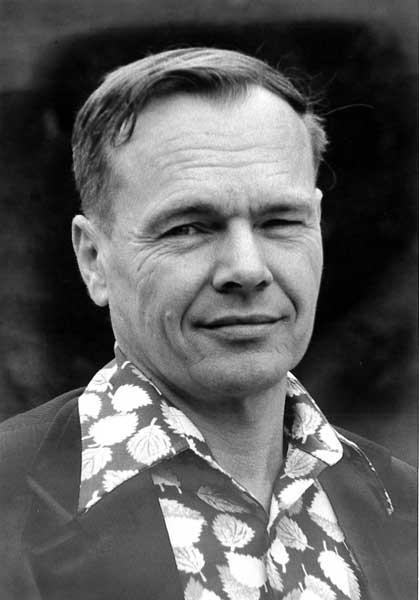

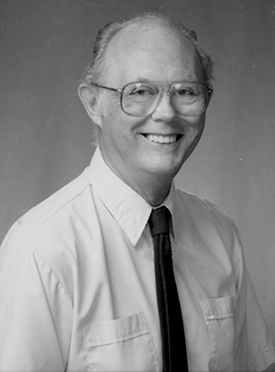 Russell Verner Benson(1928-2009) Mathematics
 Wesley G. Bentrude(1935-2022) Chemistry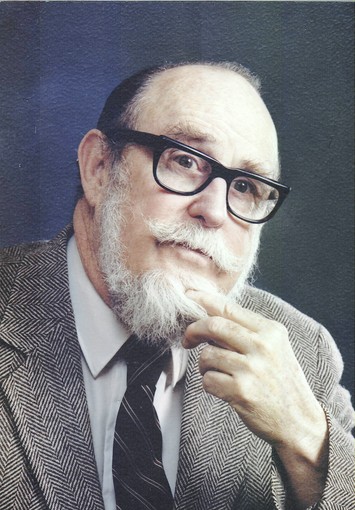
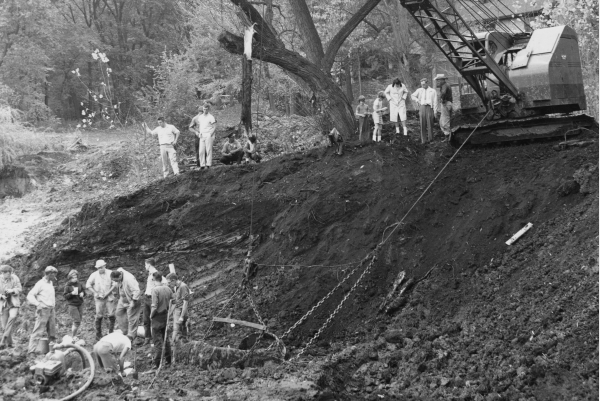
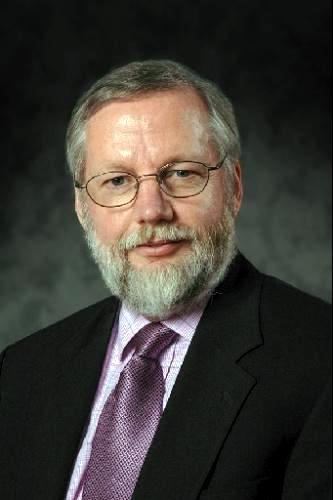 Bud Bouma served as Professor of
Biology at Calvin College for 37 years and was a member of Church of
the Servant. An alumnus of Calvin College he received his PhD in
human genetics from the University of Texas Medical Branch and did
postdoctoral work ay the University of California, San Diego. He
served on the ethics committees of several local hospitals and for a
decade was on the Board of Hospice of Michigan.
Bud Bouma served as Professor of
Biology at Calvin College for 37 years and was a member of Church of
the Servant. An alumnus of Calvin College he received his PhD in
human genetics from the University of Texas Medical Branch and did
postdoctoral work ay the University of California, San Diego. He
served on the ethics committees of several local hospitals and for a
decade was on the Board of Hospice of Michigan.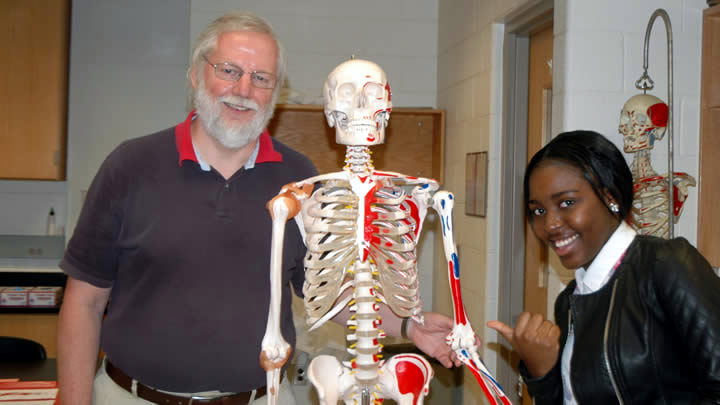 assistant in his Biology 115 lab: “‘Make sure you take the time to learn
all of the students names. It really helps to build a connection
when you can call someone by his or her name. And if you see them
outside of class, make sure to greet them or give them a wave, so
that you can start to build relationships with the students.’ This
was the approach that Professor Bouma took with his students; he
really strove to make each person feel special and cared for.”
assistant in his Biology 115 lab: “‘Make sure you take the time to learn
all of the students names. It really helps to build a connection
when you can call someone by his or her name. And if you see them
outside of class, make sure to greet them or give them a wave, so
that you can start to build relationships with the students.’ This
was the approach that Professor Bouma took with his students; he
really strove to make each person feel special and cared for.” 


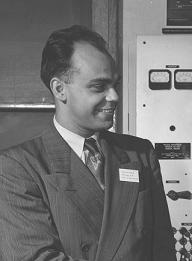
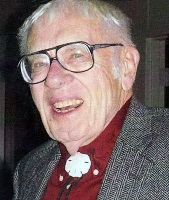
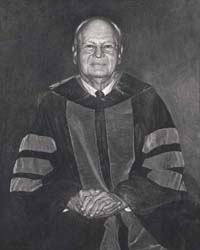
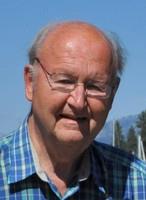
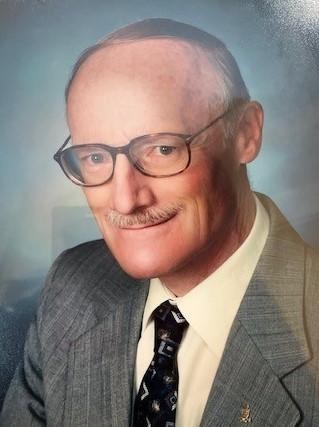

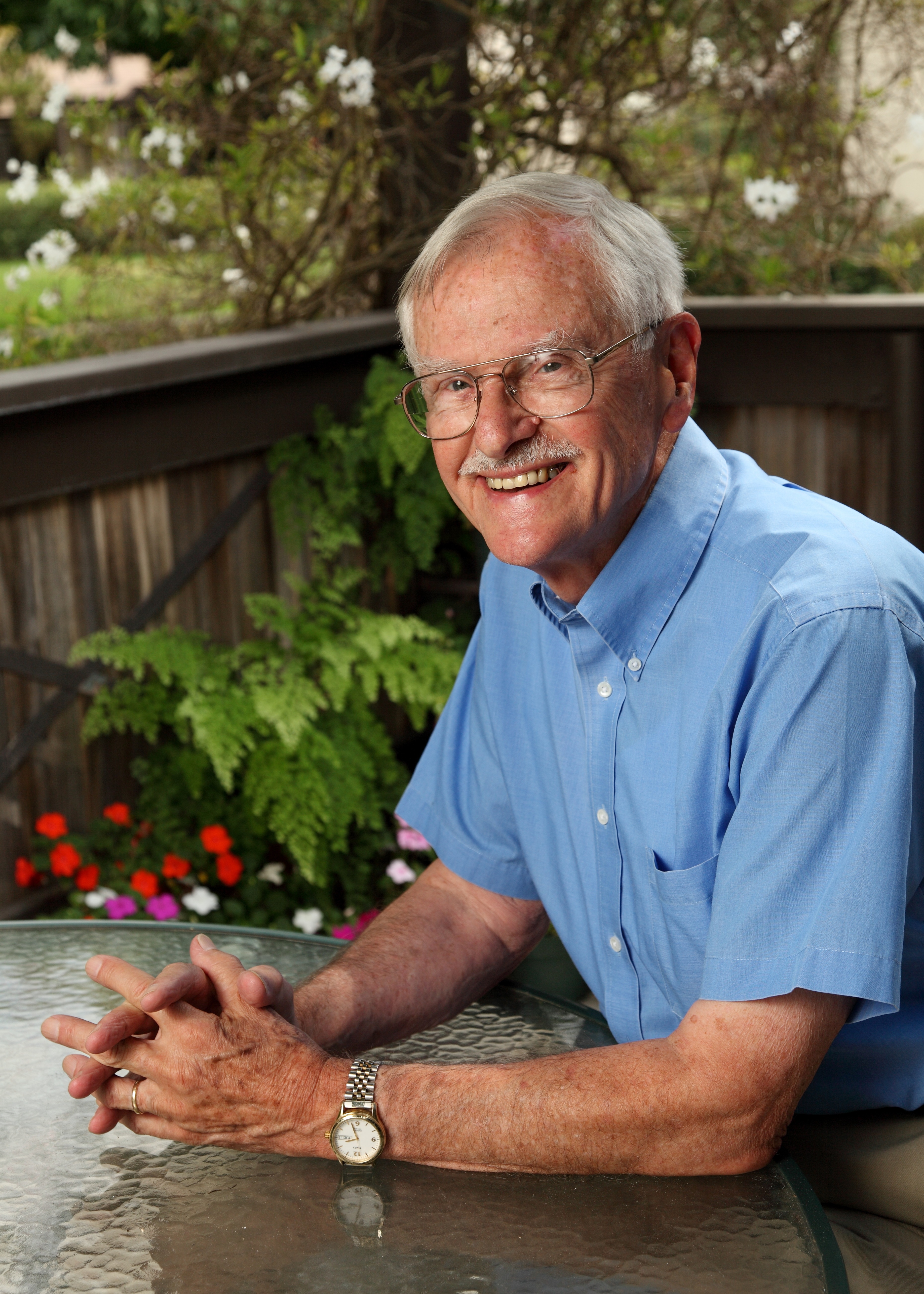 Dave Cole arrived in heaven on Sunday, March 13, 2016. He is survived by three children, eight grandchildren, and nine great grandchildren. Among Dave's enthusiasms were gardening, landscape painting, walking, punning, and history reading, but his heart belonged to his family.
Born Roger David Cole on November 17, 1924 in Berkeley, he studied chemistry at UC Berkeley after three years in The U.S. Army Air Corps. He spent two years as a chemist at an oil refinery in nearby Avon before returning to UC Berkeley to earn a Ph.D. A year of research at the National Institute for Medical Research in London, and two at the Rockefeller Institute in New York City preceded his joining the Biochemistry Department at UC Berkeley in 1958. He retired as Professor of Molecular and Cell Biology in 1990, and as Assistant Dean in the College of Letters and Science in 1992. The University presented Dave the Berkeley Citation in 1992.
The research Dave did with his students throughout his career concerned the structure and function of proteins - hormones, enzymes, cytoskeletal proteins, and especially chromosomal proteins. He published more than 200 articles and book chapters on his research. He was in that first generation of biochemists who revolutionized the field in the 60’s and 70’s.
As a Westmont College trustee for 12 years, he especially encouraged the college to continue strengthening an excellent science program and assisted faculty in writing grant proposals. “Serving on the board at Westmont has been one of the high points of my life,” David said in 2009.
As an ASA member and very much interested in faith and science connections, he authored several chapters and articles on theological and ethical implications of genome research, for example, “In Whose Image? Faith, Science, and the New Genetics” (1989). He taught many Sunday School classes over the years on faith and science. He did not hesitate to educate and correct the public on issues of science in gracious and beautifully written letters to the editor of the Santa Barbara News Press, “
While Dave had numerous professional accomplishments, he never talked about them and those are not the things he will be most remembered for. He will be remembered for his humility, his sense of wonder and gratitude, his love for God, his whole-hearted and unconditional love - that extended not only to his immediate family, but also to his students, colleagues, church, and extended family and friends. He will be remembered for his joyful and sometimes "pun-ishing" sense of humor, his ability to see beauty all around him, his wisdom, grace, and goodness.
Dave Cole arrived in heaven on Sunday, March 13, 2016. He is survived by three children, eight grandchildren, and nine great grandchildren. Among Dave's enthusiasms were gardening, landscape painting, walking, punning, and history reading, but his heart belonged to his family.
Born Roger David Cole on November 17, 1924 in Berkeley, he studied chemistry at UC Berkeley after three years in The U.S. Army Air Corps. He spent two years as a chemist at an oil refinery in nearby Avon before returning to UC Berkeley to earn a Ph.D. A year of research at the National Institute for Medical Research in London, and two at the Rockefeller Institute in New York City preceded his joining the Biochemistry Department at UC Berkeley in 1958. He retired as Professor of Molecular and Cell Biology in 1990, and as Assistant Dean in the College of Letters and Science in 1992. The University presented Dave the Berkeley Citation in 1992.
The research Dave did with his students throughout his career concerned the structure and function of proteins - hormones, enzymes, cytoskeletal proteins, and especially chromosomal proteins. He published more than 200 articles and book chapters on his research. He was in that first generation of biochemists who revolutionized the field in the 60’s and 70’s.
As a Westmont College trustee for 12 years, he especially encouraged the college to continue strengthening an excellent science program and assisted faculty in writing grant proposals. “Serving on the board at Westmont has been one of the high points of my life,” David said in 2009.
As an ASA member and very much interested in faith and science connections, he authored several chapters and articles on theological and ethical implications of genome research, for example, “In Whose Image? Faith, Science, and the New Genetics” (1989). He taught many Sunday School classes over the years on faith and science. He did not hesitate to educate and correct the public on issues of science in gracious and beautifully written letters to the editor of the Santa Barbara News Press, “
While Dave had numerous professional accomplishments, he never talked about them and those are not the things he will be most remembered for. He will be remembered for his humility, his sense of wonder and gratitude, his love for God, his whole-hearted and unconditional love - that extended not only to his immediate family, but also to his students, colleagues, church, and extended family and friends. He will be remembered for his joyful and sometimes "pun-ishing" sense of humor, his ability to see beauty all around him, his wisdom, grace, and goodness.
 Lorence Gene “Larry” Collins, age 93, of Thousand Oaks, California, died on October 20, 2025. He was born on November 19, 1931, in Vernon, Kansas, to Floyd Iven Collins and Ethyl Faye Randall. Larry lived a long and fulfilling life marked by faith, learning, teaching, and love for his family.
 (picture 1947) by F. Alton Everest. One of the five founders of the ASA, Irving Cowperthwaite died of cancer on May 27, 1999 at age 94. Irving was formerly the chief engineer at Thompson Steel Co. in Mattapan, MA. Born in Worcester, Irving earned his bachelor's degree in chemistry at MIT and doctorate ant Columbia U. He taught chemistry at Columbia from 1930-37, then joined Thompson Steel. He retired in 1969. It is with sorrow and with great respect that we note that Irving Cowperthwaite is dead but it is with joy that he is now with the Lord he loved and served. Irving was one of the five who met in 1941 and organized the American Scientific Affiliation.
 Jimmy Henry Davis (1948-2025) Chemist
  Benjamin Bonney Dayton (1914-2018) Physicist
 Donald E. “Don” DeGraaf (1926–2026), Physics
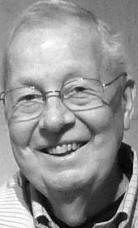

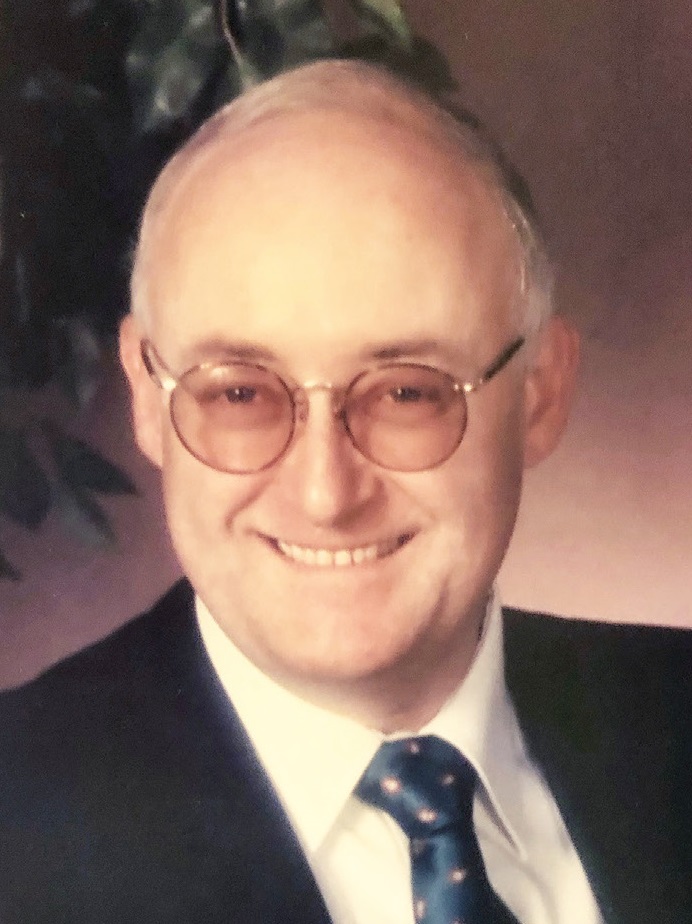
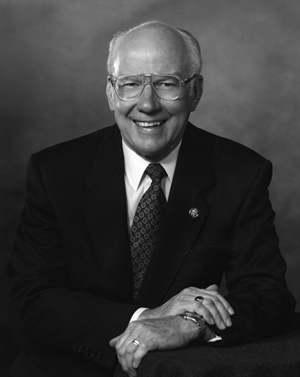
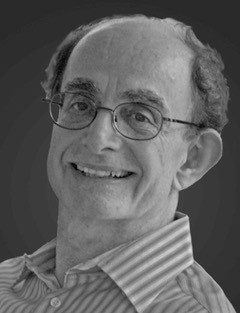


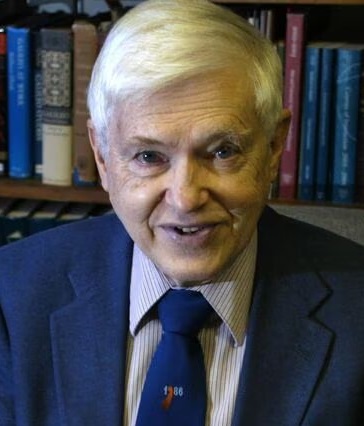
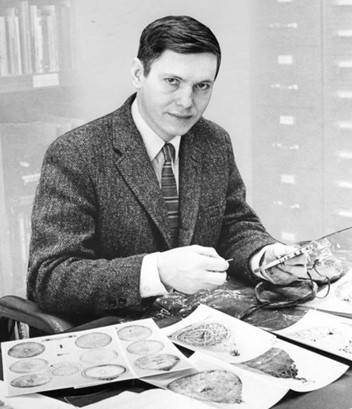 Following a summer job at Harvard Observatory, Owen was admitted to Harvard as a graduate student in astronomy, earning a master’s degree in 1953. He made his first appearance in the old ASA journal in September 1953, when Hartzler forwarded a six-paragraph summary of cutting-edge work on the size and age of the universe that Owen wrote. Although Hartzler credited it to Owen, the piece was published under Hartzler’s name. At the same time, he became a teaching fellow under I. Bernard Cohen, the first American to receive a Ph.D. in history of science and a student of George Sarton, founder of the History of Science Society. Decades later, Owen became a professor in that illustrious department. The following year, Owen married fellow Goshen graduate Miriam Sensenig, a nurse. They would have three sons.
 Roger Griffioen (1934 - 2026) physicist
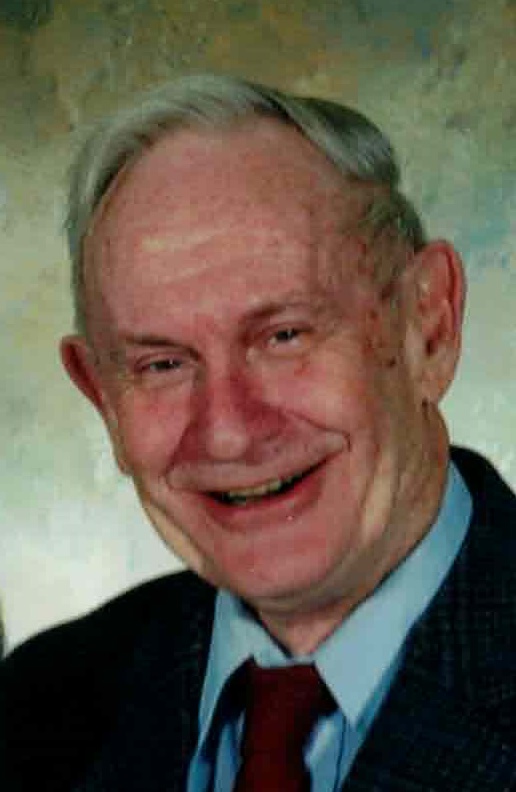
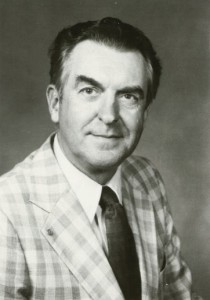
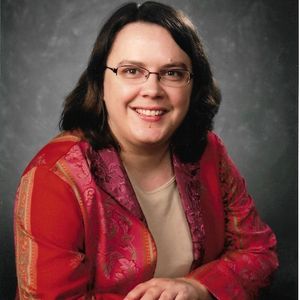
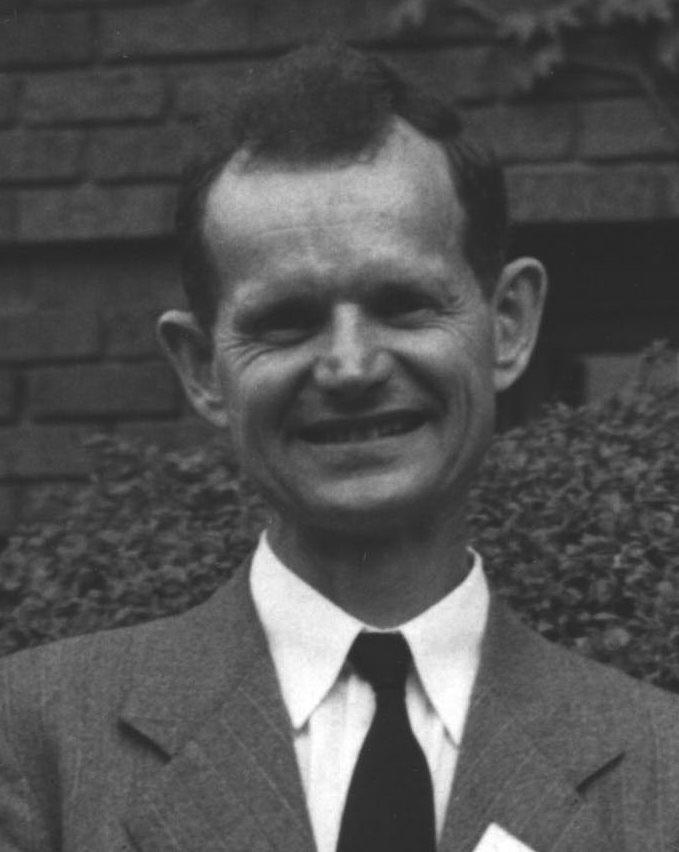


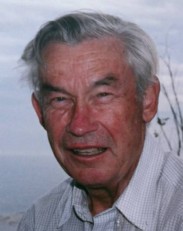
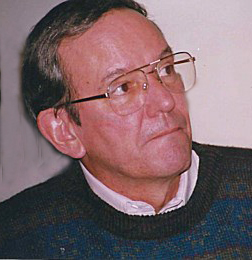
 John Dirk (Jack) Van Dyke (1943–2026), Chemistry, Educator
 Howard J. Van Till (1938 -2024) Physicist/Astronomer