
 NEWSLETTER
of the
American Scientific Affiliation and
Canadian Scientific & Christian Affiliation
Volume 53, Number 5 SEP/OCT 2011
Reflections on the Annual Meeting: Letter from the Editor
Emily Ruppel
The theme: “Science-Faith Synergy: Glorifying God and Serving Humanity.”
The other theme: “Get Your Own Dirt.”
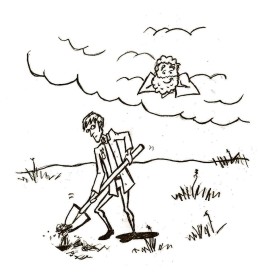 Twice, the following joke was made during daily
devotions at ASA’s 2011 Annual Meeting: “One day, a young
scientist casually informs God that he has attained the ability to create life.
In order to demonstrate this feat to a highly doubtful deity, the
scientist bends down, scooping up a handful of soil …
Twice, the following joke was made during daily
devotions at ASA’s 2011 Annual Meeting: “One day, a young
scientist casually informs God that he has attained the ability to create life.
In order to demonstrate this feat to a highly doubtful deity, the
scientist bends down, scooping up a handful of soil …
‘Oh, no, no, noooo,’ God says, shaking his head. ‘Get your own dirt.’”
Twice, an audience full of faithful scientists from all different walks of life and disciplines, laughed.
Anyone who’s spent even a small amount of time in the sciences would probably appreciate this joke’s premise and clever reveal, smiling at the scientist’s misplaced self-assurance. It’s a great caricature of how easy it is for us all to fall into the false assumption that whatever we humans make, do, and control in the universe resulted from our own ingenuity and “high” evolutionary status.
As Christians in science, however, when we study and marvel at the world around us, we do so both as curious people seeking to understand and manipulate it, but also as children of God desiring to fulfill our role in protecting God’s creation.
At this year’s ASA annual meeting, over 50 lectures, posters, and breakout sessions called on each of us to consider anew our special place in nature, as human beings and as scientists— the human beings most capable of making alterations to nature itself. As scientific research sheds light on the “rules” that govern the physical world, we are presented with countless opportunities to “cheat” those rules, as it were.
For instance, back when Jesus walked, a married couple incapable of conceiving a child, without divine interference, would have remained barren.
There was no cure for mental illness. No prophylactics. No spectacles for the poor-sighted.
There were no planes, trains, and cars to help folks get from one corner of the map to another, nor was there any way to call home.
People rarely reached old age.
In the past two thousand years, all of this has changed, thanks to the efforts and ingenuity of scientists.
But in the process of developing new cures and technologies that improve the quality of our lives and ease our suffering, what problems are we creating for other people and for the environment—and possibly, for ourselves? Does an increased sense of self-reliance diminish our relationship with God? Are we suffering spiritually when we bypass suffering mentally or physically?
During the devotional sermon on Saturday morning, Presbyterian minister and geologist Bob Geddes spoke about self-denial as a necessary aspect of doing good research and of taking up the cross of Christ, as both pursuits require constant striving, questioning, and hard work.
As Christians and as scientists, most members of the ASA are used to sacrificing personal comforts for the greater good. So when and how should Christian faith inform scientific research when it’s uncertain whether the methods and results of a practice or discipline clash with Christian theology? Where would Jesus stand on those issues in which lines between scientific progress and poor stewardship blur into a hazy, unclear horizon?
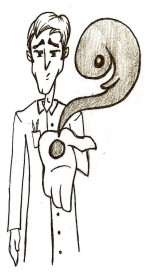 Speakers at this year’s Annual Meeting
illuminated a number of scenarios that merit the consideration and input of
Christians in science.
Speakers at this year’s Annual Meeting
illuminated a number of scenarios that merit the consideration and input of
Christians in science.
Plenary speaker WILLIAM HURLBUT, an ethicist and neuroscientist at Stanford University, illustrated just how far our society still is from reaching any consensus on the merits of embryonic stem cell research. Hurlbut’s talk helped reveal the problematic nature of the debate: if human embryos are to be considered ethically procured for research purposes, will we be condoning the employment of potential human beings as “raw materials?” What future consequences might arise from any science built on shaky moral ground? As one ASAer described Hurlbut’s talk, “The effect was to emphasize just how complex the question is, and just how hard it is to draw lines which should not be crossed.”
Also on the topic of medical technologies, New Zealand scientist and professor GARETH JONES gave a plenary session exploring the differences in how people perceive our growing ability to modify reproductive choices (including genetics) and the human brain. While the former is often considered “an intrusion into divine territory,” the latter inspires far less theological unrest. However, Jones pointed out that both spheres represent significant control by human beings as those who image God, and that surgical and pharmaceutical controls over the brain—the organ that most defines us as individuals—should be exercised with great caution.
Following Hurlbut’s and Jones’ plenaries, a symposium on the Ethics of Neuroscience and Reproduction, featuring talks and debates on related topics, was held throughout Saturday afternoon. Subjects ranged in scope from the need for and effectiveness of sexual “reorientation” therapies to how assisted reproduction technologies may lead to increases in genetic disorders.
Canadian psychologist Heather Looy discussed the former, describing how individuals with same-sex desires often suffer grief and moral confusion when their sexual orientation diverges from the accepted moral standards of their community. Although there has been some reported success from those people seeking to alter their sexual preferences (especially for women), Looy reported that reorientation therapies are yet to be widely accepted as necessary or even effective.
“There is no ‘away.’
Everything goes somewhere.”
–Steven Bouma-Prediger
Also on Saturday, the track on Environmental Stewardship gave ASAers much to think about in terms of our responsibilities to creation, and how modern technology both enhances and breaks down our relationship with the natural world. Theologian Peter Hess kicked off the symposium with a discussion of how one of the factors underlying our current ecological crisis is the antiquated Abrahamic notion of human exceptionalism, or the doctrine that human beings were created to rule over the earth and are therefore exempt from biological constraints.
Throughout the day-long track, which included seven presentations on various aspects of natural and humanitarian stewardship, phrases like “creation care,” “God’s earth-protect mandate,” and “environmental stewardship” were commonly heard and examined. Speakers stressed the potential for Christian theology to become a platform from which environmentalists urge others to take more responsibility for improving the planet.
Closing
out the track on Sunday was plenary speaker STEVEN BOUMA-PREDIGER, who
gave a sermon-worthy talk on caring for the earth as an example of
science-faith synergy. Among the many quotable phrases and Bible passages from Bouma-Prediger’s presentation, one that stood out for
many ASAers was a quote consisting of 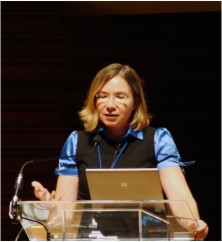 two simple facts: “There is no
‘away.’ Everything goes somewhere.”
two simple facts: “There is no
‘away.’ Everything goes somewhere.”
At the Saturday night plenary session, environmental scientist KATHARINE HAYHOE gave one of the most comprehensive, thought-provoking lectures on climate change that many in the audience said they’d ever heard. While most ASAers already accept global warming as a real problem supported by an astounding scientific consensus, Hayhoe asked us to look at this dilemma through a different lens— not as people watching out for our own necks, but as Christians concerned about our brothers and sisters in Christ who are already suffering because of warming effects all over the globe.
Looking back as well as forward in time, attendees also considered science-faith synergy from an ancient perspective. Contributions to our understanding of New Testament times, Old Testament times, even older than Old Testament times from the disciplines of paleontology and archaeology were presented in a symposium and throughout the weekend, beginning with a plenary session by notable biologist and paleontologist MARY SCHWEITZER.
Schweitzer was the first dinosaur researcher to provide solid evidence of soft tissue in dinosaur bones. Her research has incited much controversy in the scientific community, as the preservation of soft tissues over millions of years was previously assumed to be impossible. Schweitzer, who describes herself as naturally very shy, has had to defend her work on every front, both to other Christians and to other scientists. While many among the former group have claimed that Schweitzer’s work provides evidence of a young earth, some in the latter category see the research itself as wasteful, since it is expensive and requires the dissolving of precious dinosaur bones.
As one attendee of Schweitzer’s talk noted, “In addition to technical issues, political issues had to be surmounted. When you’re starting a revolution in paleontology, telling the old guard that everything they know might be wrong, you’re bound to encounter some flak. I guess that might make you wonder who the real dinosaurs are!”
“When you’re starting
a revolution in paleontology,
telling the old guard
that everything
they know
might be wrong,
you’re bound to encounter some flak.”
–Tim Wallace
Another current topic of debate in the science and Christian faith arena is Methodological Naturalism, or MN for those who prefer fewer syllables, which refers to the idea that one should seek to explain the causes of phenomena in the natural world without appealing to supernatural deities or powers. The subject was tackled head-on in a well-attended Monday morning symposium organized and moderated by Robert Bishop.
Joe Spradley started the set of talks by putting MN in historical perspective, tracing its early origins from the Greek philosophers to the 12th century when St. Hildegaard distinguished herself as perhaps the first Christian woman in science. Robert Bishop picked up the pace, taking us through Galileo, Newton, and Boyle and their use of MN as well as their appeal to God for explaining certain aspects of nature. Prior to the 19th century, MN was understood by theists as the appropriate way of understanding the secondary causes through which God was at work in creation.
Interpretive historian Ron Numbers titled his talk, “When God Disappeared from Science,” and documented the growing awareness throughout the 19th century that scientific explanations necessarily avoided appeal to the supernatural. From there, Kathryn Applegate argued for the importance of MN in modern science while Bruce Gordon championed Methodological Neutrality. This alternative “MN,” he suggested, removed the constraint of MN, which inhibits the discovery and explanation of certain causes in nature. In contemporary debates, it seems that MN is typically treated as a criterion to distinguish scientific from nonscientific explanations, a role that it is ill-suited to carry out.
The debate was spirited and worthy of ASA in drawing out diverse opinions from the panelists and the audience. While the debate is not likely to be the final word on the matter, the audience seemed united in their belief in a Creator, but few were willing to put “miracle” as an element in their equations.
As evidenced by the depth of debate and variety of views on all of the above topics, navigating the boundary where science meets theology and philosophy can be a perplexing, even frightening, pursuit, both for Christians in science who must consistently evaluate their own methodology against their Christian morality and for the science teachers who must make sense of all these things for others. It’s no secret that science educators in America suffer from the effects of the perceived “war” between science and Christian faith among their students, the parents of their students, and sometimes, the local education authorities.
To help each other find healthy methods of leading debates and promoting mainstream science to other Christians, many of ASA’s veteran science educators came together to share their perspectives on how to tackle science-faith issues in (and out of) the classroom. A workshop on Friday called “Helping Your Congregation Deal with Religion-Science Issues,” followed by a Saturday symposium called “Seeking God’s Wisdom for Science Teaching,” as well as a Sunday morning plenary session on the challenges and changes in economics, politics, and society that influence scientific inquiry today by Wheaton Dean of Natural and Social Sciences DOROTHY CHAPPELL, helped bring perspective and provide members with new ways of dealing with an age-old challenge.
In addition to the richly populated academic portion of this year’s annual meeting (chosen and arranged by program chair Rod Scott), attendees also found time to meet with each other and share their thoughts over meals, drinks, and field trips to interesting sites in the Naperville area (organized by local arrangements chair Ray Lewis). Many ASA members described these social opportunities as one of the most valuable uses of their weekend together.
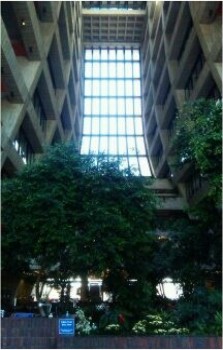 Most of the field trips occurred prior to the
first plenary session on Friday night. That morning and afternoon, ASA geologists
(and other rock enthusiasts) spent a day probing Naperville’s nearby
caves and ogling geological formations. ASAers with a
penchant for particle physics got a first-hand introduction to Fermilab and the inner workings of the Tevatron,
while interested academicians toured the campus of Wheaton College and nature
lovers ventured through the blossoming paths of Morton Arboretum.
Most of the field trips occurred prior to the
first plenary session on Friday night. That morning and afternoon, ASA geologists
(and other rock enthusiasts) spent a day probing Naperville’s nearby
caves and ogling geological formations. ASAers with a
penchant for particle physics got a first-hand introduction to Fermilab and the inner workings of the Tevatron,
while interested academicians toured the campus of Wheaton College and nature
lovers ventured through the blossoming paths of Morton Arboretum.
 At the opening session on Friday evening,
descriptions of the arboretum outing inspired both ASA President Susan
Daniels and ASA Executive Director
At the opening session on Friday evening,
descriptions of the arboretum outing inspired both ASA President Susan
Daniels and ASA Executive Director
Susan’s recounted how she and her husband-to-be were walking down one of the winding pond-lining paths of the Arboretum when they turned a corner and couldn’t stop laughing over the inexplicable hilarity of watching a fish flop around on a lily pad.
Randy’s story was perhaps even more romantic—and/or slapstick— he spoke of how Morton Arboretum provided the lovely flora and fragrant air for a setting worthy of proposing to his future wife. She accepted, of course, and they lived happily ever after … After, that is, they figured out how to escape from the Arboretum, which in the meantime had locked all of its gates for the night!
Randy’s wide-armed, chuckle-filled account of his engagement night added another piece of evidence to this writer’s theory that he and Alan Alda were, indeed, separated at birth.
Members who couldn’t make it to this year’s meeting can look forward to the next one, which will take place in sunny San Diego. The theme is Science, Faith, and the Media: Communicating Beyond Books (although traditional tracks won’t be left out). Leaders in various communications industries will be sharing their thoughts and ideas about ways of using modern media to communicate with the general public on issues of science, faith, and the interaction between the two.
It’s an especially good topic for this year, as we at the ASA office in Ipswich work to upgrade the website and various other methods of communicating news and ideas both internally and externally.
To that end, members can look forward to a newsletter that incorporates stories from God and Nature, along with articles, columns, and editorials by journalistically gifted ASA members. We’ll also be focusing more on using social media to our advantage in promoting ASA activities and gaining new members. As always, we appreciate and depend on your feedback as we revitalize the ASA’s communications and increase our role in the public dialogue on issues of science and faith.
Please keep in touch by continuing to send in news items—and if you keep a journal or feel inclined to compose about your experiences as a Christian in science, please consider doing so on a regular basis and sending those stories to me at emily@asa3.org for inclusion in God and Nature News—the forthcoming magazine that ASA Past President Jennifer Wiseman and others have long been hoping to be able to read and distribute among friends and colleagues.
I hope to meet many more of you in July in San Diego—in the meantime, feel free to write or email; I would love to hear about your thoughts, ideas, and accomplishments at any time.
~Emily Ruppel, your freshly inaugurated Associate Director of Communications
ASA’s First Symposium on Eating Meat and Christian Ethics
Wendee Holtcamp
One speaker in the symposium, James Thobaben, dean of Asbury Theological Seminary’s School of Theology and Spiritual Formation, discussed this very issue in his talk “Food as a Moral Object: The Ethics of Eating.” He outlined the debate that transpired throughout much of Christian history—at least, until the modern era—on whether it was even moral to kill and consume animals at all.
According
to Thobaben, many monastics
condemned excessive meat consumption, and in the 18th century, John
Wesley opposed the elegant epicureans of his day who were prone to gluttony.
Meat was associated with excess, even a stimulant to lust. Wesley also
encouraged restricting one’s diet for the sake of the poor. In his day,
this was no more than a symbolic gesture, a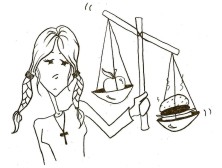 nd today much evidence suggests that reducing
meat consumption actually can and does help the poor.
nd today much evidence suggests that reducing
meat consumption actually can and does help the poor.
“Eating is a moral act that usually is casually performed with little ethical consideration in the modern era,” Thobaben wrote in the abstract for his talk. Perhaps it is time to change that.
Martin Root, assistant professor of Nutritional Sciences at Appalachian State, presented on “How Does What We Eat Create Chronic Disease?” Eating less meat and more vegetables plus getting more exercise, he concluded, are all activities that decrease our risk of developing heart disease and cancers. He added that the newest Dietary Guidelines for Americans from 2010 provides a good starting point.
In Steven Hall’s talk, “Environmental and Ethical Implications of Meat Consumption,” many statistics and facts were cited to highlight the environmental, ethical and health reasons to reduce meat in our diets. “Eating less beef may be one of the best ways to save water,” said Hall, a professor of Agricultural Engineering at Louisiana State University. Livestock consume mass quantities of water and also consume grain that could otherwise feed the poor. “It’s an issue of social justice. We eat meat, and poor people have less bread or cornmeal.” As he stated in his talk’s abstract, “Compassionate and conservative people should consider eating less meat, not only for the health benefits but also for environmental and ethical reasons.”
In veterinarian Jerry Risser’s talk on “Animal Rights or Environmental Stewardship?” he discussed the moral obligation we have to animals, and how Christians might fit into the “animals rights” discussion (in fact, he does not think that animals inherently have rights and that the term is problematic), since Christian thought diverges from non-Christian thinkers who might assign animals a certain morality. Nevertheless, he implored, “People think meat does not really come from killing and eating animals. We have to be more reflective about the lives of animals we eat.”
The Executive Director’s Corner
Randall D. Isaac
This issue marks a major transition for the ASA/CSCA Newsletter and for ASA as an organization. For nine years, Margaret Towne and David Fisher have faithfully served as the newsletter editors. With their characteristic passion and devotion, they sought out and collected news items from throughout the organization. We extend a warm and heartfelt expression of gratitude to them for their work. Thank you, Margaret and Dave!
Emily Ruppel, our new Associate Director of Communications, is now taking responsibility for editing the newsletter. In this issue, she presents some of her ideas and vision for how the newsletter can be an effective communication tool for ASA, as well as a summary of our annual meeting. Stay tuned for the new ideas, and feel free to share your thoughts and feedback to her at emily@asa3.org .
This is not the only change in ASA. At our business meeting in Naperville, IL, we announced that Arie Leegwater is stepping aside as PSCF editor at the end of this year. The ASA Council has selected Jim Peterson, currently one of our book review editors, as the new editor of our journal. In our next issue, we’ll be telling you more about Jim. He will continue to focus on the quality and relevance of our journal.
I am also pleased to announce another major change coming to ASA. The Council has approved a recommendation from the staff to change our membership management system to an online membership management service. Our current system is based on Microsoft Access, using a variety of programming efforts by different people during the last fifteen years. This system is not easily adapted for electronic interaction, which is presently handled by custom programming. It also presents significant maintenance challenges, and it is difficult to extend its function to future opportunities. By moving to a robust service with reliable support, we believe that we will be able to provide better services for our members.
These changes will be implemented over the next four to six months, during which time we will provide you with more information. The changes will involve a new website design, better support for ASA chapter websites, improved communication, faster and more automated renewal and membership application, and easier tracking of financial transactions. It also means that we will be issuing new member ID numbers (aren’t you glad you didn’t memorize your current one?)
Throughout these changes, our focus continues to be on providing you with the resources and communications that you need. Our mission is to enable a network of Christians in the sciences for purposes of dialog and support, especially concerning issues of science and Christian faith. We seek to stimulate scholarly research on relevant issues and to communicate seminal ideas.
Your participation and input are important to help us achieve these goals. Above all, we would appreciate your faithful prayers and your financial support to enable us to continue our work.

Dave Fisher and Margaret Towne, respectively
Among the many things that first attracted me to join the ASA were its publications. When I joined in 1979, Richard Bube was doing a great job with the journal and Walt Hearn had an informal, sometimes humorous style in the newsletter. Walt sometimes styled himself as the “Weary Old Editor—WOE is me!”
Walt e-mailed me two weeks ago, giving context of how things have progressed since he began his 23-year editorship in 1969. He snail-mailed copy to ASA headquarters, where it was typed onto a stencil and ran on a mimeograph. Since then, Walt, Dennis Feucht and most recently Margaret Towne and I had the advantage of progressively improved technology to keep it more current and to embellish it with things such as better-quality photos.
We’ve aimed for several objectives:
- To summarize Annual Meetings in ways that informed non-attendees of what went on, and motivated them to want to attend next year. We’ve listened especially for the aptly-turned phrase or anecdote that encapsulated the essence.
- To help members use time more efficiently. We read reams of publications, websites and e-lists, then summarized what we considered the most interesting and relevant to scientist-Christians.
- To provide balanced coverage of the various interpretations held by members.
- To provide a sense of camaraderie by introducing members to each other and reporting their significant achievements.
It has been a joy to work with Margaret, Lyn Berg, and other staff and members. I expect to remain involved in ASA in future years. As we pass the baton to Emily Ruppel, we look forward eagerly to the innovative and creative ways she will fulfill this office.
—Dave Fisher
It
was a pleasure and an honor to co-edit the newsletter from 2002 to 2011. I
learned so much about research in science over the years and it impacted my
ethics and religious beliefs. Co-editing as well as contributing material
enriched my knowledge of archeology, geology, paleontology, and many other
disciplines. I subscribed to many science journals and thought about the
newsletter with every article I read, including in my local newspaper!
It was amazing how often such items popped out. 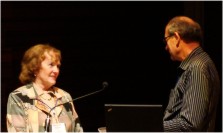
When I was outside or traveling in the USA or abroad, I was always aware of God the Creator and so enjoyed geological scenes, sunsets, the night sky, and the variety in all of life. Being so involved in the science and religion dialogue made going to the zoo a spiritual experience. As Kepler (1571–1630) said, “O God, I am thinking thy thoughts after thee.”
The newsletter responsibility was with me 24/7 and truly edified my life. During worship, science and religion interface was noted often such as in this hymn:
This is my Father’s world, the birds their carols raise; / The morning light, the lily white, declare their maker’s praise. / This is my Father’s world; he shines in all that’s fair. / In the rustling grass I hear him pass; he speaks to me everywhere. (Maltbie D. Babcock)
Bonnie
and Martin Price introduced me to the ASA and recommended me as a
newsletter co-editor. Bonnie and I met while biology majors and in InterVarsity at the U. of Michigan. It was so easy and
enjoyable to work with Dave Fisher and Lyn Berg.
We bonded extremely well. Thanks to
Each issue revealed ASA members’ gifts and activities, and I was amazed to learn (even from obituaries) how involved our members were in their disciplines and how their faith enriched their experiences and how they impacted the world.
I attended the past ten Annual Meetings which were so educational, enjoyable, stimulating, and fun. The field trips, seminars, plenaries, worship services, and varied discussions over meals were so edifying. I learned a lot in the dining halls and witnessed the unity amidst diversity and how we are so amazingly interrelated.
ASA members, please inform Emily Ruppel of your research, publications, presentations, science and religion activities, and new experiences. Send her summaries of seminars you attend in science and religion. These insights give us new ideas to contemplate. Emily is in for a wonderful journey, and we are so fortunate to have her as our Associate Director of Communications. She is most gifted in the latest technology and has a great mission ahead.
Test of FAITH—Exploring Science and Christianity on Tour
Ruth Bancewicz
Is God extinct? Does science threaten belief in God?
The “Test of FAITH” resources were developed to equip Christian leaders to teach on the relationship between science and faith in both the USA and UK. The centerpiece of the material is a documentary in which Christian scientists and theologians respond to the question, ‘Does science threaten belief in God?’ Contributors include Francis Collins, Jennifer Wiseman, Rosalind Picard, Sir John Polkinghorne, Bill Newsome, Alister McGrath, Deborah Haarsma, Denis Alexander, Simon Conway Morris, Ard Louis and Cherith Fee Nordling. See www.testoffaith.com
DVD and study guides are available now from Wipf & Stock: http://tinyurl.com/buyTOFUSA
Test of FAITH is touring the USA this fall. Events will include a film showing and discussion with local experts. Further details, poster and flier at www.testoffaith.com/events/us-tour.aspx
Welcome, New Members! June–July 2011
Bracht, Virginia R. –Albuquerque,
NM
 Brinley, Janelle
–Wheaton, IL
Brinley, Janelle
–Wheaton, IL
Bundrick, Daniel J. –Omaha, NE
Byrd, George V. –Kailua-Kona, HI
Campbell, Forrest S. –Santa Rosa, CA
Chambers II, Harold L. –Spring Arbor, MI
Clark, Allison –Bloomington, IL
Clemente, Manika –Greendale,
WI
Cruzan, Arletta –Beaver Falls,
PA
East, James D. –Wheaton, IL
Francis, Valerie L. –Waverly, OH
Freer, John H. –Hopkinsville, KY
George, Jude A. –Los Gatos, CA
Gevry, Taylor R. –
Goeking, Jacquie –Chicago, IL
Hoffman, Donell B. –Houghton,
NY
Holtcamp, Wendee –Kingwood, TX
Janzen, Bryan –Abbotsford, BC Canada
Kinczyk, Jon –Glen Ellyn, IL
Lee, David M. –Millersburg, OH
Leidner, Gordon D. –Davidsonville,
MD
LePage, Kathryn R. –N Canton,
OH
Lim, Maria –
Lohse, Matthew –Springfield, IL
Manchester, Morgan –Linden, PA
Moore, T. M. –Hamilton, VA
Moore Jr., Clifford J. –Hawkins, TX
Paszalek, Kevin –Kijabe,
Kenya
Rogers, Thomas –North Vancouver, BC Canada
Sheehy, Christiana –Ventura, CA
Shields, Keith A. –Vancouver, BC Canada
Spellman Jr., James E.
–Milton, DE
Taylor, Gary G. –Calgary, AB Canada
Van Zant II, Frank N. –Colorado
Springs, CO
Walters, Thomas –Altadena, CA
Weibelzahl, T. James
–Langley, BC Canada
Wells, Christopher M. –Houghton, NY
Wickwire, Peter –Wheaton, IL
Williams, Christine –Wheaton, IL
 Congratulations, Long-time ASA Members!
Celebrating 30 Years of Membership
Stephen E. Cloutier
Robert A. Conradi
Johannes J. De Vries
Allen G. Hiebert
John W. McConkey
Donald C. Morton
Charles E. Reece
Alan N. Stockton
Robert J. Tissell
Judith A. Toronchuk
Materials from the Annual Meeting Are Now Available
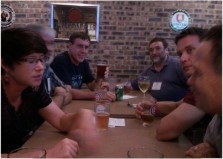 The 2011 ASA Annual Meeting took place on the
campus of North Central College in Naperville, IL, from July 29 to August 1.
Listen to MP3 audio from over 50 lectures, discussions, and symposia
from the Annual Meeting at www.asa3.org/ASAradio/ASA2011_index.html or purchase them on DVD or CD at http://www.florianaudiovisual.co/ashop/asa.php?cat=124
The 2011 ASA Annual Meeting took place on the
campus of North Central College in Naperville, IL, from July 29 to August 1.
Listen to MP3 audio from over 50 lectures, discussions, and symposia
from the Annual Meeting at www.asa3.org/ASAradio/ASA2011_index.html or purchase them on DVD or CD at http://www.florianaudiovisual.co/ashop/asa.php?cat=124
The 2012 ASA Annual Meeting will take place at Point Loma Nazarene University in San Diego, CA, from July 20 through July 23. Our theme is Science, Faith, and the Media: Communicating beyond Books. The conference will bring ASA members together with leaders in various new (and old) communications industries.
The Newsletter of the ASA and CSCA is published bimonthly for its membership by the American Scientific Affiliation. Send Newsletter information to the editor: Emily Ruppel, PO Box 668, Ipswich, MA 01938-0668. E-mail: emily@asa3.org
Send Coming Events
information to David Fisher, 285 Cane Garden Cir.,
Please send Canadian
matters to: CSCA,
Send address changes and other business items to the American Scientific Affiliation, 55 Market St., PO Box 668, Ipswich, MA 01938-0668. Phone: (978) 356-5656; FAX: (978) 356-4375; E-mail: asa@asa3.org ; Web site: www.asa3.org
©2011 American Scientific Affiliation (except previously published material). All rights reserved.
Editor: Emily Ruppel
Managing Editor: Lyn Berg